It isn’t easy to ignore the impact of private accommodation on hospitality over the past two years. Alternative accommodation has soared, with traditional hotels (both international brands and boutique) finding themselves on the back foot.
But with that come new traveller demands and expectations of what a space needs to have, to appeal to consumers – and it isn’t just free Wi-Fi and a decent (free) mini-bar. Instead, some have gone the opposite route, asking for less rather than more, and finding value in a slightly different way.
Founded in Singapore, during the first quarter of 2017 – the year the UN World Tourism Organisation labelled as the “international year of sustainability tourism for development” – Big Tiny is a startup that taps into a growing demand for eco-friendly and socially conscious travel experiences.
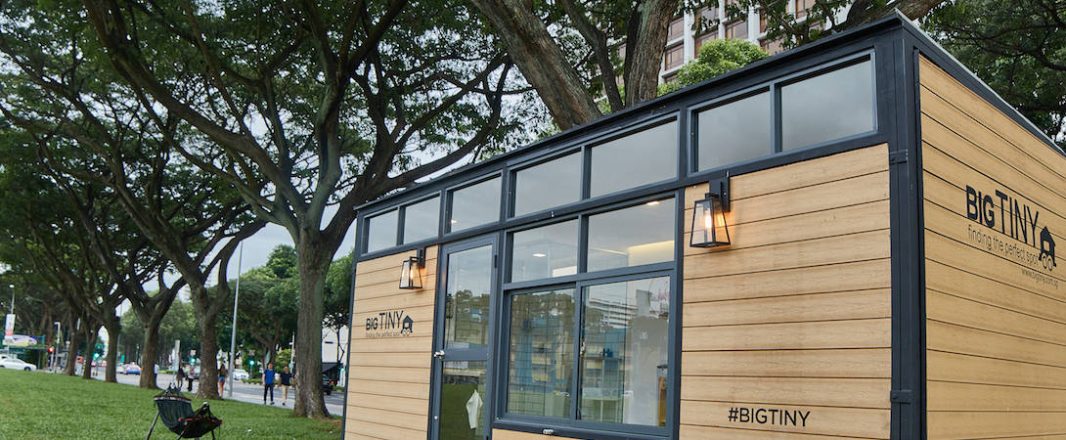
Big Tiny specialises in what could be explained as a cross between a caravan holiday and an Airbnb experience. Coining the term, “the Big Tiny experience”, the alternative accommodation startup wanted to couple the international trend of “tiny houses” (advocating living in compact, but spatially efficient homes) with eco-tourism.
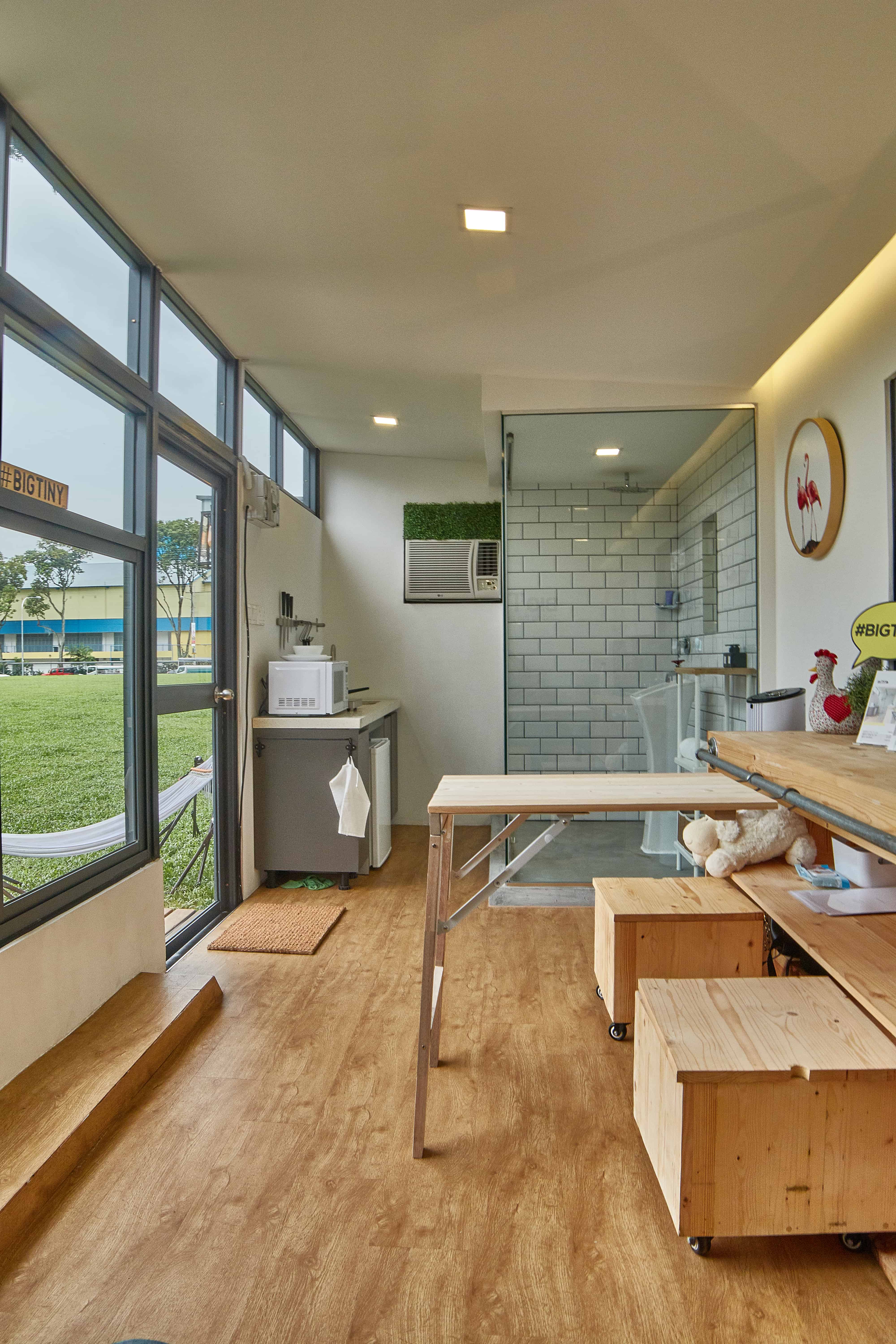
The spatially efficient interior of a Big Tiny home
The idea, created by three Singaporean entrepreneurs, is to provide an escape from “digitally-laden” lifestyles to a rural, disconnected setting, without compromising on the quality or the novelty of the accommodation experience. It comes at a interesting time, as it was recently revealed that unique accommodation experiences are trumping traditional hotels, according to Booking.com’s Guest Review Awards data.
Each Big Tiny house is ecologically efficiently designed, with solar-powered electricity, composting toilers and a rainwater collection system. The houses are kept to a maximum size of 46sqm and are also built on wheels, so that they can be relocated easily and quickly.
Travellers can select which specific Big Tiny property they’d like to stay in based on location. The startup lists each property on both Airbnb and Booking.com, charging between S$150-250 per night.
Once in-destination, travellers will receive an information pack about tours and activities within the area. The landowner will greet them on arrival and provide a safety briefing, after which onsite support is available throughout the stay.
To establish the location of each house, Big Tiny seeks out “land hosts” with spectacular views– property owners who can offer space to ‘host’ Big Tiny houses. Those interested will apply to partner Big Tiny in it’s tiny house movement. After the tiny houses are deployed, land hosts can earn ‘income’ off their land as the houses act as a vacation rental for passing travellers.
In its simplest form, Big Tiny is an alternative form of affordable accommodation, typically located in rural settings. They are specifically designed to target small families, interested in ‘off-the-grid’ holidays.
It taps into the culture of the ‘sharing economy’, as it encourages people to see the potential for their land to be used for accommodation. And, for those who previously did not have the means to rent out their properties on sites like Airbnb (because of spatial or other practical constraints), purchasing an affordable “tiny house” could grant them that opportunity.
At present, there are only two Big Tiny houses in New South Wales and Victoria, Australia that are available to rent from February 2018. The co-founders have expressed plans to expand to Sydney, Melbourne and Brisbane within the year… with future ambitions for New Zealand too.