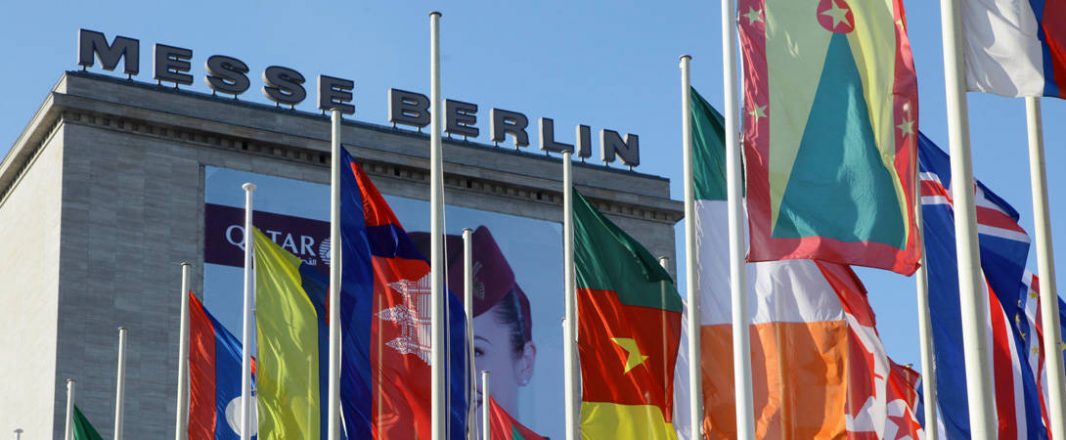

Yes, there was a railway strike – hey, wouldn’t be the same without a strike or two – but everything went relatively smoothly at this year’s event.
I managed to get to my appointments on time, moderated three sessions which went smoothly (so I was told), sat on one panel during PhoCusWright@ITB Berlin – it was good to have the opportunity to share the Asia story at such a huge, global event.
Could it be that Asia’s time has finally arrived? No more lip service to the potential that is Asia but finally, the realization and the inclination to do something to tap the Asian travel market potential by companies and destinations in Europe and the rest of the world.
For there is no doubt that Asia has arrived as a emerging travel force. Singapore, in announcing the TravelRave calendar of events this October of which WIT is a part, let its audience know that up to 80% of the 11.6 million visitors it received last year were from within Asia.
Swire Hotels’ CEO Brian Williams, speaking on one of the panels, said that up to 25% of his business at the group which includes The Upper House, Hong Kong and The Opposite House, Beijing, came from Chinese customers who do not flinch at paying his high rates.
During the China panel – I took note of a remark made by the moderator who apologized for not having any women on the panel given that it was International Women’s Day and he promised there’d be a woman next year and wondered if it was the 19th or 21st century I was living in – the audience heard about the different segments of Chinese travellers emerging and that one should not lump them into one giant wok.
Some of the discussion revolved around the need to serve them rice but social media also figured strongly in the debate with more Chinese embracing networks like Wei Bo, as Jens Thraenhart of Dragon Trail shared.
(By the way, a tip shared by Morris Sim of Circos Brand Karma recently – tap the Chinese weddings market. Next year is the Year of the Dragon, an auspicious time for weddings and if McDonald’s in Hong Kong has gotten into the act, then you should too.)
At eTravel World, a new feature within the Travel Technology halls, WIT ran a workshop on “Search, Social Media & Mobile in Asia” which was well-attended, showing the interest in the region.
Here, my panellists – Alvin Ch’ng of TripAdvisor, Anil Damodaran of Abacus and Frank Trampert of Circos Brand Karma with a guest appearance from Timothy O’Neil Dunne of T2 Impact – stressed the need to localize and that there was “no one Asia”.
What works in Japan does not work in India, they say, so you have to make sure you localize your web and mobile offerings. Choose your target market, know who your customers are and tailor accordingly.
The advent of smartphones and investments in infrastructure developments by governments in Asia – OpenNet in Singapore and Korea’s even more ambitious broadband plans – mean consumers’ experience of the web is very different in Asia versus Europe.
In the area of mobile adoption and innovation, the panellists were convinced that Asia would lead the way but the ever-contrarian O’Neil Dunne cautioned against being carried away by hype as roaming charges were still a major obstacle.
Ch’ng of TripAdvisor encouraged the audience to take risks and experiment. “Everything is so new and it’s worth trying things out,” he said. O’Neil Dunne said it in three words, “Do it now.”
There was also a debate over whether one should go for browsers or apps – Abacus’ Anil favoured browsers while O’Neil Dunne said it was a case of horses for courses and that in the US, he would favour apps. Anil’s argument was there were too many platforms to choose from while a browser was more universal.
Of course, there was also talk about social media and if it was time for it to evolve from customer engagement to social commerce – Trampert said that at this moment, it was still more about customer engagement and brand awareness.
On the show floor, there was talk about the evolution of social media to social commerce. Everbread’s Assen Assilev broached thepossibility during his presentation at PhoCusWright when he said social media could unlock the key to airline ecommerce within networks.
At eRevMax’s booth, I ran into Sascha Hausmann, CEO, who told me that RateTiger had signed an agreement with Open Hospitality to deliver reservation processing via Facebook social media. The agreement, he said, would enable hotels to utilize all channel management capabilities of RateTiger to distribute inventory and rates to Open’s reservation booking engine on the hotel’s Facebook presence.
“Online distribution is now beyond OTA connections but ensuring the property is now available across all consumer platforms,” said Ragnar Strerath, division president-RT Connect at eRevMax.
WIT asked them if the transactions actually happen within the Facebook environment or if users are directed back to the hotel environment. Said spokesman Ryan Haynes, “Yes, there is a booking engine in Facebook itself. The Fan page has a Facebook template but has a booking system little different to a hotel website/ OTA. This enables therefore Facebook users to direct here within the FB environment and it’s not needed to go to another website/environment.”
We then asked for examples of hotels that have successfully executed this. The response? Not at the moment since this is a very new integration for the company but we were promised some examples would be shared in due course. So watch this space.
By Friday though, the last trade day of ITB Berlin, all talk of Asia potential, social media and mobile was forgotten as the dreadful news unfolded of the earthquake and tsunami in Japan. Rather appropriately, the blue skies earlier in the week had given way to an overcast sky.
When I switched on the television that morning, at first I thought it was some movie I was watching as I saw boats and cars being washed away. Then I realized it was live TV and my thoughts immediately went out to all those affected directly by the disaster, friends living in Japan and the Japanese delegation at ITB Berlin. What a horrible day that must have been for them as they wondered what was happening at home. A moment of silence was observed and Messe Berlin issued a statement, expressing condolences for victims and offering help to delegates from Japan.
To say the disaster cast a pall over the last day is an understatement. Once again, it proves how unpredictable life is and how weak and helpless we are in the face of nature’s wrath. They say with this earthquake, the world has physically shifted, the earth is rotating a tad faster and the day has gotten slightly shorter.
But more than the physical changes, I think this natural disaster and its aftermath will have repercussions that we have yet to even think about and I hope that as our region rises to take its place in the new global order, the countries within it will do so humbler and more respectful of Mother Nature.
It’s an ITB Berlin I will not soon forget.