I read an article this morning on Mashable on how Instagram and Vine will change the news industry. So soundbites will be reduced to Instagram-filtered images and 6-second videos – oh look, there’s a meteorite landing on Russia and how to cook nasi goreng in six seconds, and not the instant one, mind you, the one that your mama used to do.
And then I read about how 80-year-old Arthur Frommer has bought back his 56-year-old brand name from Google. The news was all in text, however.
So if you were to report this piece of news via Instagram, what image would you choose? Frommer giving Google the finger or stamping on a pair of Google Glasses might work.
And if I were to produce a 6-second video, I’d recreate the epic clash from “Star Wars” between Luke Skywalker and Darth Vader – except I might make switch ages and have the old Luke give it to Darth, saying, “So you think you can kill my guidebooks? Give them back to me.”
Except I don’t have time this morning to produce this video – faster and easier to still use words really.
So I tip my hat off to Frommer for doing the buy-back – a brave and emotional decision. He wasn’t about to let some young ‘uns trample on his dreams and kill his legacy – Google had announced they would cease all printed editions.
This is what happens when your baby lands in the hands of someone who have different ideas on what to do with it. Ditto with Lonely Planet, sold by founders Tony and Maureen Wheeler, to BBC which then sold it at a loss to NC2, a US media firm. Perhaps it’s a better home for the brand that, despite its name, did not make the world a lonelier place for travellers. We shall see.
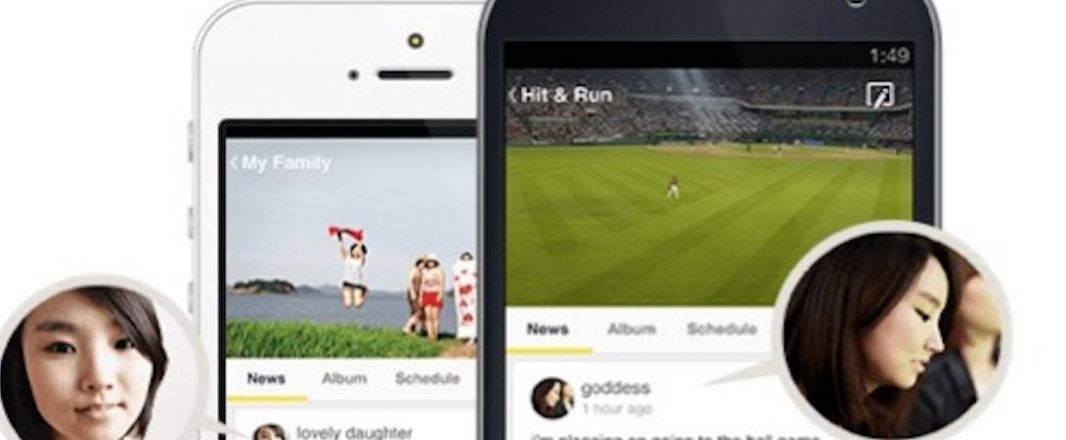
 Anyway, yesterday, I was at StartUp Asia and if there’s anything that will change social and news and travel and everything else, it will be those instant messaging apps that we all use now – from What’s App to WeChat to the Korean sensation, not quite as big as Gangnam but I suspect more durable, Kakao.
Sirgoo Lee, co-CEO of Kakao Corporation, said the company was actually founded six years ago. It launched with a lot of Web 2.0 services and failed miserably. Then in 2009, when the smartphone came in, it dawned upon the two co-founders that a service to do with communication would do well.
So it launched three years ago a messaging service, Kakao Talk which now has 80 million users with 4.8 billion messages sent everyday.Tencent, China’s largest Internet service portal, recently invested US$70 million into the company and in all, it’s raised US$90 million.
Some people say this investment could be seen as a conflict of interest. Tencent owns the other instant messaging phenomenon WeChat, with 300 million registered users as of Jan this year, but I still struggle with its Social features, Yesterday I shook it and it showed me someone that was at least 9,000km away.
Lee said yes, there is a competitive element but we hope to share ideas and learn from each other. “We will probably not compete in China or Korea.”

Sirgoo Lee
I suspect the Chinese may be learning more from the Koreans. Kakao is profitable in just three years. Last year, it made US$45 million in revenues and US$7 million in profit. “We’re just getting started,” said Lee.
The games platform, which it launched July 2012, is a strong revenue driver – Kakao now offers 100 games on its platform. According to BeSUCCESS, Korea’s leading tech start-up platform, three mobile games achieved 10 million active users within a month of their Kakao release. Most notably Dragon Flight saw its revenue increase by 2,800% after partnering with Kakao.
Gifting is also seeing revenue growth. When it started two years ago, it was selling three Starbucks coffee a day. “You shoot a barcode to your friend, your friend redeems it at Starbucks.”
Last year, it sold US$200 Swarovski gifts on Valentine’s Day and this year, US$1,000 jewellery sets are being sold on the day of love.
This week, it launched in Indonesia and Vietnam and brought K-pop celebrities to those markets which, by the way, are K-starstruck and was seeing 100,000 downloads a day in Indonesia.
Its goal is to build a mobile social platform. “We want to launch different things using social graph and traffic, we are willing to experiment and work with business partners to build a healthy ecosystem,” said Lee. There are plans to launch an online music and electronic book shop, to enable musicians and artists to market their work to fans. It also plans to expand its global user base, through strategic partnerships with platforms such as Facebook, Twitter and Google.
Beyond Kakao, Korea’s seeing exciting start-up activity. James Jung, founder and CEO of BeSUCCESS, said in 2012, 126 start-up investments were made and the Korean government has launched a 1:1 matching fund for angel investments. Remember too that Korea’s the home of Samsung which is kicking ass in the smartphone market.
Asked for the secret of Kakao’s success, Lee said, “dumb luck and listening to customers.”
Lee’s playing it humble but I wouldn’t underestimate this man and the innovation that is yet to come from this country that’s now presided over by a woman President, is constantly in conflict with its neighbor – conflict breeds innovation, right? – and churns out celebrities faster than you can say Psy.