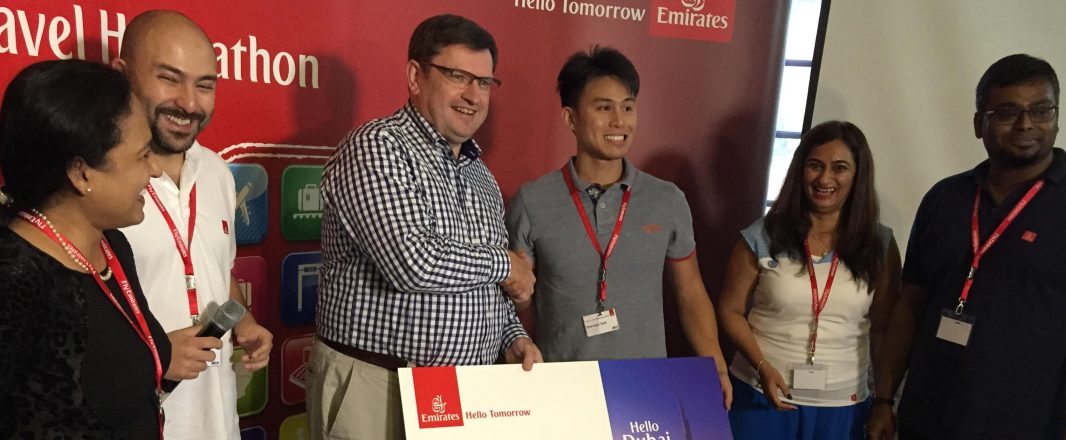
If there were some recurring themes that came out of last weekend’s Emirates Travel Hackathon, it was youths want to share, meet each other, make friends, play games and make travel fun, cheap and easy for themselves.
They also want it simple, with most saying there was just too much information and noise out there, making travel planning hard and complex for them.
And they believe the smartphone is the way to make travel simpler, more fun and more personal for them.
There was never a dull moment in the pitches made by the 28 teams which gathered for Singapore’s first travel hackathon, which was conducted in collaboration with the Keio-NUS CUTE Center and Department of Communications and New Media, NUS, with roughly half of the participants coming from students and the rest from professional developers.
Three teams from Malaysia, sponsored by MaGIC, Malaysia’s Global Innovation & Creativity Centre, also took part.
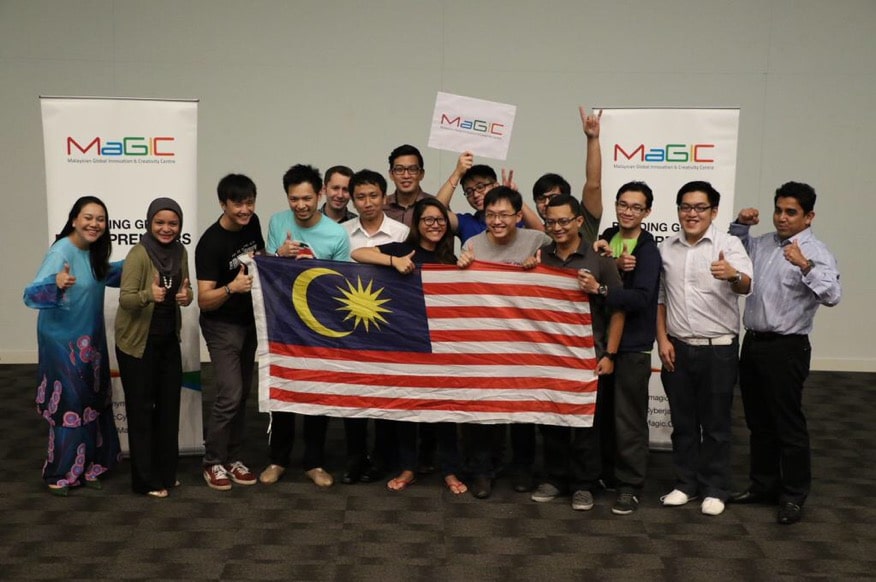
The teams from Malaysia, sponsored by MaGIC
As their canvas, they had Emirates’ list of APIs including access to LocusLabs’ iBeacons and APIs from Skyscanner, Wego, TripAdvisor and Brand Karma. Given Emirates’ scale – it flies more than 100,000 passengers a day –
The majority of ideas were social – they ranged from Tinder-like apps that allowed them to meet and travel with each other, find like-minded buddies for activities when on the ground, choose who they sit next to and chat with each other using their own app, and a one-click photo sharing network for travellers to update immediate friends and family.
It was good to know that despite the high-tech world they live in, they still wanted to meet each other physically, have real conversations and make real friends. Of course, it could also be that they don’t wish to end up sitting next to some boring old person – which underscores the nature of the world we live in, travellers have all the power these days to make choices.
The airport experience was covered by quite a few given that 80% of passengers on Emirates never leave Dubai airport and they covered apps that used iBeacon to offer sales and flight alerts to passengers, to meet like-minded people at airports and to engage in games that would win them prizes from the airline.
And the in-destination piece was also covered with solutions such as Crowdz, offering a crowd-sourcing solution to predict crowds at tourist attractions while Drive connected travellers with taxi drivers-cum-tour guides, and allowing travellers to review the drivers. Each partner offered individual prizes for best use of their APIs.
S&S, a single flight search using Skyscanner and Emirates’ APIs, offering the best fares for a one-week trip won big, with all partners picking solo entrant Sherwyn Goh as the winner. It clearly shows the trend towards “snackable content” as mobile becomes mainstream.
Judges were impressed by the well-designed interface he came up with in 24 hours, as well as the simplicity of the idea. Joe Sarre of Skyscanner said called S&S’s user interface “awesome and simple”.
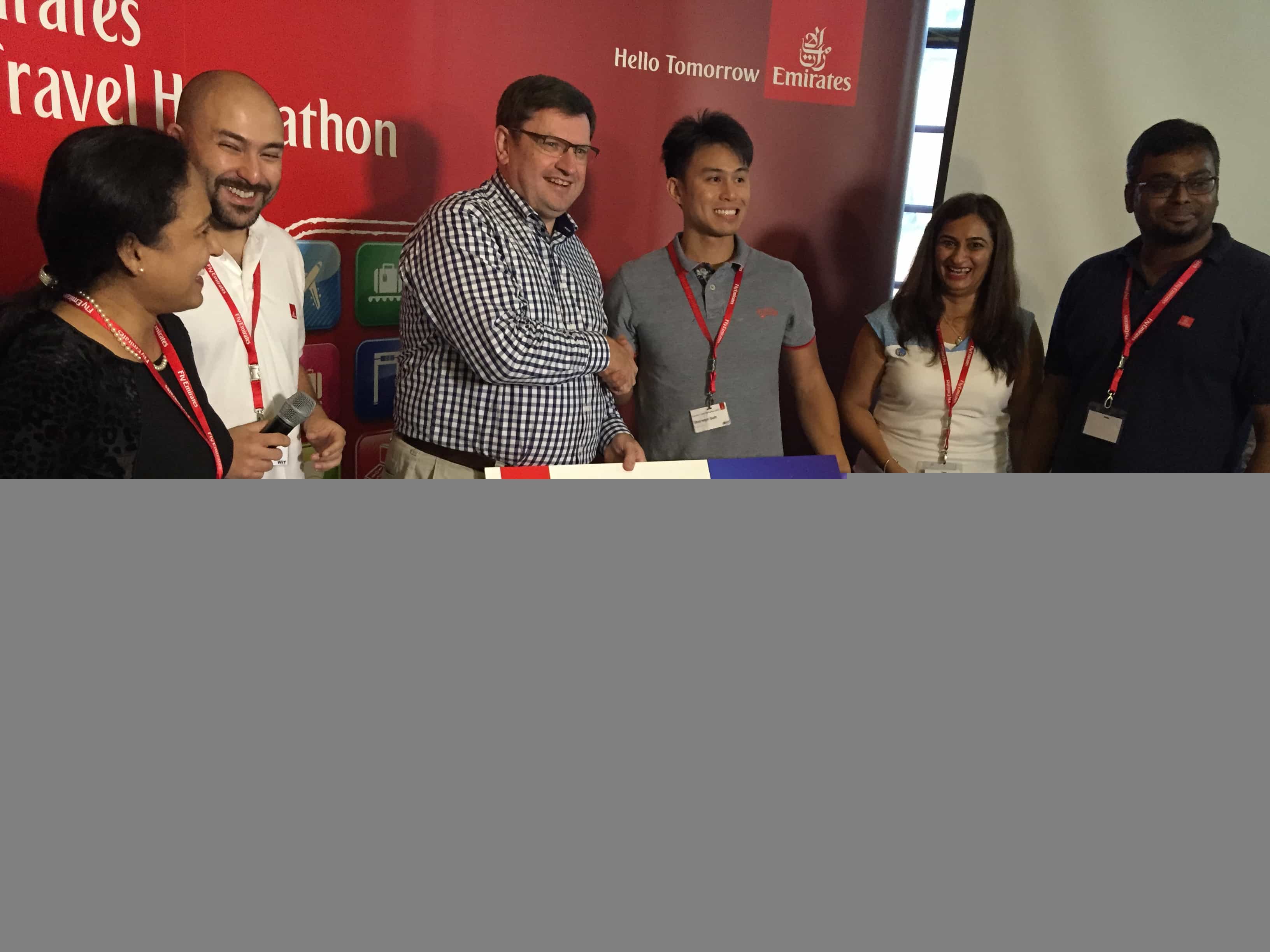
Kevin Griffiths presenting the top prize to Sherwyn Goh
Sherwyn Goh won the top prize of a trip to Dubai to present the idea to Emirates management as well as at the WIT Middle East conference in Dubai, taking place April 8-9. He was also selected to pitch at the WIT Bootcamp in Singapore, Oct 19, one of six slots offered by WIT to the participants of this hackathon.
Other winners included:
- Meet Me Halfway, an app that blends LinkedIn and Elance to create serendipitious business encounters in transit time – it won the S$2,000 second prize from Emirates and a chance to pitch at the WIT Bootcamp in Singapore, Oct 19. Also won $1,000 worth of mentoring services from Square Circle.
- Aviato – a big data-personalisation play that’s about offering customers “fewer personalised choices depending on social profiles” picked by Emirates for their $1,000 prize, WIT and Skyscanner.
- Magic Shakers, an app that allowed people to play games while at the airport. Picked by Emirates as the $500 prize winner.
- Make It Abled, a website that makes travel planning and booking easier for people with special needs – picked by almost all partners, including WIT.
- Triply, an app that allows travel planning between friends and hotel recommendations with review analysis.
Other than S&S, Make It Abled, Meet Me Halfway and Aviato, WIT’s two other slots for the Bootcamp, on Oct 19 in Singapore, went to SurpriseMe, an inflight app that allows captive audiences the chance to “play” with what’s below them on the ground while they fly, EmChat, a chat app that groups people on the same flight and priorities by interests. It was the only team that used the Raspberry Pi for their solution.
Kevin Griffiths, senior vice president, technical services of Emirates Airline said the event had produced amazing results and that he and his team were impressed with the talent and ideas they had seen from this 24-hour hackathon. 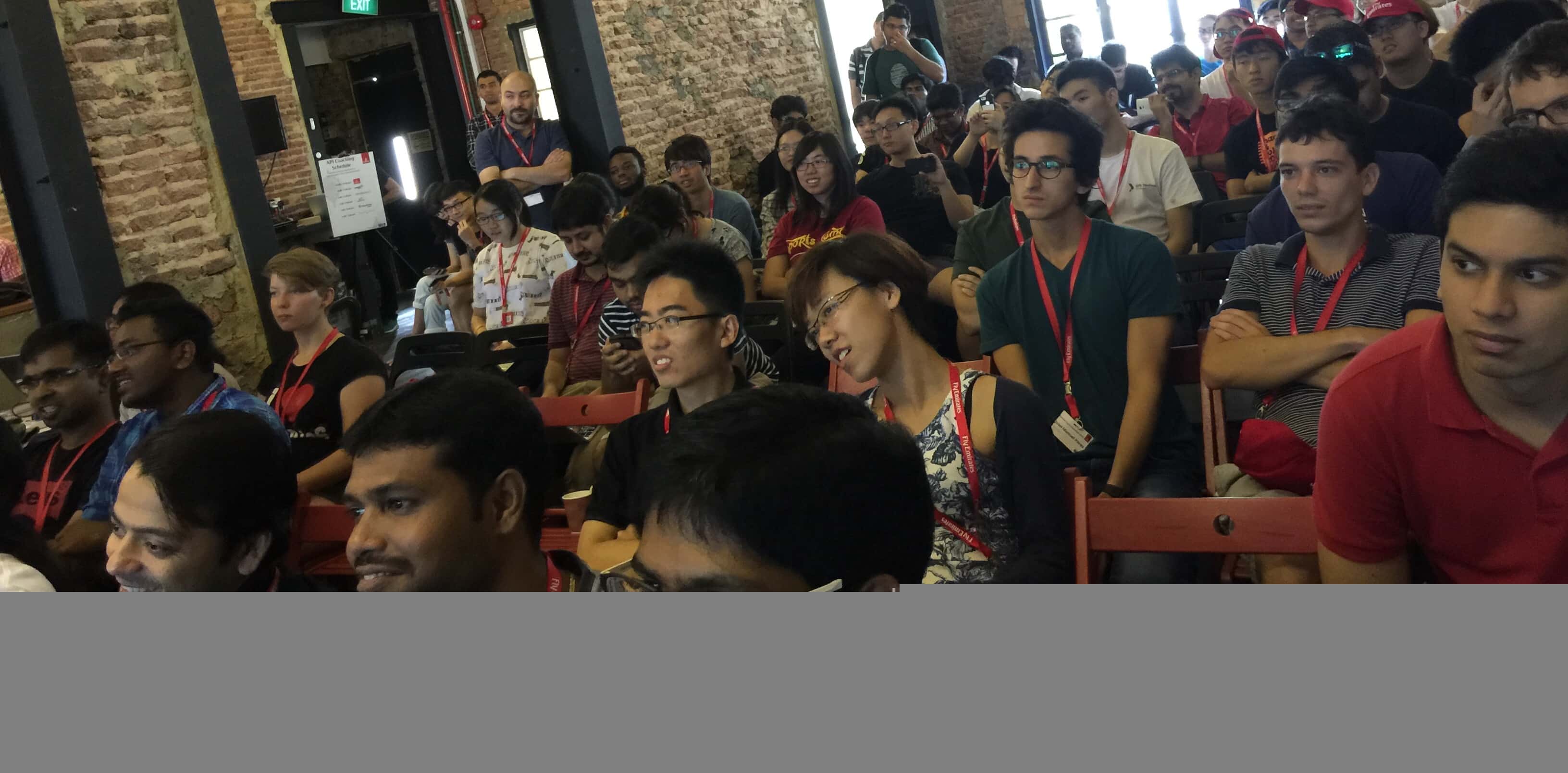
Charisse Tan of Brand Karma, who picked S&S and Triply as its two winners, said, “It was amazing how these two teams were able to create their solutions over one night. Both were designed with user experience in mind, especially the use of semantic search and data analysis to recommend and tailor the consumer’s travel journey to their preferences and actual needs.”
Aaron Hung of TripAdvisor who picked Crowdz among its three winners said, “It was an unusual approach to finding richer information for travellers researching their trips. Adding the occupancy information gives an additional piece of important information to users, and provides opportunities for the businesses.”
For WIT, the full house, the energy and enthusiasm showed for the travel hackathon proves a hunger and appetite for travel and a desire to innovate and create solutions for their own generation of travellers.