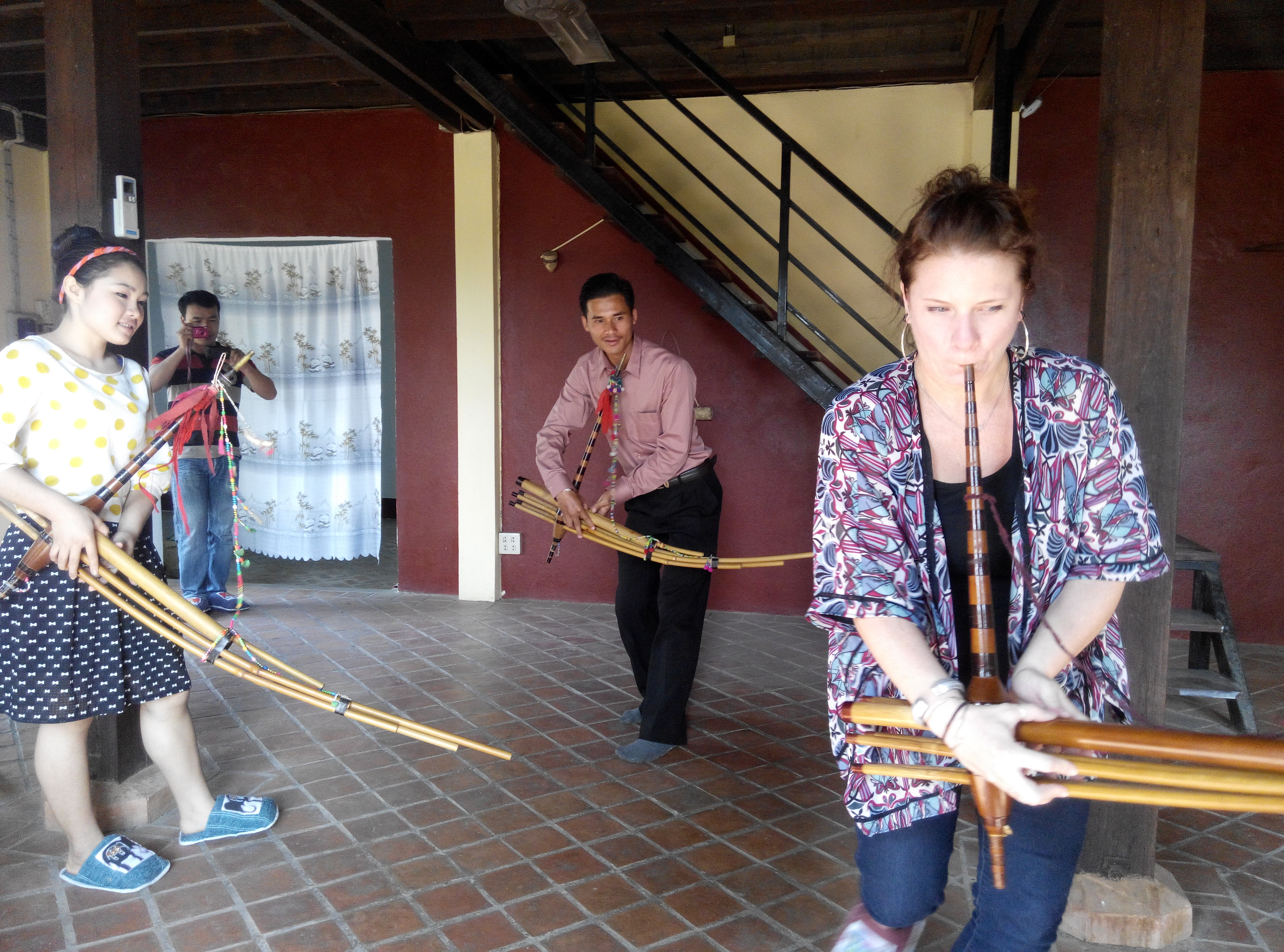
Learning to play a Hmong traditional music instrument in Laos, Luang Prabang
Q: Describe the business, core products and services in one paragraph.
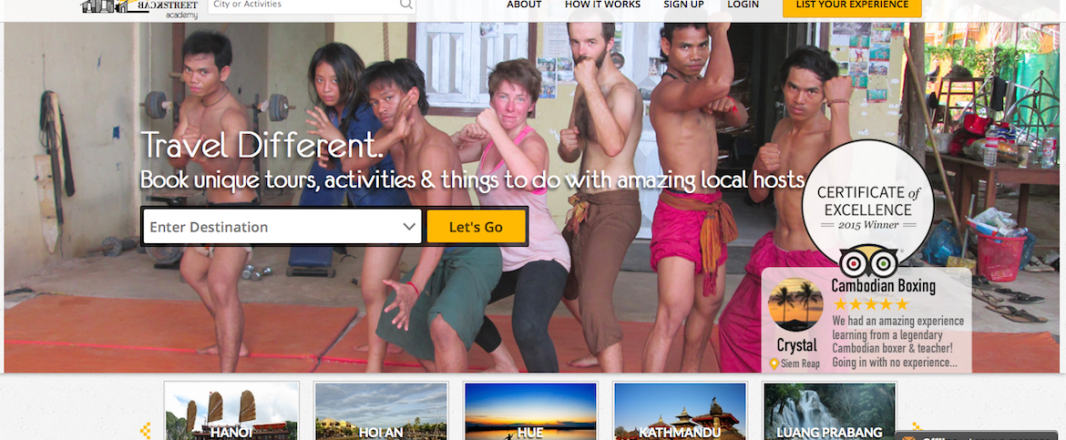
Backstreet Academy is a peer-to-peer impact travel platform offering on-demand unique travel experiences crafted by local experts in developing countries. Launched in March 2014, Backstreet Academy now has over 600 travel experiences on sale in 6 countries and 24 cities, with a focus on intimate cultural exchange and classes offering insight into traditional skills and local life such as fishing with nets, boxing with champions, carving workshops and even insect cooking classes.
Q: Who are your key customers?
Our customers are independent travelers who are interested in offbeat unique travel experiences with local people. Couples, families and people who have an intrinsic interest for culture and crafts make up the biggest proportion of customers.
Q: What business are you most likely to be compared to?
Travel activity platforms such as withlocals, trip.me.
Q: What problem are you trying to solve for your customers?
1) Finding, curating the best local unique experiences and presenting it with a great user experience. It is very difficult to find local experiences that are not run-of-the-mill, and everyone craves that unique connection or special activity that defines their trip, so we make it very simple for them to find an entire selection where they can book easily.
2) Safety and convenience is always a concern for travelers. While similar peer-to-peer (P2P) platforms offer unique experiences by locals as well, the P2P nature implies a certain level of risk and inconvenience arranging with the local host. We take care of all that through a verification & training process which has given us a zero-incidence rate and almost 98% confirmation response time within 2 hours.
3) For our local hosts we help them to solve the problem of accessing the traditionally monopolized tour industry by directly connecting them with the travelers. We provide a local call centre and translator network to help everyone (even the illiterate and people without access to technology) to create a travel activity and access the tour industry, immediately increasing their income 2-3 times directly.
Q: What financial support did you have to launch the business?
We have a group of Angel investors who invested in our seed round, a grant from Singapore International Foundation and prize money from winning a few business plan competitions.
Q: Who validated the idea first – investors or customers?
Our investors believed in the idea first, and then we subsequently validated it with the customers.
Q: What is the revenue model and strategy for profitability?
A commission based model where we take a cut of every booking, usually between 10-20%.
Q: What is the market opportunity? How scalable is this business?
The market opportunity is huge, with just the South-east Asia travel market alone generating over $46bn in turnover annually with over 107m travelers. Around 30% of this is spent on tour activities, and of these, 40% comprise individual travelers who make their own bookings, giving a market size of around $4.56bn.
Travel activity booking is the last big wave in the online travel revolution that has seen flights and hotels all consolidate under booking platforms, and it is also the most lucrative one, with the largest margins, currently at 30-40% compared to flights and hotels. The challenge is in consolidating the numerous fragmented players across different cultures quick enough and build a recognizable brand around it.
It is very scalable as the target market of travelers is very similar across the region and acquisition costs can be reduced with a high lifetime value once a customer converts to using an activity booking platform for purchasing activities. Similar to all other booking platforms, the technology and systems can be scaled to other geographies and locales with a little localization.
Q: Competitive analysis – strengths, weaknesses, opportunities and threats.
Strengths
Anil, Akash and Jamon trying out the different activites on Backstreet Academy – from learning how to tie a turban to eating tarantulas and learning how to shoot with a traditional handmade weapon.
1) Our key strength is the ability to access the entire population in a particular citybecause we are able to bridge language and technology gaps faced by most people in South-east Asia through our local call centres and community translator networks. This opens up a much bigger breadth of activities that our competitors simply do not have.
2) We are better in terms of search being ahead of many of our competitors in the cities we are in.
3) We have very consistently good experiences as proven on tripadvisor where we have a 97.6% recommendation rate and were awarded the certificate of excellence in our first year of operation.
Weaknesses
1) We are 2-3 years behind our competitors and thus have a lower number of cities, experiences available.
2) We are not as well-funded as some of our competitors.
Opportunities
1) The opportunity to be the first platform to consolidate all the activities in South-east Asia and become the main activity booking platform known by travelers, tapping into the vast $4.56 bn activity booking market.
2) There’s a trend of people going more independent, and looking for more unique and individualized experiences. They are also increasingly looking for more local connections. The long tail of travel is starting to be addressed as more activities can accommodate niche interests with small booking sizes (culture, maker, arts, etc) and we are able to address that with our multitude of long tail offerings.
Threats
1) Other travel verticals might swoop into the space in search of growth, such as Tripadvisor’s purchase of viator. Other possibilities include airbnb venturing into activities and all the other flight and hotel booking platforms creating their own version of an activity booking platform.
2) Regulation of peer-to-peer activities similar to the regulation battles faced by other sharing economy companies like airbnb. The increased cost of compliance or the possibility of a ban can destroy the business model. A large amount of money is needed to battle regulators in different geographical locales.
Q: Who are the team members and advisors?
The 3 founders of Backstreet Academy met while studying at Singapore Management University (SMU), when they were working on poverty alleviation projects investing in local entrepreneurs through the concept of micro-venture capital in Nepal.
“Seeing how local people can quickly and directly benefit from such a platform, as well as how travelers like us can enjoy unique and memorable travel experiences with local people really motivated us to build this service for ourselves and the people we were working with.” Said Jamon, the CEO of Backstreet Academy.
Co-founder & CTO, Akash Gurung, also professes the team’s passion for the intersection between travel, technology and social enterprise. The third co-founder, Anil Gurung, who currently serves as COO, even quit his high flying career with a 5-figure salary at MNC Vale, one of the largest Iron ore miners in the world, to realize the vision of Backstreet Academy.
Q: Why do you think you are the best people to make this vision happen?
We have extensive experience working in developing countries at the Bottom of the Pyramid (BOP) and understand the users and situation there. We’ve also put in a lot of effort to understand and empathize with our users, by staying with them on-site and observing how we can continuously optimize the user experience for them. This commitment makes us a really good team to build this vision.
We are also a diverse team with complementary backgrounds, being able to build a product and scale it to over 24 cities in a year. This allows us to move fast with very little overheads.
We are extremely passionate about being at the intersection of travel, technology and social impact and are thus very motivated to realize this vision.
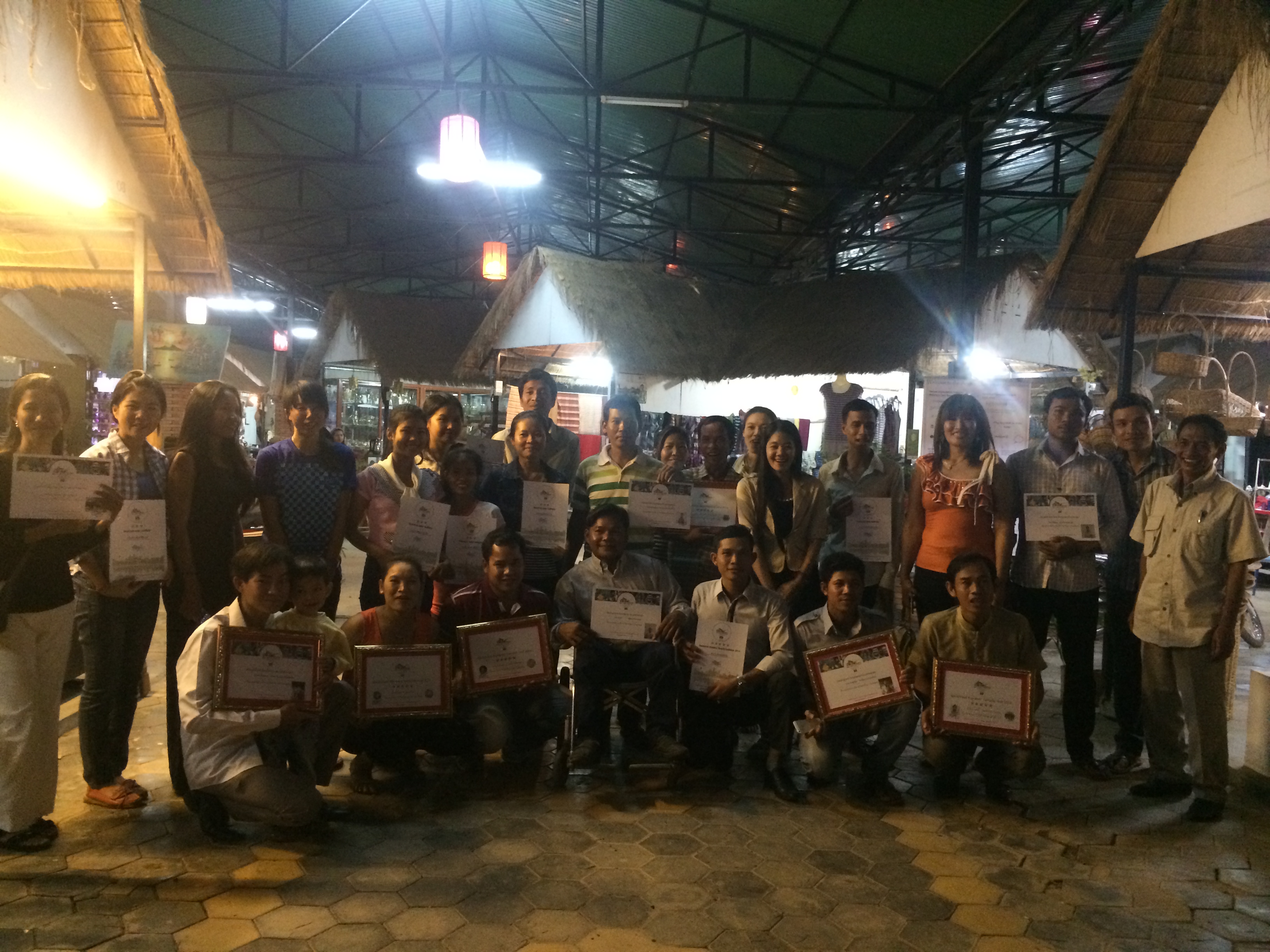
Backstreet Academy Certificate of Excellence for Siem Reap Hosts
Q: What’s the motivation behind doing this?
1) Ability to democratize travel
This product allows people who are traditionally left out to be able to directly access the tourist market, democratizing travel for all. This changes the lives of many people, creating additional income streams and opportunities as well as offering varied and interesting experiences to travelers. Similar to how other sharing economy companies broke down the barriers between people and brought millions of new unique and individualized experiences to people, we hope to do the same for travel activities.
2) Intersection between travel, technology and social impact
Being able to build something in these 3 fields that we are most interested in drives us to constantly achieve more.
3) Building something for ourselves
We, ourselves, are avid travelers, and have always been looking for more interesting things to do that are not so run-of-the-mill and allows us a unique perspective into locals’ lives & culture. In many ways we built this for ourselves as we want to be able to easily access such experiences and meet locals who are amazing at what they do easily wherever we go.