Money is always a tricky subject in the start-up world. A whole day could be devoted to hashing out the pros and cons of bootstrapping versus raising investments through a seed round.
Is it right to sacrifice the family meal for your budding business or to sell your soul for a little extra cash to get you off the starting blocks? How much is too much, and what is it exactly, that investors expect in return?
The questions are virtually impossible to answer as they depend highly on the type of business being run. Needless to say, everyone has their own opinions on the matter.
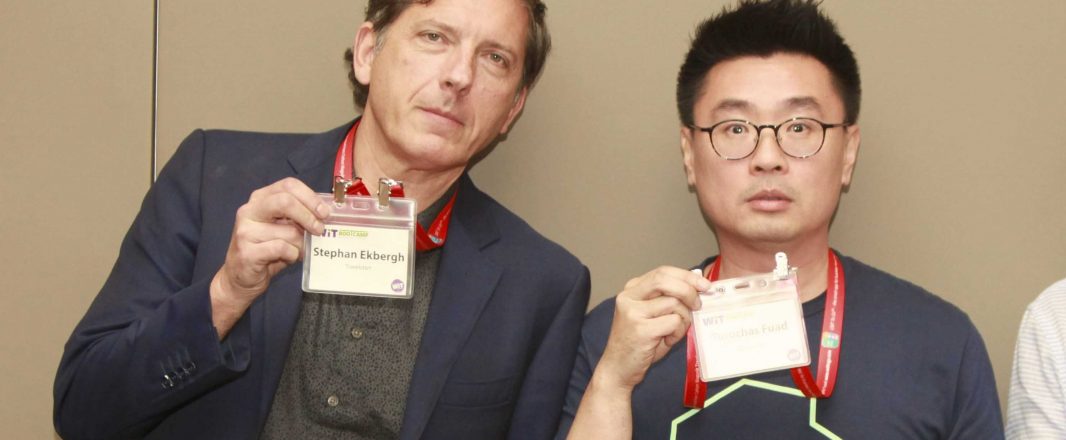
At the WIT Bootcamp 2016 at One Farrer Hotel and Spa this week, successful entrepreneurs Turochas Fuad (founder of Spacemob) and Stephan Ekbergh (CEO and founder of Travelstart) share their perspectives on the early days of starting up.
To make one thing absolutely clear from the start, no matter whether you prefer using other people’s money or self-funding your project, all entrepreneurs (both on stage and in the room) unanimously agreed that any money must always be treated carefully.
Earlier in the day, Tim O’Neil-Dunne (co-founder of Air Black Box) argued strongly “when you have money, you must treat it as your own… it is someone’s lifeblood and they entrusted it to you.”
It was a message that resonated throughout the rest of the day.
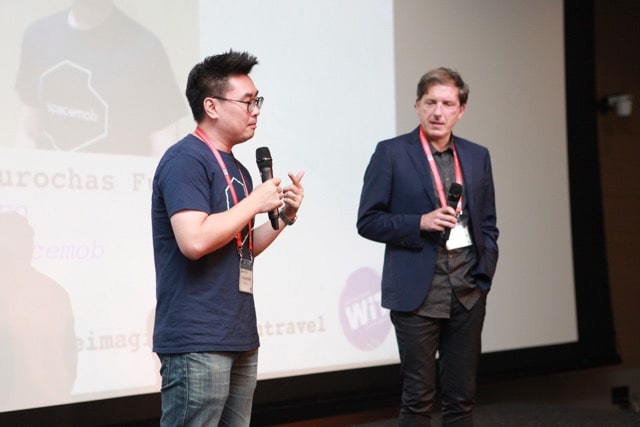
Turochas “T” Fuad launched co-working space, Spacemob, earlier this year
Fuad argued in favour of accepting funding, on the grounds that it could help startups achieve “hockey-stick growth.” However, it should not be forgotten that ultimately “investors are basically betting on you making money for them… [they] want you to make their money work”.
Investments can present incredible opportunities for companies to develop and scale but holding a fundamental degree of respect for money that is used to build your business idea, will help you make wiser decisions as the company grows.
Meanwhile, Ekbergh argued that taking investments could actually serve to hinder the growth of the idea behind the company. “I personally get more nervous handling other people’s money… [I’m] sometimes too careful when using [it].” This feeling, he suggests, simply isn’t compatible with the “need to have a lot of guts when building a business.”
Instead, Ekbergh believes that there is value is being strapped for cash. “Innovation is best under severe money and time constraint… that’s when me and my team are more creative.” In his opinion, using your own money before playing with anyone else’s is an honourable way forward, as you truly earn the value of what you create.
While differing in approach, both Fuad and Ekbergh acknowledge that taking money from investors has a powerful side effect. “[It] lights a fire under your ass,” Fuad exclaimed, “if you start screwing up… it’s not going to be good,” as you are suddenly much more accountable for your startup’s outcome.
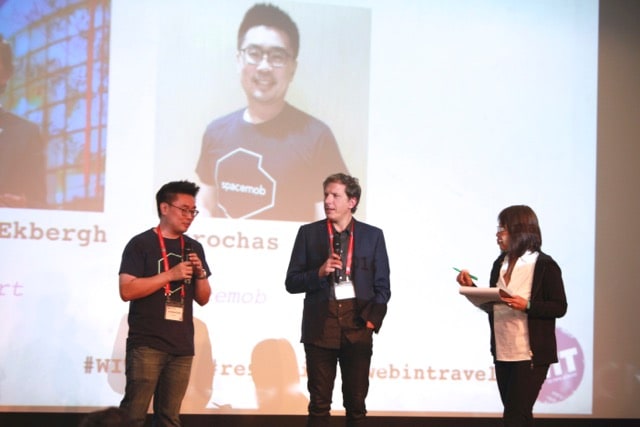
It is a feeling Ekbergh can empathise with, recounting his experience of investor funding 15 years ago. “On a personal level, I was running out of steam, I needed something to stimulate me.” He didn’t want to sell parts of his company as he’d done before, but he sought to “go out and try and find money” to meet the “tremendous opportunity” he saw in African travel market.
Both men have starkly different startup tales and though their attitudes on how to treat investment funding is largely similar, Ekbergh strongly believes that the true value of your startup lies in the blood, sweat and tears poured you have poured into it.
“Raising money is almost like cheating” he remarked bluntly. Observing how often pitch presentations entail how much money a startup raised, Ekbergh favours “stories of strife… are more real and resonate more.” They depict a greater degree of passion and commitment, rather than simply the potential commercial viability of the product.
Yet, funding yields other benefits too, like giving a company a greater degree of perceived credibility, which could serve to encourage greater investment – an important tool as the company grows. For example, Ekbergh recalls when news broke of Travelstart’s $40m injection by Amadeus Capital Partners, the company was suddenly regarded as a success story, despite not having made any change in their operations.
Beyond that, having funding also gives you the power to high a certain calibre of people to join your team, which will ultimately serve to bolster the company’s growth.