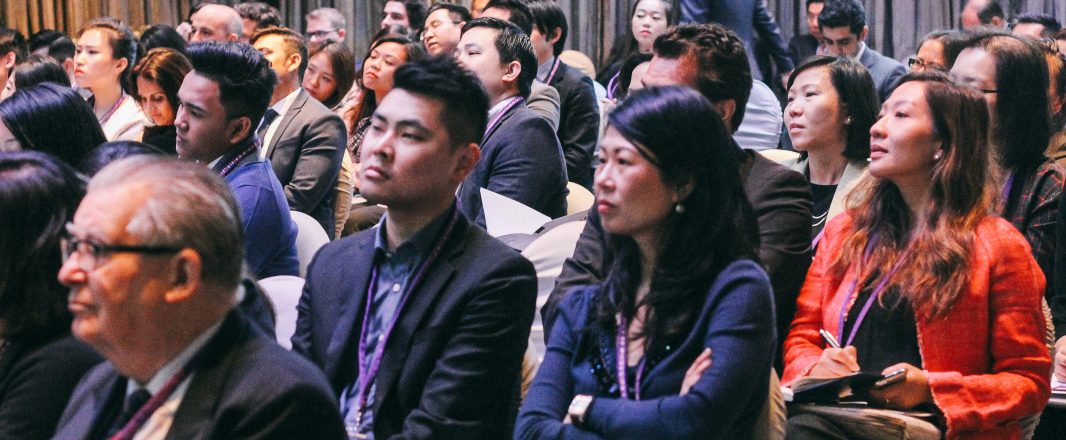
The sky was blue. The air was distinctly chilly. Hong Kong put on her best winter frock for us as we kicked off our first WIT event of the year, our conference dedicated to hospitality.
The day prior to the event, we had held a Think Tank gathering of about 20 industry leaders and we were gathered at the board room of the Above and Beyond lounge at Hotel ICON and the views were truly remarkable, the perfect setting for us to brainstorm about the future of hospitality.
Over the weekend, a new chief executive had just been elected although some said it was more like “selected”. Nevertheless Hong Kong has its first female chief executive, Carrie Lam, in its history and you can but hope she will bring positive change to this city which has been eclipsed by a rising China over the last decade.
At WIT Hospitality, a lot of hard questions were asked. This is a city that has the world’s best hotels – the gold standard for hospitality was set here, it being the home of iconic brands like Peninsula, Mandarin Oriental, Shangri-La and Marco Polo. Yet in the global context, in this era of consolidation and scale, they are considered minions in a land of giants.
And with changes sweeping the industry, largely driven by technology, and where scale will become even more critical when it comes to distribution, will they risk becoming even more marginalised if they don’t embrace new thinking into their organisations?
Giovanni Angelini, chairman of Angelini Hospitality, posed some of the day’s hardest questions. He sits on several hotel company boards and he says profits are dropping across the board, margins are shrinking, labour costs are rising and competition is rising. Given this scenario, can mid-sized groups survive in the next 10 years?
Innovation, he says, is not just about technology. It’s about thinking and doing things differently, to improve efficiencies, drive revenues and profits and create new revenue streams.
Hotel executives, he says, cannot keep asking owners to “invest in this and that new technology”. They have to be made fully aware of the “risk and opportunity” of such investments and what it means in the bigger scheme of things.
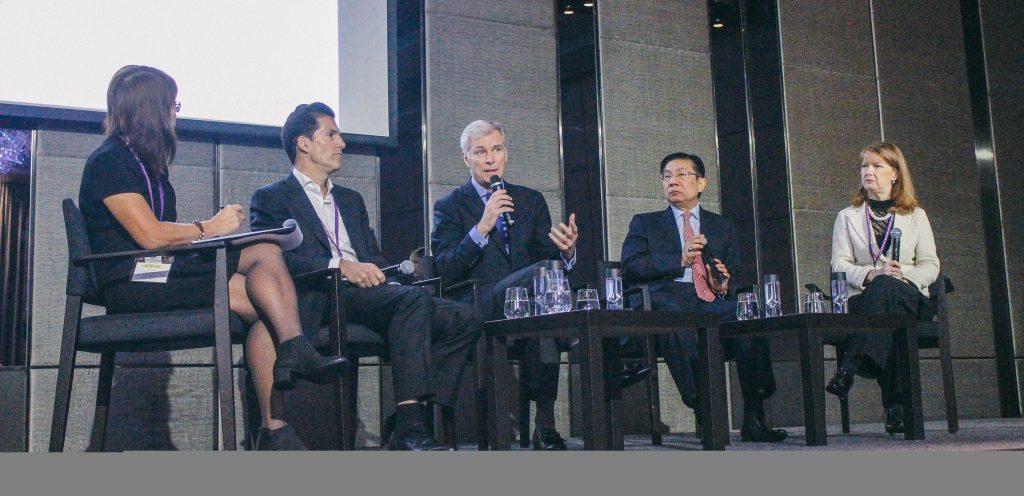
The hotel leaders Panel, from left, Markland Blaiklock, NH Hotel Group China; Symon Bridle, Rosewood Hotel Group; Lim Boon Kwee, Dusit International; and Jennifer Cronin, Marco Polo Hotels – commitment to change must come from the top
The panel of hotel CEOs speaking at WIT – Symon Bridle, Rosewood Hotel Group, Jennifer Cronin, Marco Polo Hotels & Resorts, Lim Boon Kwee, Dusit International and Markland Blaiklock, NH Hotel Group China – was a good indication that they recognised the need to open their minds to the changes sweeping the industry.
The question is what do they do about it. There’s no holding back the tidal wave of change and no point blaming OTAs and other disruptors. There’s only recognising the mega trends and figuring out how to find opportunities within those trends.
To me, there are three key trends sweeping hospitality – one, hotel companies trying to transform themselves (AccorHotels and its acquisitions in private accommodation, technology and concierge services), Asia, led by China, rising to balance out the power play so that now we have a triangle of power – US, Europe, China/Asia, and new players breaking down the hotel walls.
The same three trends are also playing out in the OTA world – look at the Priceline, Expedia and Ctrip triangle, how they are each transforming themselves with acquisitions across the travel world, and there are also new distributors snapping at their heels. Airbnb with its move into Trips, payment models like Paytm in India and WeChat and Alipay in China, Amazon with its Alexa voice (let’s not discount them just because they tried in the past and failed), social commerce sites like Tmon in South Korea upsetting the traditional order of things in that market.
With every part of the hotel wallet being disrupted – wifi and minibars are increasingly free, concierge services being replaced by in-destination apps, food delivery eating into room service – how can hotels reimagine themselves?
Take food delivery – players like Ubereats, Food Panda and Deliveroo promises orders within 30 minutes in Hong Kong. Room service within a hotel also takes 30 minutes. These players are making us think, said Bridle. “How can we get faster?”
“Can we use them to deliver our room service outside the hotel?” wondered Cronin.
From details like that to the bigger ideas – Century City Holdings, which owns Regal Hotels, is investing in startups and venturing into co-working, according to vice president marketing Colman Ho who was brought in by the owners to rethink its real estate model – it is clear leadership has to come from the top.
If chief executives aren’t convinced, then nothing will move.
Yes, the preoccupation with talent will always be there – with all the developments in the pipeline across Asia, you have to wonder where all the staff are going to come from – and yes, it will become more about the experience than just the room product, but what will happen though is that the experience will in time become the hygiene factor.
Then it will be about who’s able to create the biggest treasure chest of loyal customers and who’s the most discoverable to first-timers. For the latter, it will be hard for hotel groups to compete with the search budgets of Priceline and Expedia. It is in the former that it has the biggest opportunity – yet loyalty has also changed.
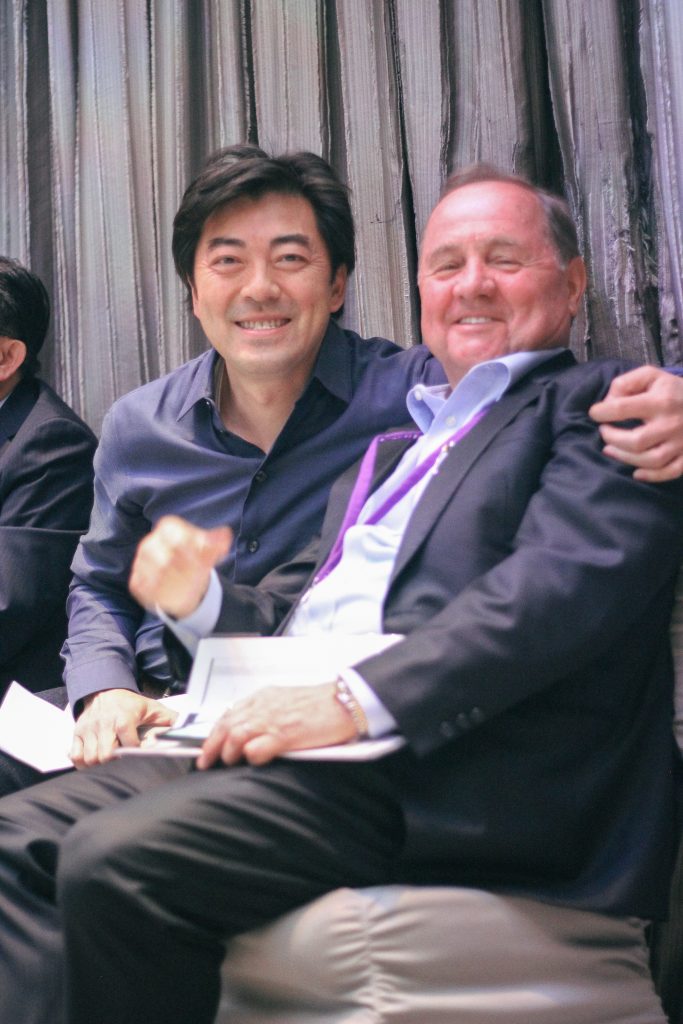
Morris Sim, SilverNeedle Hospitality (left) and Giovanni Angelini, Angelini Hospitality, asked some hard questions.
So more hard questions: Are people loyal to brands or to their lifestyle? Can hotels go from functional to lifestyle (Nokia didn’t, argued Morris Sim, CMO of SilverNeedle Hospitality, who’s been brought in by the hotel company to reimagine its business)? Why is Airbnb so much better at building community when hotels were the original builders of local communities?
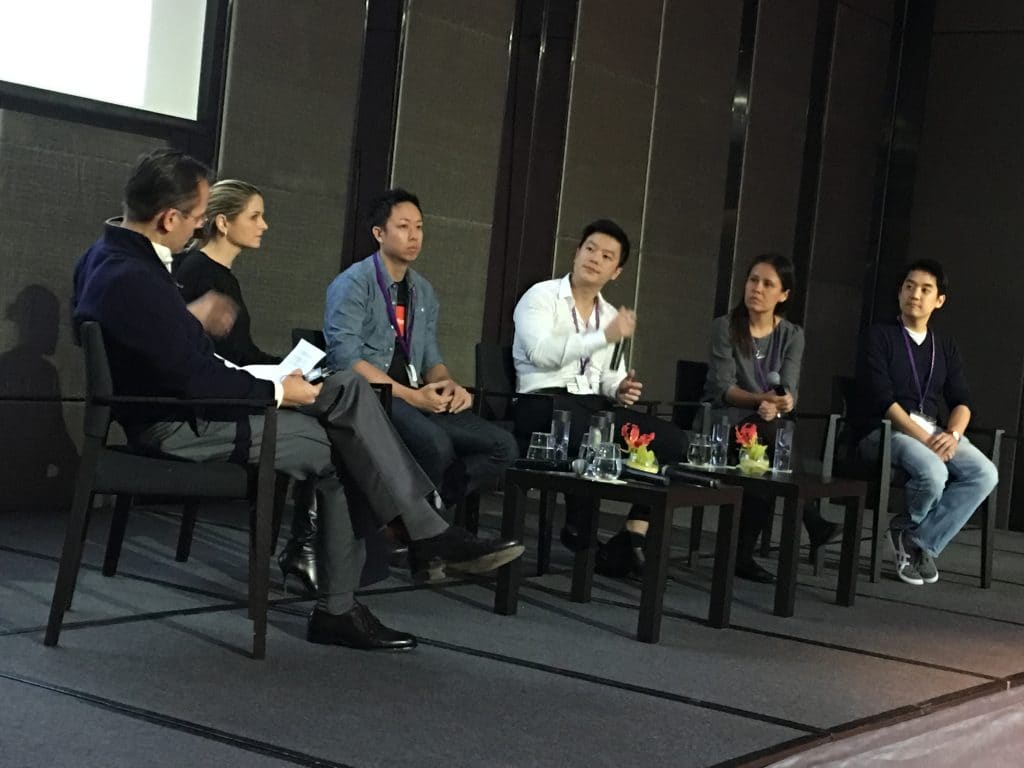
From left, Fritz Demopoulos, Queen’s Road Capita;; Lucy Werner, Google; Eric Gnock Fah, Klook; Wesley Tang, Chope; Blanca Menchaca, BeMyGuest; Roland Yau, Cocoon Ignite Ventures
A hint at some of the answers came from the panel on “The Disruption Opportunity” moderated by Fritz Demopoulos, CEO of Queen’s Road Capital. When he asked the panelists what could hotels do better, Blanca Menchaca, co-founder and COO of BeMyGuest said, “Hotels should stop trying to learn. Things are happening so fast. What I learnt as a digital marketer three years ago is no longer valid. Hire those who already know.”
Wesley Tang, GM of restaurant reservations app, Chope, said bureaucracy can be slow in in hotels, recalling how it took one US chain hotel six months to put its restaurants on Chope.
Hotel executives on the panel acknowledged they had been slow to transform. The general consensus was that they have to be less focused on standards and operations, more on marketing and innovation, they have to learn from other industries and they have to listen to and engage with new voices and players. Their challenge is shifting from an operations-focused mindset, on which they built their reputations, to find that balance between technology and humanity, as Angelini puts it.
To me, one of the best things about this year’s WIT Hospitality was that we were able to put in one room senior leaders and pioneers of Asia’s hospitality industry – Felix Bieger, whose name is immortalised at the Peninsula Hotel, was in the audience – with new leaders as well as about 50 hospitality students who will shape the future. Learning happens when there is diversity.
Truth is, none of us will survive if we don’t adapt in this period of exponential change.
To quote Israeli historian, Yuval Noah Harari, author of “Sapiens” and “Homo Deus: A Brief History of Tomorrow”, “People shouldn’t be focused on the question of how to stop technological progress because this is impossible.
“There is absolutely no way to turn back the clock, with 8 billion people returning to living as hunter-gatherers. So the question is really how to make the best of our current situation, and how not to repeat the mistakes of the agricultural revolution. With the new revolution in artificial intelligence and biotechnology, there is a danger that again all the power and benefits will be monopolised by a very small elite, and most people will end up worse off than before.”
His words apply as much to travel as to civilisation. We all have a part to play in ensuring his words do not come true in our industry, as well as our world at large.