
The recently-released Global Startup Ecosystem Report and Ranking 2017 by Startup Genome stirs up debate over the necessity of startups to thrive and if the startup world at large is overlooking the less obvious opportunities in a rising Asia, that is, its secondary cities.
The report, based on a survey of 10,000 startup founders across more than 100 cities, assessed the startup ecosystems in 50 countries based on overall performance, funding, market reach, talent and startup experience.
Its 2017 rankings, put together by Startup Genome in collaboration with Global Entrepreneurship Network (GEN) as its publication partner, place five of the top 20 startup ecosystems in in Asia, with China featuring two cities – Beijing in number four and Shanghai in number 8. Singapore came in 12th, Sydney in 17th and Bangalore in the final 20th position.
“There is always some subjectivity in such surveys. I would, for example, like to know if e ach criteria was given equal weightage when the rankings were calculated,” said Bill Liu (right), chairman and managing partner, Stream Global Pte Ltd, a Singapore-based venture capital and incubator for startups.
He said that although he wouldn’t “quarrel too much over the rankings”, he noted some of Asian cities of prominence in the start-up arena were missing. Some of these include Shenzhen (“very strong”), Kuala Lumpur (“emerging”), Jakarta (“especially in the last couple of years”) and Mumbai (“given time, will also develop”).
Another venture capitalist in Asia, while wanting to be remain unnamed, concurred saying he was surprised Shenzhen did not make the list “in spite of attracting more venture capital investment than Shanghai for several years”.
One could argue that it is too easy for foreigners to get too enamoured with Shanghai without considering the huge tiger in the south, Shenzen, which is seeing an incredible rate of innovation and invention but less talked about in foreign media circles.
Indeed, the growing prominence of secondary cities in Asia in the startup arena suggests there may be an unnecessary emphasis on the importance of being in a startup “ecosystem” in order to thrive.
“This middle kingdom in Asia is rising and brings a lot of interest. There is a growing notion that focusing on ecosystems may be pointless and indeed, the most daring of entrepreneurs go beyond the obvious. You do not follow the herd.
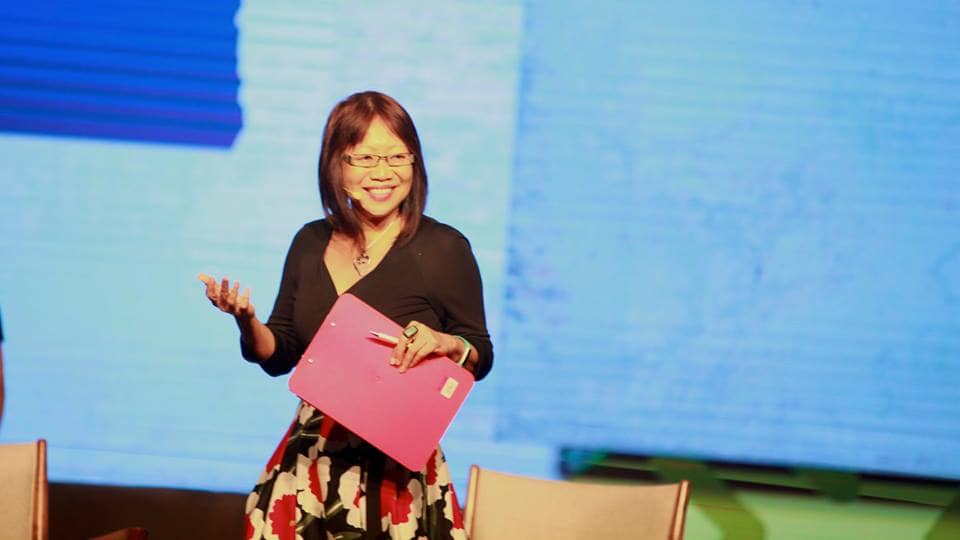 “Also, outside of the established ecosystems, costs are much lower and that is certainly attractive to startups. In our startup pitch platform, which we run twice a year, we are seeing many entries coming from secondary cities,” said Yeoh Siew Hoon (left), founder of the WIT Startup Pitch within the WIT conference platform.
Added another venture capitalist active in Asia, “Venture capitalists are already investing in startups in second and third-tier cities, globally. A typical VC in the Bay Area is only allocating 30-40% of their fund to startups in the area. Most startups need more than 100 staff, which any city can provide; it is unnecessary to be located in an “eco-system” to find talent.
“In fact, the idea of an “ex-location” package is building up steam, that is asking and incentivising talent to move out of these eco-systems to lower cost locations. Finally, with open-source and off-the-shelf tech, anyone can have access to advanced technologies; it is again unnecessary to be located near SV, Beijing or Shanghai to access it.”
One of Asia’s leading startup conferences, Echelon, run by e27, for instance is being held in Penang, Malaysia, next week, and this emerging city has become a favourite stop for digital nomads around the world. In hosting Echelon Malaysia, it is clearly wanting to make a mark in the startup world by offering a lower cost base and access to talent.
Interestingly, the Genome report gave Singapore the top ranking for talent, citing its strong performance in access to quality talent and cost. In a city known for its high costs of living and doing business, this certainly raised eyebrows.
Singapore has been clamping down on work visas in recent years to foreign service workers – what it is called the S-Pass – and a further clampdown is anticipated in the coming months. While this may not impact startups directly, since the work visas are targeted at those at the lower end of the food chain, it stands to reason that if the food chain is disrupted at any point, it will affect the entire supply chain.
Liu said being an ecosystem and having a good ranking in such surveys is more of a branding exercise and may help attract investments and talent. However, he noted that Silicon Valley was not itself a planned ecosystem nor had one for support, yet still developed a healthy startup economy.
Added Siew Hoon, “When you are outside looking in, it is easy to be blinded by the obvious but I think it’s only when you live and breathe here that you understand the not-so-obvious layers and the future for startups in Asia lies in the second or third cities.”
Last month, Fraser Thompson, director, AlphaBeta, flagging the opportunity in the ASEAN region, said that contrary to popular belief that growth would only come from the capital cities, the reality is it’s the secondary cities that will provide the spurt in the regional bloc comprising Indonesia, Malaysia, Singapore, Brunei, Thailand, the Philippines, Myanmar, Vietnam, Laos, and Cambodia.
ASEAN, he said, is relatively late to urbanisation with only 30% of people living in urban areas. This means the middle cities, with population ranging from 500,000 to 5m people, will provide a huge tailwind of growth.
Startup Genome, which began these rankings back in 2011, “provides data-driven insights to inform strategic decisions as to locations and guide actions to mitigate ecosystem weaknesses; and works with city leaders and members to capture and assess the efficacy of policies and practices, and help them learn from each other about what does and doesn’t work”.
“The Global Startup Ecosystem Report (GSER), produced by Startup Genome in collaboration with GEN, is a leap forward in our understanding of startup ecosystems and the global network of capital and connections that drive them. It also provides advanced analysis of the specific drivers of startup ecosystems, based on survey responses from thousands of technology startups from around the world,” said GEN’s president Jonathan Ortmans.