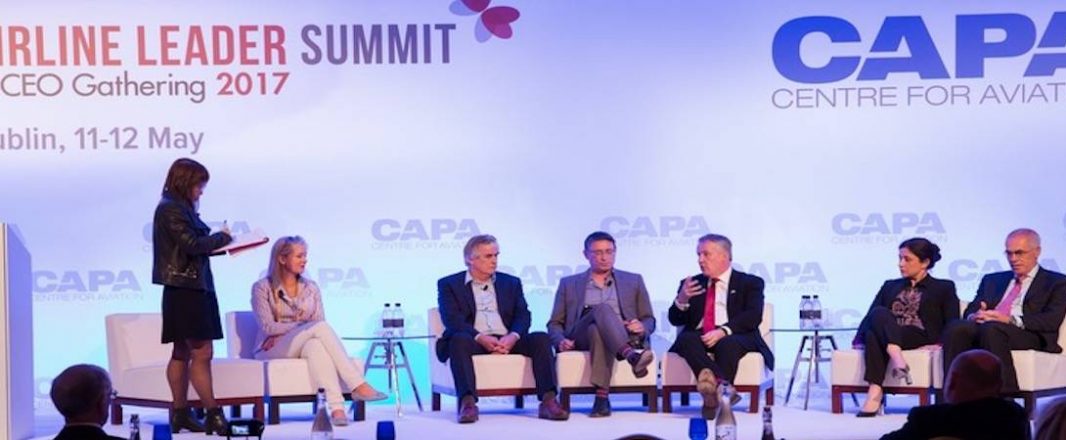
It is clear that disruptive forces are coming “faster and bigger than you think” to change aviation – the question is, are the airlines ready for it?
Peter Harbison, executive chairman of Sydney-based Centre for Aviation (CAPA), opening the Airline Leader Summit in Dublin last week, believes they are not.
As he sees it, two forces are converging to change the industry forever – one, ownership and control and two, ownership of the traveller as technology opens up the field for third parties to take over the selling of travel.
Underlying those two forces is the rise of China and new markets like Asia, he said – growing Chinese ownership of airlines as well as the rise of new travellers from a region whose propensity for mobile is higher than in other regions of the world.
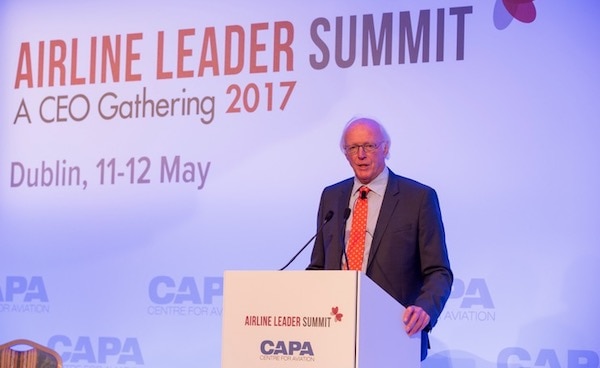
CAPA’s Peter Harbison, opening the Airline Summit in Dublin.
He said the industry had gone through three disruptive cycles in the last two decades – 6th freedom, Gulf carries and low cost airlines. Now it’s time for China, partnerships and big data to change the industry.
Pointing to tech companies such as Uber, Airbnb and Amazon, he said, “All they do is focus on data.”
Here are the key takeaways on how airlines could prepare for the new world of retailing
1. Act like tech companies, “data is not a department”
Airlines have to think like tech companies and put technology at the heart of everything they do. Similar with data – data should not just sit in a department. It should be shared throughout to allow teams to play with it, and test, fail fast and learn.
To Booking.com’s Director Partnerships EMEA, Toni Raurich Marcet, “data is all we have”, and he urged airlines to use data to “look into the past and future. You have to change as an organisation, and not have data as a department. Start looking at patterns and not be so focused on processes.”
To Willie Walsh, CEO of IAG, data is the difference between knowledge and wisdom. “We have to learn how to get value of it, to make us wiser.” Being wise means handling it very carefully so as not to turn customers off, he said. “We have sufficient information on 53 million customers to personalise but we are still tentative about how we move around that to get to where we want to go.”
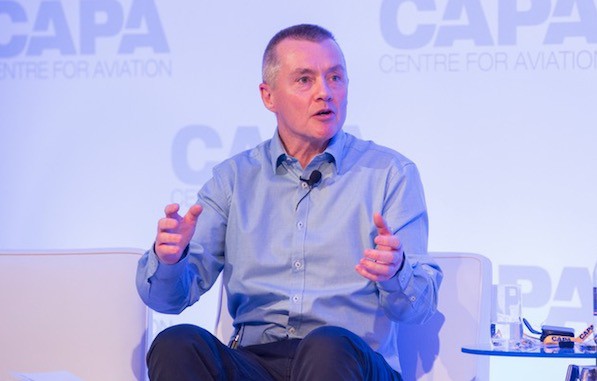
Willie Walsh: Data is the difference between knowledge and wisdom.
To Cath Lynn, Group Director Strategy & Network, of easyJet, “it’s our most valuable asset and we have to learn how to look after it.
3. Learn from, invest in and engage with startups
Pieter Elbers, CEO of KLM, said that with technology changing so fast, airlines would be wise to invest in and incubate startups. “Our cash flow would be too minimal to consider investing in the big tech giants so supporting startups would be a great move.”
Walsh, relating an accelerator programme it recently ran, said, “We told them our problems and we thought it’d take two weeks for them to come back with solutions. They did it in two hours.”
There’s a lot of learning both ways, he said, between a larger, older organisation and a young startup. “We need to have a change in attitude – to fail fast and fix things. People who are afraid to fail, that means no progress.”
Easyjet’s Lynn said airlines have to become less hierarchial in structure. “If we give our staff wings, they will fly.”
3. Start with the problem, then fix it with data
Again taking a leaf from the startup book, one good way to start using data is identify specific problems and then use data to solve it. For example, said Walsh, “credit card fraud – machines are much better at analysing that. That can save you millions of dollars.”
4. Hire for new skills
The industry in five years will look very different from today and airlines need to hire new types of people to help them with the change – data scientists, digital marketers, technologists.
Christine Ourmieres-Widener, CEO of Flybe, who started on the job four months ago has begun a three-year digital transformation and has hired a CTO to execute on it.
“Things are changing so fast that we can’t learn to keep up with it so hire people who know,” said Peter Bellew, CEO of Malaysia Airlines who said this was particularly true in Asia, where the change towards mobile is happening so rapidly.
5. Be mindful of the Google threat
Bobby Healy, CTO of CarTrawler, urged airlines to fight back against the growing power of Google in flight search. Instead of worrying about GDS fees that have been fairly flat, they should worry about the rising costs of customer acquisition a few years down the road as Google owns more and more of the top of the funnel and displaces even the meta-searches like Kayak and Skyscanner.
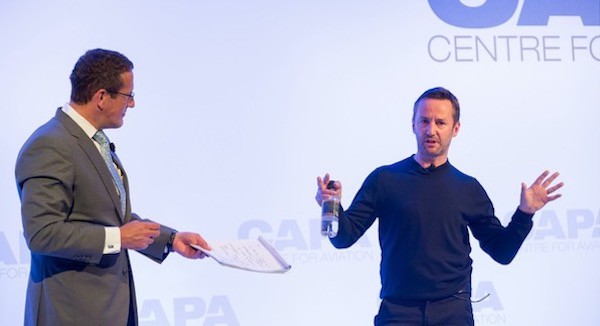
CNN’s Richard Quest (left) with CarTrawler’s Bobby Healy who urged airlines to fight back against Google’s growing power in flight search.
He proposed two solutions – don’t take part in Google Flight Search and provide the right digital product. He said, “Don’t let Google have your data unless it’s on your own terms.”
6. Become a brand
To rise above commoditisation, airlines have to build strong brands, and the car industry is a good place to learn lessons from. Citing Volkswagen, Walsh said that the company has many different brands, it’s segmented the market well and it understands consumers and how they will change.
This was the rationale behind Level, IAG’s new trans-Atlantic low cost airline which will initially operate two A330s between Barcelona and the US West Coast (Los Angeles and Oakland) and is set to take flight June 1.
Walsh, who said the A321 is a game changer for longhaul, added, “Brands are important, they allow you to compete in different segments with different propositions. If that premise holds, we will continue to see airline brands – maybe not individually owned.”
MAS’ Bellew said there’s still romance to the brand and people still love to fly. “The more we make them feel like James Bond, the more chance you have of keeping the customer.”
• All images credit: CAPA