On the Japan Airlines flight over from Singapore, I caught a television programme made by Tokyo TV called “Why did you come to Japan?”
Clearly launched on the back of the inbound boom to Japan, it basically catches visitors at Narita airport unawares, asks them their reason for coming to the country and if they find interesting stories, the crew will follow them on their trips.
I found it highly entertaining, educational and strangely moving in parts and it made me realise what an important role Japanese culture has all over the world and the influence it has on young children.

In one segment they found a young Canadian girl who had always dreamt of visiting Japan ever since she won a gold award at The International Children’s Art Exhibition (ICAE), run by Pentel, when she was six years old.
When asked if she’d ever seen the painting again, she said no and the crew asked if she’d like to see it again if they found it. A couple of weeks into her trip, she gets a call saying they’d tracked her painting to a Pentel factory somewhere in Japan, and she meets the crew there.
The moment when she is shown her painting, drawn 17 years ago, by the staff at Pentel is precious. She can’t help crying and laughing at the same time. This is the painting, she said, that changed her life. The prize gave her confidence in her talent and she pursued art as a career, and Japan remained in her dreams as the place that made that happen.
In another segment, a Guatemalan teenager is accompanied by her parents – it’s their 15th birthday gift to a girl who’s crazy about anime culture and who’s always wanted to attend the Anime Japan event, and the TV crew follows this family on their first trip to Japan, their first encounter with snow, the hour-long queue to get into the exhibition and the hours and hours spent walking the floor as their daughter lives out her dream.
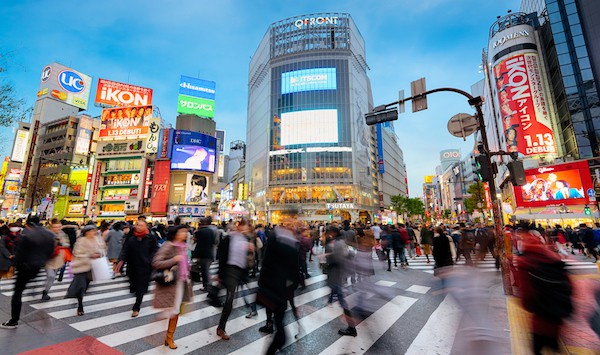
Tokyo fascinates with its food, people and architecture. (Image credit: fazon1/iStock)
It made me think about why I come to Japan, beyond business reasons. Yes, it’s the food but to say it’s all about the food is doing the country an injustice. For me, it’s the whole package – that sense of the future as well as the past – that’s found in its people, food, streets, architecture.
I fall in love with the quirkiness and creativity of its pop culture. I respect the discipline of its society. I am awed by the hospitality and pride they embody in their service to visitors. I admire the innovation that comes out of Japan.
When he was asked why he set most of his sci-fi fiction in Japan, William Gibson, author of “Neuromancer”, said, “Japan is the global imagination’s default setting for the future”, a place where people “seem to the rest of us to live several measurable clicks down the time line,” where one encounters things that are not yet but soon will be found in Western urban centers.
In preparing for World Rugby Cup in 2019 and Olympics 2020 when it expects 40 million visitors, Japan clearly has a lot of work ahead to get its infrastructure and people ready. But it’s making good progress.

Japan will host the 2020 Olympics.
This week, the Travel & Tourism Competitiveness Index of 2017 ranked Japan at 4th place, leading the Asia Pacific region by improving five positions from 2015.
Here’s what the report had to say about Japan’s performance. “International tourists continue to visit Japan for its unique cultural resources and for business travel (4th). Japan boasts some of the most developed ground transportation infrastructure systems and ICT networks globally (both 10th), which guarantee seamless internal connections and access to information and services online. Air connectivity is also well developed (18th), and provides high-quality service (24th). In addition, Japan is, overall, open to T&T activities, with relatively welcoming trade and investment agreements (35th), though it does have a tight visa policy (112th).
“Moreover, it invests almost 4.5% of its budget on activities related to the sector and has put into place effective marketing campaigns (27th). Japan has also managed to become more cost-competitive (94th, up 25), thanks to a substantial reduction of fuel prices and air-ticket taxes.
“The improvement in price competitiveness has been the main driver of Japan’s overall performance, combined with improvements in promoting cultural and natural resources. Still, environmental sustainability remains the area where Japan has yet to achieve better results. High PM emissions (93rd), overfishing (71st) and increasing share of threatened fauna (129th) are concerns both for tourism and the country’s sustainability.”

500+ delegates will be in Tokyo for WIT Japan & North Asia
On Thursday, we kick off our sixth edition of WIT Japan & North Asia. In that time, we’ve seen Japan’s travel industry evolve. This year, we will have 500 plus delegates convene in a celebration of all that is creative, dynamic and changing about travel in this most exciting part of the world.
Welcome to Tokyo, WIT-ters.
• Featured image credit: lkunl/iStock