
Winter in Sydney is very different from the winter portrayed in the Game of Thrones television series but I get the feeling that the competition for online consumers is going to get as brutal and bloody in the next year or so, and travel will be caught up in the quest for the Iron Throne.

In Sydney, even on a winter’s day, you can take a dip
The two days I was in Sydney, the sun shone and the sky was blue but storm clouds are definitely brewing in the game of ecommerce and travel, one of the biggest sectors, will not be spared.
Scale and might are going to matter even more as Chinese dragons and Asian unicorns battle with global elephants for market share in every sector of ecommerce.
Grab raising US$2.5 billion from investors including Didi and Softbank to defeat Uber in South-east Asia is one such play; Expedia investing US$350m million for a minority investment in Indonesian OTA Traveloka for a grab of the South-east Asian travel market is a travel-specific move; Alibaba investing in payment platforms in India (Paytm) and TrueMoney, Thailand, signs of the Chinese giant spreading its tentacles into an area about to be disrupted bigtime, with everyone eyeing blockchain technology as the next big disruptive force in peer-to-peer services.
At Techsauce held in Bangkok late July, investors remarked tongue-in-cheek that South-east Asia was becoming a Chinese colony. The American titans are not to be left out. The launch of Amazon Prime Now in Singapore, heralding its entry into South-east Asia, was so awaited by residents that the site crashed within 48 hours, and signs appeared saying delivery was unavailable. Rumours flew that Amazon had to resort to taxi drivers to cope with delivery orders.
e27 reported that Amazon set a new 24-hour download mark for Singapore, stating “the app was downloaded 2,500 times via the Apple Store on its launch day, which App Annie says is “at least as big” as Facebook’s highest day in 2017 (May 7).”
Whether this is the novelty effect – Singaporeans love to flock to anything that’s new and then move on to the next big thing – remains to be seen but it is clear Amazon will shake up the already cut-throat competitive ecommerce scene in this tiny city of 5.6 million consumers.
Other battles are brewing. In the co-working space came the news of WeWork acquiring Spacemob, the Singapore-based co-working startup, to spearhead its expansion into South-east Asia. With a war chest of $500m, the American giant of co-working intends to shake up the region which is mushrooming with co-working spaces from Tokyo to Jakarta. In the movie streaming service, iflix, the Malaysia-based streaming service, just raised $133m, led by US media conglomerate, Hearst, which will do battle with the likes of Netflix which is expanding in Asia.
All these will further accelerate changes in customer behavior in the world’s largest consumer market.
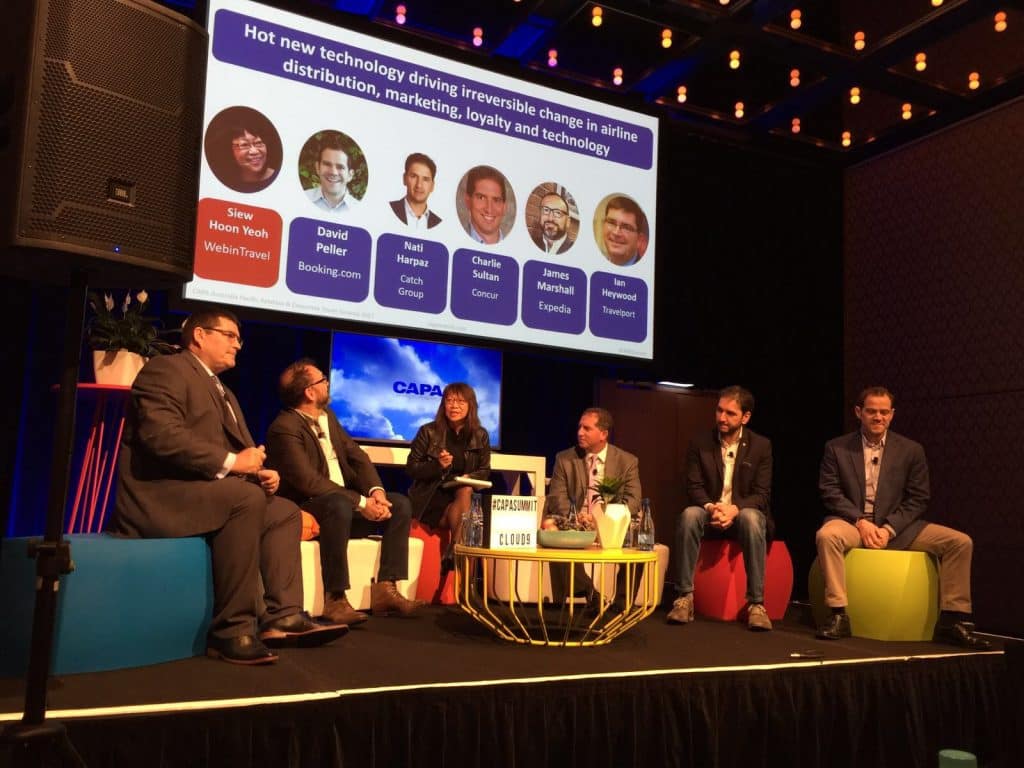
The CAPA Cloud9 panel on airline distribution and retailing, from left, Ian Heywood, Travelport; James Marshall, Expedia; Charlie Sultan, Concur; Nati Harpaz, Catch Group; and David Peller, Booking.com
Back to travel … at a panel I moderated at the CAPA Aviation Summit in Sydney, the majority of panelists regarded Amazon as the bigger threat to travel than Google. James Marshall of Expedia and David Peller, Booking.com, said Amazon owned the transaction and that made it more formidable.
Peller said, “They tried to get into travel in the US and failed, they’ve learnt lessons and they’ve got patience. They will work it out.”
Remarked an industry observer, “Amazon is roughly at the same stage as Microsoft was in the early 1990s. But back then no one thought retail had a future. Today market spaces really do matter. It is only a short time before the US ones and Chinese players start to clash or cooperate. I suspect it will be both.”
While Google keeps expanding its reach into travel – it has launched Google Flights in Australia and New Zealand and over the weekend, added Discounts to Google Trips in Australia – observers say that Google’s heavy dependence on travel for ad revenues could hold it back in making an all-out assault on travel.
Or maybe that’s just wishful thinking? Charlie Sultan of Concur said Google owns the customer data at all stages of the travel journey and that made it a formidable foe.
Nati Harpaz, CEO of Catch Group, Australia’s largest online retail group, also picked Amazon as the one to watch. With Amazon’s imminent arrival in Australia, retailers are expecting a shakeup and Catch Group should feel the heat most.
Harpaz has made significant changes to the company since he took over as CEO – the company has an approximate turnover of over $300 million per annum, and 10,000 new members a week (across four online platforms, CatchoftheDay.com.au, Scoopon, Grocery Run and Mumgo).
In June, it expanded its reach into travel, launching a luxury travel site called Bon Voyage to complement its travel and leisure business, Scoopon Travel, which targets budget travellers.
Harpaz clearly believes this approach to offer more curated choices, including concierge services, will be a defensible weapon against Amazon’s might. “Unlike other travel deals sites, all experiences have been handpicked by the team, bringing travellers five star experiences from the world’s best destinations,” he said.
Catch Group’s entry into travel follows the trend set in markets like South Korea, Japan and Indonesia where marketplaces have moved into the travel sector. Blibli.com of Indonesia recently bought tiket.com.
Startups are going to struggle and this is the year when consumer-facing travel startup brands may well face the cry “go big or go home”. Traveloka has gone big, Roomorama, which pitched itself as the accommodation sharing site for South-east Asia when it started, has gone home. Wego, Asia’s first travel meta-search, has practically moved out of South-east Asia and carved out its niche in the Middle East, last week raising an amount said to be US$12 million from a media company, MBC Group. This bring Wego’s total equity funding to US$57.5 million in five rounds from five investors.
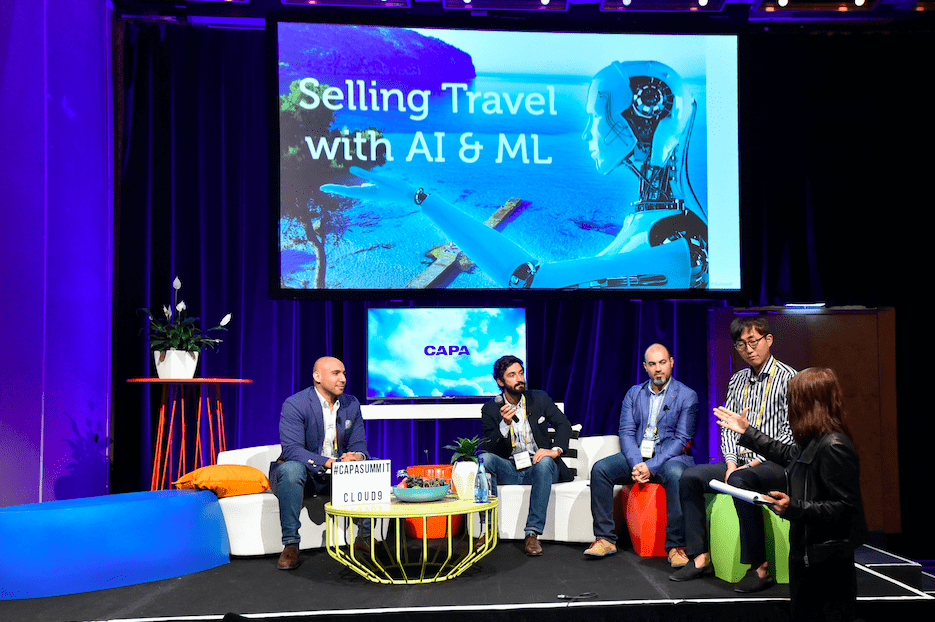
The first panel at CAPA to feature startups, from left, Nabil el-Shafeay, BeMyGuest; Enguerrand Vidor, Leezair; Hichame Assi, Hotelscombined; and Curtis Oh, PlayWings, South Korea.
B2B is seen as the safer lane right now. At the second panel featuring startups in the Cloud9 track of the CAPA conference, Nabil el-Shafeay, vice president-partnerships, of BeMyGuest, left his Expedia job in Madrid to take on a new role and life in Singapore “because I believe tours & activities is the big opportunity right now” and “B2B is the sweet spot”.
Hotelscombined, the last independent hotels meta-search (it has received no outside funding since startup in 2005), has started moving into the B2C space, building its consumer brand in markets like South Korea where, through a partnership with Naver, it has got pretty good traction. It is clear the Sydney-based business is picking its battles carefully in this heavily-consolidated space. It doesn’t stop new startups like Leezair and Playwings to have a go at building up their brands in their markets.
Leezair, a participant in the Qantas Avro Accelerator programme, works through a mobile app that uses location-based technology to offer deals on experiences like wine tasting and sky diving. Said Vidor, “At the moment you book flights first, but I want the experience to be the beginning….We’re in talks with hotels and airlines. Thanks to artificial intelligence and advanced technology we want to be like a travel agent.”
Playwings is trying to find a niche in South Korea for special flight tickets deals. According to the company, normally, flight tickets prices can be two-three times higher than the original prices depending on the booking time. To meet this challenge, PlayWings searches special ticket prices from different airline companies, including early-bird promotions and clearance tickets, and provides real-time services to its users.
CEO & founder Curtis Oh is confident there are enough new channels for startups like his to acquire customers. Korea is also a different enough market in that Google is not dominant even though it has its own search giant, Naver, which is also getting into travel.
At Techsauce, players in the general ecommerce space spoke about localisation and unfair advantage as two of the most defensible positions for smaller companies.
So it would appear that if you can’t go big and you don’t want to go home, you’d better find your lane pretty fast or else be mowed down – because you know what happens when those with might has the Iron Throne in their sights, don’t you?