In Asia Pacific, the average traveller watches about two hours of videos a day, travels five times a year, and spends $3,657 on travel a year.

Ryan Ferguson, Google: “Videos today are no longer about Christmas, no longer about one campaign at a time.”
This was part of the findings from a new piece of research by Google presented by Ryan Ferguson, sector lead of travel, Asia Pacific, Google at day two of the WIT 2017 conference.
Calling these people “Youtube enthusiasts”, Ferguson shared some data that Google had found about travellers who use Youtube as a research platform.
* They travel and spend 75% more that the average traveller.
* More than 75% own a credit or debit card, making online bookings and payments easier.
* They take twice as many international trips.
* They are thrice as likely to research on trips when they get their bonuses.
* They are twice as likely to book a trip when there is a price promotion.
* They are twice as interested in shopping and adventure travel.
* They are 2.5 times more likely to be triggered by online advertisements.
* While researching a holiday, they watch 5 travel videos per week around their destination.
Based on these findings, Ferguson said the industry needs to look at video engagement. Youtube — the video platform owned by Google — reaches 83% of audiences in Asia Pacific, he said. “It is also the world’s second largest search engine,” he said.
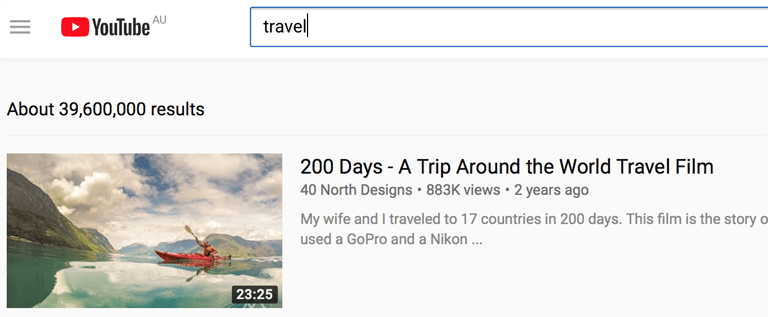
The video platform, he said, has seen queries on travel grow 16% year-on-year. About 65% of those queries are destination specific. There are 1.1 billion to 1.3 billion video users in Asia Pacific.
“Consumers are leaning into these platforms and really asking the platforms where they should be going, what does the destination look like?,” he said.
Ferguson pointed to Booking.com as a example of a company doing a good job with using video to attract travellers.
“Their propensity is to look at strategy, dig deep into data, and learn how to target audience correctly. They curated a bunch of videos specific to their audience signals and intent. They understand local profiles and search volume, so the video message they create is consistent with what users are looking for. They have driven a million engagements in Japan alone,” he said.
“Videos today are no longer about Christmas, no longer about one campaign at a time.”