
The APAC villa rental market is on the rise, according to a recent report conducted by Villa-Finder.com.
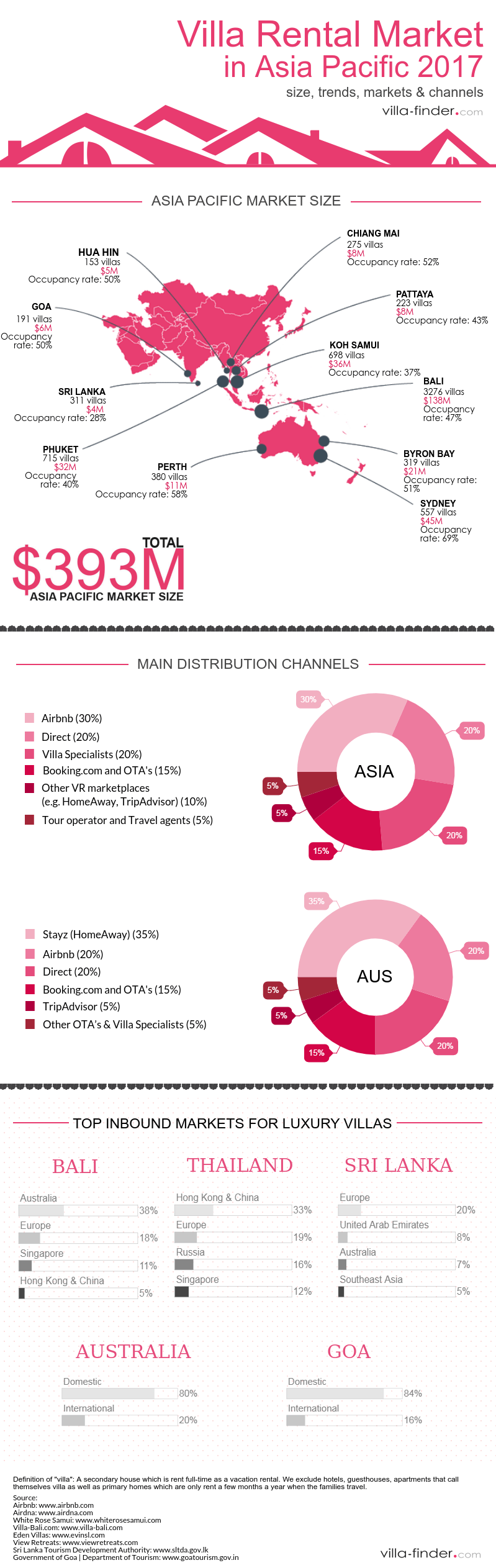
The report states that Europe and North America are at the forefront, however APAC is nipping at its heels as it accounts for $393m of the global $120b vacation rental market, growing at an annual rate of 18.3% (according to Statista).
At the moment, Bali alone accounts for more approximately one third of the total APAC rental villa market at $138m. Perhaps surprisingly, Sydney contributes the second most at $45m, tailed closely behind by Koh Samui ($36m) and Phuket ($32m). Occupancy rates are highest in Sydney (69%) and Perth (58%).
However, primary online distribution channels differ between Australia and the rest of APAC. In APAC, Airbnb takes the lead at 30%, followed by direct bookings and villa specialists, both at 20%. By contrast, Stayz (Homeaway) is the primary distribution channel in Australia (35%), before Airbnb (20%) and direct bookings (20%).
The growth of the number of villa developments is predicted to come about as a natural result of the rise of tourism in other markets within the region.
“As tourism develops, it will attract more ‘holiday home’ investors to the island. These investors will in turn attract top agents seeking alternative accommodation options for their clients. This will in turn fuel the rental market,” said Jack Eden (CEO of Eden Villas).
David Chambat (CEO, Villa-Finder.com) predicts that this rise will manifest through greater property investment in countries like Myanmar, Laos, Vietnam, China and India, on top of already thriving markets.
The study also supports the notion that there is a significant contrast in perception in the purpose of holiday villas. In the UK, for example, renting a second home is often perceived to be a possible additional source of income. In APAC, vacation rentals as considered more of a financial investment, attracting investors and more commercial developers.
For example, Ascott led a consortium in 2015 to invest US$50m in Tujia, as well as investing US$40m to form a joint venture with it too.
Lead image credit: iStock