
Travel, like every industry, is dominated by giants but Jenny Wu says there are “good seeds” of innovation happening and it’s just a matter of time before Baidu Capital picks the next big travel bet. For now, it’s banking on an autonomous future as well as logistics and e-commerce.
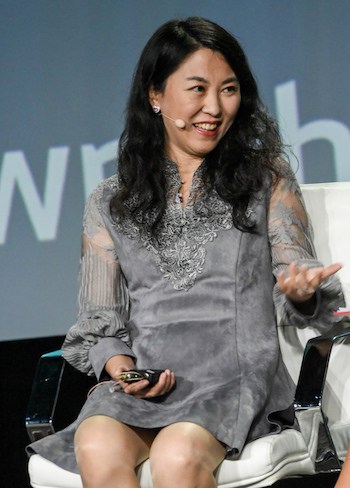
Jenny Wu is on the hunt for the right travel bet
“I won’t be sleeping tonight,” says Jenny Wu of Baidu Capital Partners, as she taps away into her WeChat over dinner, “closing a deal and there are many questions to answer.”
We are in Fort Lauderdale, Florida, and the different time zone is wreaking havoc with her fly-in, fly-out schedule but Wu is no stranger to gruelling schedules and she’s taking in stride the transition from heading strategic investments for Ctrip to now running the new US$3b Baidu Capital fund.
“It’s been a smooth transition. Initially I worked in conglomerates, then Morgan Stanley, and then moved to Ctrip where I was responsible for corporate development and investments. Moving to a PE fund is a natural extension, managing a fund is like managing a company.”
Even though the fund is barely a year old, and targeted at mid to late stage companies, it’s already completed six deals totalling RMB3 billion – and Wu is on the hunt for the right travel bet.
“In travel, you always see Ctrip, Priceline and Expedia – it’s becoming harder for anyone to build their own platform, but we see good seeds.
“It’s definitely difficult for startups to tap into the global market but you can start with one specific pain point and dive into it, and build up the first layer of the platform.”
She says travel was no different from other industries in that “every area is dominated by giants but there are a lot of new things, tech and innovation, happening” – tech to remodify existing industries, for example.
Banking on an autonomous future
One sector Baidu Capital is betting on is the autonomous automotive industry. It’s invested in Grab, Uber’s competitor in Southeast Asia, for a start and has invested in NextEV, China’s answer to Tesla, the valuation of which has doubled in the past six months. “And it’s cheaper than Tesla,” she laughed.
Baidu Capital is looking to build up the full value chain around an autonomous future.
“We want to build an industry chain around new transportation – car making to travel solutions to car services and tech-AI implementation.”

Baidu Capital is banking on an autonomous future (Image credit: chombosan/iStock-Getty Images)
Truck Alliance, matching cargo with drivers, good example of a platform play
Another sector it is banking on is logistics and e-commerce and co-related industries. One example is the Truck Alliance in China, which aggregates demand for about several million truck drivers and matches cargo with driver.
Citing it as a good example of the kind of platform it is interested in, she says the trucking industry in China is fragmented with 95% of truck drivers operating independently. “There was a mismatch between drivers and cargo and Truck Alliance solved the bottleneck, the pain point of the industry.”
The Alliance has enjoyed five years of growth and it is the number one in this industry vertical which is valued at RMB4 trillion.
“It was started by a truck logistics company which used mobile internet and AI to transform the industry,” says Wu.
“AI, like mobile Internet, will be big part of every business”
With the hottest topic right now being AI, Wu says it encompasses such a big stack of tech from voice recognition to underlying algorithms.
“There are some great new startups coming in China – it has big potential. AI, like the mobile internet, is going to be an important part of every business; it has to be covered in every business model sooner than later.”
Within Baidu Capital, she’s hired two research executives to work on AI-enabled data intelligence, and combine that with traditional research work, to assist her in decision-making.
“It’s still early stage, we are building up the database and data intelligence, and industry know-how. At the same time, we are investing in AI companies which keep us updated on the most advanced technology.”

Jenny Wu: AI is going to be an important part of every business (Image credit: NicoElNino/iStock Getty Images)
The importance of getting smart money
Wu said it was important for startups to get smart money especially at a time of over-liquidation. “There’s too much money around, it is very important to get smart money and that means investors with strategic resources, smart brains and which can be helpful to you at the right stage of the company.”
With Baidu Capital funding comes strategic resources and experienced corporate executives. “Entrepreneurs treat me like a friend,” she laughs. “Even if I choose not to invest, they still approach me as a friend – it’s great utilisation of my experience.”
With all her focus on tech, she says, “Relationships still matter, not the shallow ones. They know I can help them and I sincerely help them, and I build the relationship.”
Baidu Capital always asks for a board seat. “Sometimes we cannot get one and we ask for an advisor’s seat.”
The most important question entrepreneurs can ask investors is – what value can you bring me?
And for her, the deal-breaker, no matter how good the deal. is integrity. “The founder’s and the executives’ integrity.”
While due diligence can show a company’s track record, she says, “I have to believe in what I see.”
“I don’t allow gender to sway decisions – but maybe a little help can accelerate the trend”
Does she have a formula? “It’s more a case by case basis. For every decision I make, I make sure I spend enough time with them. We also hire independent professionals to do background checks and that’s a US$50m investment sometimes.”
She’s slightly taken aback when I ask her if out of the six companies she’s invested in, if there were women founders.
Reflecting, she said, “Only one company has a female co-founder. I meet more female founders than I invest in – I don’t allow gender to sway decisions – but maybe a little help can accelerate the trend.”
On what she thinks of gender quotas, she confesses to mixed feelings. “Once people hire women, they realise they are great managers, much more capable, reliable, loyal and hardworking.”
Baidu Capital’s focus is clear – it picks only the number one or two in each segment. It doesn’t look at middle or smaller companies.
It identifies industry sectors with great potential, spots leaders with potential and watches the radar.
Coming back to travel, Wu is bullish on the future of Asian tigers versus global elephants. “In China, we have local players. Ctrip has greater potential to expand. It is in great shape.”
As for marketplaces vs specialists, she believes in a combination of both. “Platforms with specialisation are good. It’s hard to be a generalist.”
With the spotlight on tours & activities, Wu is eyeing the sector in both B2B and B2C spaces.
What’s overhyped is AI but what’s underplayed is the potential of traditional models and companies that may have fallen behind. “We are looking for disruptors in those industries.”
For example, she points to workplaces which are being disrupted by co-working models like Youwork in China. “It solves a real pain point in the workplace. I like their business model. In two years, their speed of expansion is impressive. I think this is a very important trend.”
She adds, “I like entrepreneurs who have vision and action – they take a big idea and work step by step to get there.”
And the dumbest thing investors do? “I believe in the fundamentals. For each company I invest in, I make thorough study and due diligence. I do not like investors who just follow the trend, hearsay and do the investment. They scare me.”
• Featured image credit: tostphoto/iStock-Getty Images