
“Want a night out with sluts?” solicited a tout on the strip, as a group of men walked past. Getting no interest, he changed his tack. “We have bible studies too.”
Welcome to Las Vegas, a place for every taste and desire. You want it, you will find it. I wanted Korean food. I got it in Chinatown. I wanted a taste of hell. I got it at the new Hell’s Kitchen, the Gordon Ramsay eatery that’s decked out to look like his TV show, and is more show than substance, really. I wanted to try a new show. I got it with “Opium”, an adult-only show that is supposed to be about space travel and is anything but.
The big furry bears are out at Bellagio, and this year, they’ve thrown in horses and soldiers as well to usher in the holidays and what will be, for most of the world, peak travel season.
At Explore 18, the new name for Expedia’s annual partner event, the talk was all about travel. The good news is, despite the threat of trade wars, softening of China, Brexit uncertainty and volatility in Latin America, prospects for travel remain strong on all fronts and, it seems, more necessary than ever in a world that’s increasingly divided.
Said Mark Okerstrom, president and CEO of Expedia Group, “More than ever, travel is important. Technology is driving us apart, travel brings us together.”
It is the reason why chairman Barry Diller remains in travel. “Travel is romance,” he said.
“It’s the ability to get yourself away from yourself, into things that are occasionally healthy.”
And so at the conference that brought together more than 4,500 delegates, as well as some of tech’s biggest rock stars, namely Dara Khosrowshahi (Uber), Randi Zuckerberg (Zuckerberg Media) and Kara Swisher (Recode), we learnt about what Expedia Group, which is closing in on becoming the world’s first $100 billion travel company, has lined up for 2019, and trends that will influence our industry in the next 12 months.
Here are my key takeaways from the event.
1. In the age of AI and machine learning, love and human creativity will triumph
In almost every talk, AI and machine learning were held up as the new big thing that will change business and humankind. Barry Diller said, “We are just now getting to the moment when we are altering the definition of humanity. I can’t imagine anything more interesting and frightening.”
Bringing it down to the business level, John Kim, president and CEO of HomeAway, reminded us of how much faster change was happening and the impact this would have on jobs.
Fast food: McDonald’s only started accepting credit cards in 2004, today it has kiosks in London and plans to open 1,000 kiosks every 90 days. These kiosks enable the company to track stocks and decrease the costs of doing business. A total of 3.7m people are employed by fast food – 60% of them are under 24.
Ride sharing: The industry has grown 44% in the last 24 months and is projected to grow another 12% next year. The costs of ride share are coming down, and it’s making personal car ownership three times more expensive. Singapore is testing a self-driving taxi fleet service and Google Waymo will launch driverless car service this month. An estimated 11.7m jobs will be impacted by self-drive cars, said Kim.
Retail: AmazonGo, which now has seven stores nationwide, plans to open 3,000 more in the next 36 months. Target, which opened in 1902, has 1,839 stores. An AmazonGo store only takes three people to operate, Target employs 350,000.
Kim said that 800m jobs will be replaced by 2030 – that’s the entire work force of the US and Europe, multiplied by 2.5. “How do we compete with machines?”
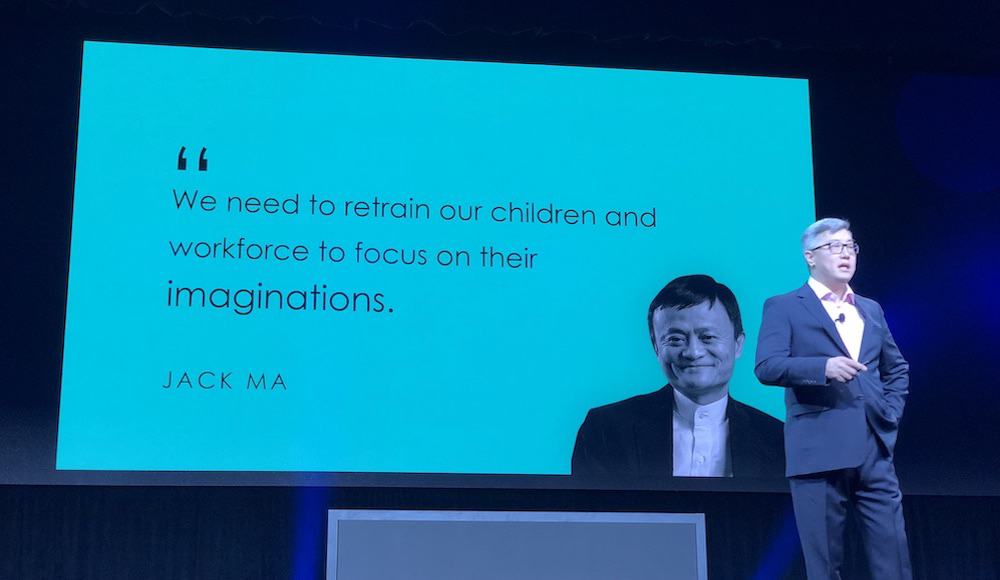
The answer is you don’t. “Independent thinking, teamwork, care for others – these are the soft parts. We need to teach our kids sports, music, painting, art. We have to make sure humans are different from machines.”
The good news is, as much as tech has driven it, travel is a human-touch industry. Referring to Alibaba’s Jack Ma speech in Davos on the importance of LQ, he said “Love means kindness, humility, sincerity, courtesy selflessness, all the qualities that build hospitality.”
“Being human is our competitive advantage and while tech is replacing humans, this is forcing us to be more human.”
2. Everything is media and everyone wants content
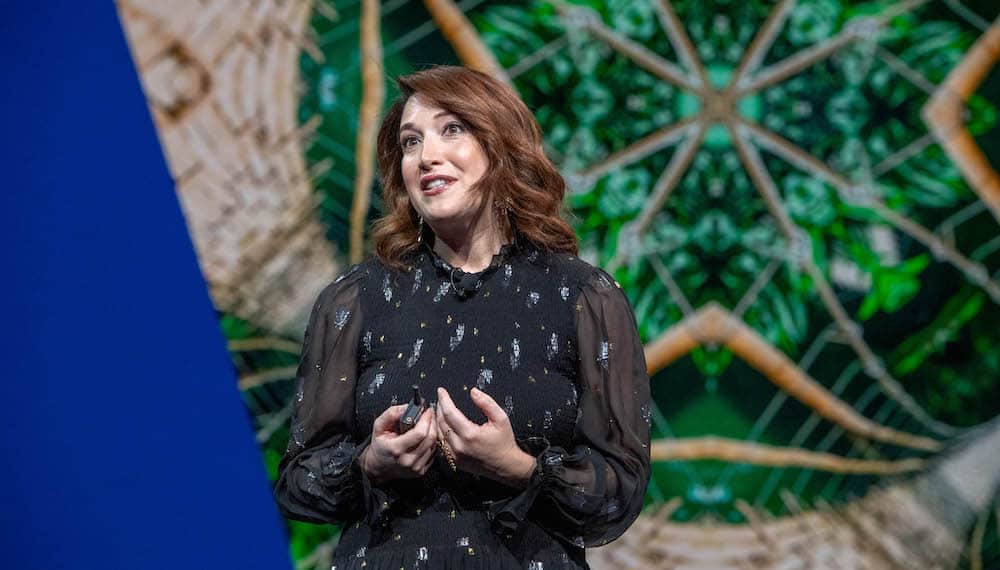
Randi Zuckerberg, who left her brother’s company “because it’s complicated” to start her own media agency, Zuckerberg Media, spoke of how everything is now media with companies like Red Bull creating content out of its live events and Coca-cola with its selfie bottles.
“All companies now need writers and content creators because consumers expect companies to give them content.” And other than video, she believes in the rise of longform and audio, with podcasts rising in popularity because of its ability to create “intimate moments” and capture the listener’s undivided attention.
So content has to either stand out (which is becoming increasingly hard), has to be useful (for example, instant customer reviews that help travel suppliers improve customer experience real-time), has to be relevant and personal (curated, personal recommendations driven by both machine learning and human creativity) and has to be immediately transactional (easy to book and pay).
3. Voice is still not a big thing, but now you can not only chat but see bots
It is clear that voice is still not there yet in inspiring or transacting. This channel still has a long way to go in travel, which needs a lot more information to plan than buying a pack of chips. In a demo of Expedia’s voice feature in travel planning, I found the interaction slow and laborious, and in an age of short attention spans – 3 seconds is all it takes for us to lose interest on the web – voice will need to sound like Scarlett Johansson in “Her” to hold even my interest.
President and CEO Mark Okerstrom commented that in travel shopping and booking, “it’s hard to imagine a world where the best way to communicate the answer doesn’t involve a photo or image” and that Expedia would likely create a more “integrated experience,” offering a visual on-screen component to complement information received via voice.
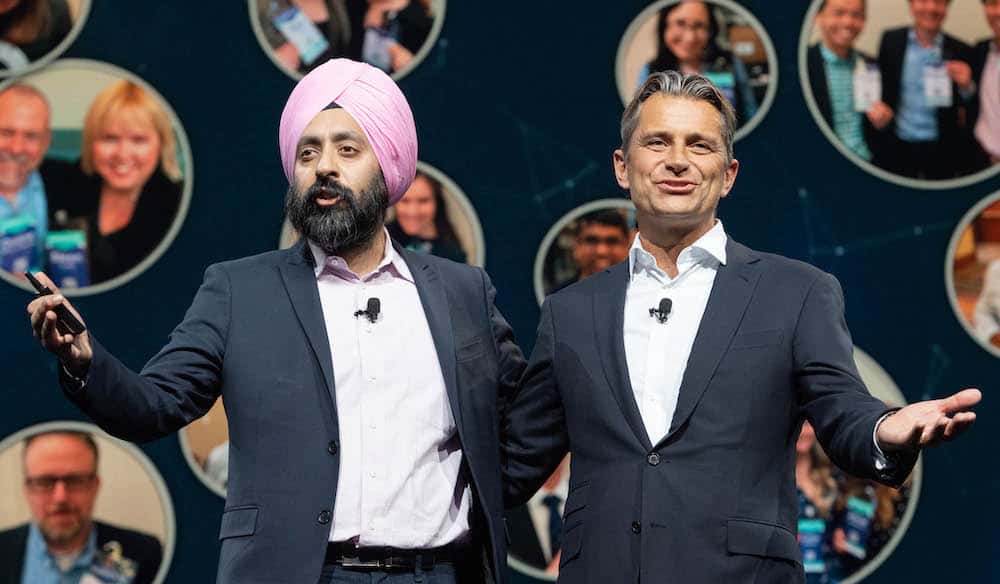
So enter “Cyril bot”, a video chatbot which took the form of Expedia Lodging Partner Services president Cyril Ranque. This AI-powered bot will be launched on the Expedia Partner Central Platform in the first half of next year.
Aman Bhutani, Brand Expedia group president, demonstrated the new technology with several voice-activated video bot demos, which focused on how the tool could help drive revenue for a lodging partner. By leveraging historical demand data, the hyper-realistic “Cyril bot” was able to tell the partner the number of additional rooms that should be made available on a specific date to maximise revenue and, with approval, instantly add that inventory to Expedia.
Said Bhutani, “When we think about our lodging business, we have created a lot of tools. But we realised earlier this year that we now need a piece of AI to actually recommend which tool to use. Because if you are trying to act on something, should you be using a promotion or a travel ad or additional inventory?”
The bot isn’t limited to video or voice but could also be used in a chat format. The bot also has the capability to operate in different languages and can be personalised to meet the needs of each partner.
4. Bots in customer service and robotics in cleaning rooms
Bots though have their place in customer service, said Bonni Simi, president of Jet Blue Technology Ventures, who said there were about 100 startups trying to solve the customer support problem. “Omni channel communication is how brands should be communicating with customers,” she said.
Two other areas that Jet Blue Ventures is active in is AI and machine learning – for example, tools that predict weather better than current weather stations or air traffic control.
Greg Mount, president and CEO of Red Lion Hotels, said the group now has a robot that can clean a room completely, “it just can’t clean the bed”.
“It will be a combination of robotics and human touch that will make it work and it’s coming at us quickly. For example, think of a robot that recognises when a large meeting breaks, and wakes up and cleans the room before the next meeting. The cost is surprisingly reasonable,” he said.
5. Like it or not, hoteliers, learn from alternative accommodation
It is clear there is growing concern among hoteliers on the growing power of the HomeAway business and whether this would distract Expedia Group from its core lodging business.
Okerstrom and Ranque took great pains to assure hoteliers that alternative accommodation catered to different customers and trip types but Okerstrom did encourage hoteliers to step up their game.
“Do you know how hard it is, as a family of four, to book connecting hotel rooms online?” he said. “It’s impossible. Hotels have the inventory, but the data is just not there. I think they need to wake up and actually make that available and be competitive for families.
“I also think there are opportunities for people who want a kitchen or a little more room. Our [hotel] chain partners have some incredible product, and we need to showcase that and advertise that more effectively.”
6. The world swings between “biggest” and “most loved”
Ben Blake, president of Hotels.com, whose brand is seeing two thirds of traffic coming from mobile, sees a world which will polarise between “the biggest” and “the most loved”.
The biggest knows how to manage complexity on a global scale and make it locally relevant. For example, the scale that Expedia Group’s engineering team is pretty staggering – 1b peak searches and 2b lodging updates per day, 58m verified reviews, 67 languages and 93 currencies.
But customers don’t care about that. What they want, said Blake, are relevance, trust, convenience and value and if there’s any form of tension, 87% of consumers said they would take their business elsewhere.
Hence companies that are masterful at taking data to deliver relevance to consumers will win. For example, Blake cited Alibaba on the one hand where you can find everything, is convenient and is trusted and on the other, a business like Man Crates, which offers gifts for the man who has everything, using “specialisation and shared passion”.
7. Asia is going its own way
It was interesting to see how differently Asia is evolving in terms of how travel is booked, with mobile the clear differentiator but packages as well showing strong growth.
Presenting booking trends, Ait Voncke, senior vice president, Lodging Partner Services, said the group was seeing strong growth in Japan, driven by mobile, and demand for packages from China growing nine times and a doubling in Korea.
The top five destinations for Asia were Tokyo, Bangkok, Seoul, Hong Kong and Taipei whole for flight and hotel, the top five were Bangkok, Bali, Tokyo, Phuket and Hong Kong.
“I am seeing things in Asia that I don’t see in the rest of the world yet. In the US, our phones may have about 20 apps, but in China they have more than 100 apps and there’s such a growth in live streaming with dedicated channels to fashion and travel. People are also booking travel through chat and they use emoticons rather than words – we have to adapt to that.”
8. Don’t lose your instinct and marry curiosity with talent
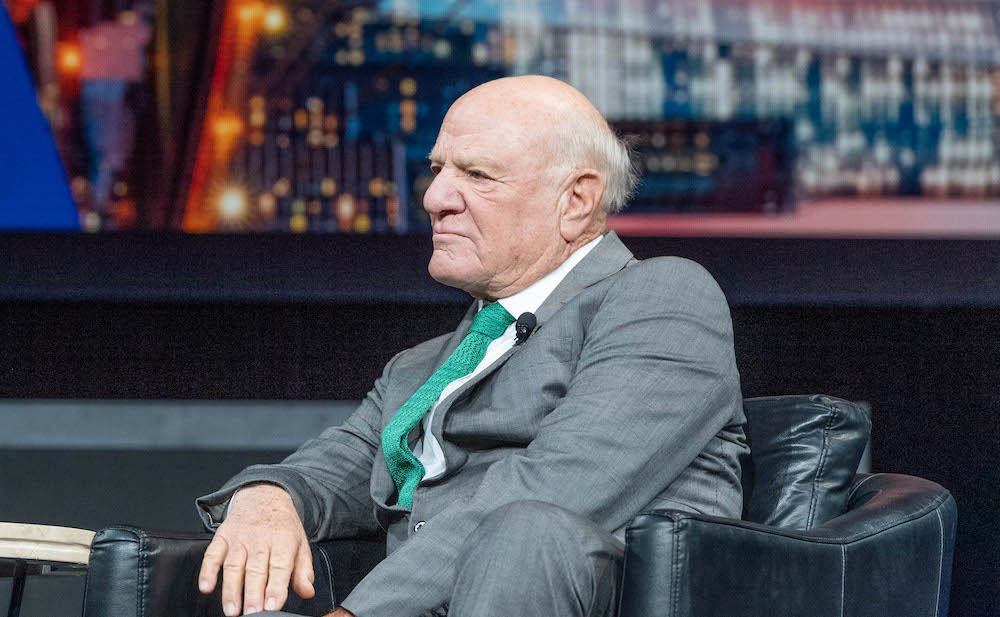
That’s the advice from Barry Diller, who’s built a media empire based on those pillars. Speaking about leadership, he said, “All you have are instincts. Leaders at the senior level, they are editing. I don’t think research helps. That editorial function, its only advantage is instinct.
“What I have learnt is you get to scrape your instincts – take all the experience but remember experience hurts instincts, brush as clean as you can so when a new idea comes in, you can hear it. Put your instinct to work. I brought that into the Internet. Know what your talent is and marry that with your curiosity.”
Curiosity is related to instinct and what he’s really curious about now is AI and if he could, he would get into it but “I doubt I have the brain power”.
So for the next three years, what Diller’s going to do is build a private island in the middle of Hudson River that will have a park and performance centre. “I love creating spaces that celebrate art and creativity.”
So even as we welcome the age of artificial intelligence and machine learning, let’s not forget to celebrate human creativity in 2019.