Hotels have made a righteous first step with their efforts to eliminate single-use plastics with a fervour not seen since they decided to place tent placards in bathrooms, describing their towel renewal policies.
The pressure on businesses to cultivate conservational practices is high and it’s positive to see how receptive brands are to it. The flash flood of press releases that have seeped through my inbox over the past year, with hotels and F&B businesses declaring their commitment to eliminating single-use plastics over the last year could fill a landfill (especially if I’d printed them).
The war waged on single use plastics is now considered the bare minimum when it comes to brands cultivating sustainable practices. So, companies must try to find acceptable alternatives to the products they use, think more broadly about what achieving ‘sustainability’ actually encompasses, and still yield a profit.
Understanding the fundamentals and each part of what makes a business both sustainable and profitable takes work, as Cempedak Island, a luxury private island in Indonesia’s Riau Archipelago, will attest.
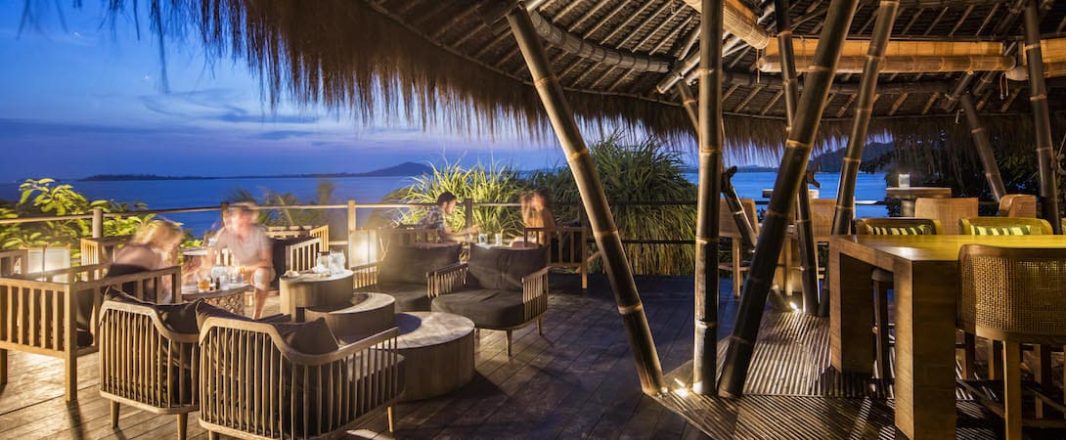
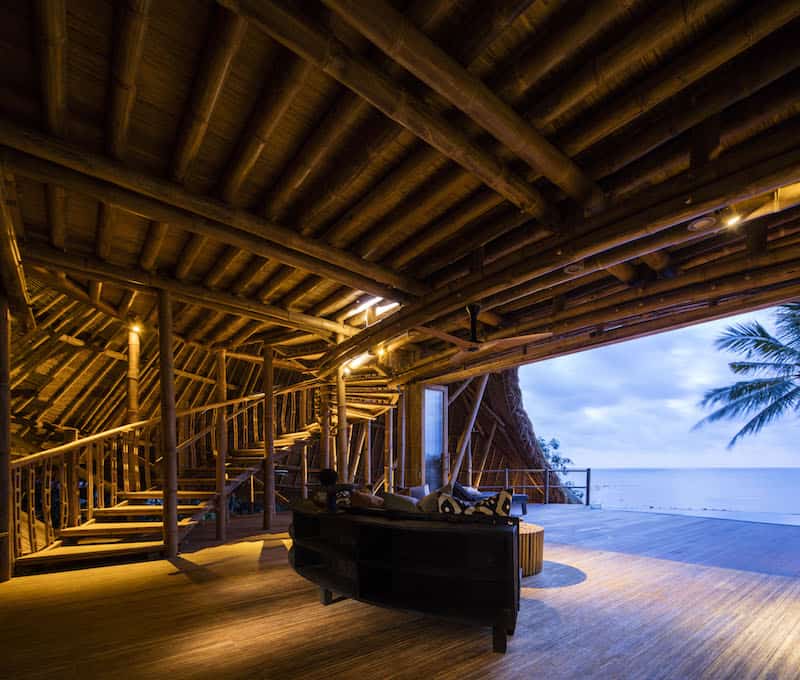
Opened last year, the all-bamboo, adult-only resort has embedded sustainable practices into its architecture and operations from the very beginning, and it seems to be paying off in more ways than one.
It’s been a long process though and one that has taken a fair bit of experimentation, trial and error.
How it learned by doing and aiming for the Long Run
“In the beginning, we didn’t really know much about what we were doing. There weren’t a lot of resources that outlined how to build and run a sustainable business. While the sustainability ‘movement’ is far from young, there is still incredibly limited information about how to implement better practices,” said Cempedak and Nikoi Island founder and director, Andrew Dixon.
So it took a slightly unconventional approach. “We started applying for awards and we learned a lot through that process because there’s quite a lot of detailed checklists,” said Dixon.
These checklists would then act as Cempedak’s rubric and criteria for sustainable practices. If the hotel could maintain award-winning standards, then logically, it was doing something right. “Once we won some [awards], it got me more focused.”
Currently, Cempedak aims to become a Long Run Alliance Member, alongside its sister island, Nikoi (which joined about five years ago). The Long Run organisation is a membership organisation centred on nature-based tourism businesses and initiatives driving sustainability.
It encapsulates a broad, holistic approach to sustainability through what it has termed “the 4 C’s” – conservation, community, culture, and commerce – aiming to create a positive impact across all dimensions.
“Initially, it was more about conservation. Then as we learned more about it, there were so many other elements to get involved in,” explained Dixon. The trick is to figure out a way to seamlessly connect all four pillars, so that it eventually becomes a positive feedback loop, sustaining a new norm of better practices.
From nutmegs to bamboo straws – creating stories and new businesses for local communities
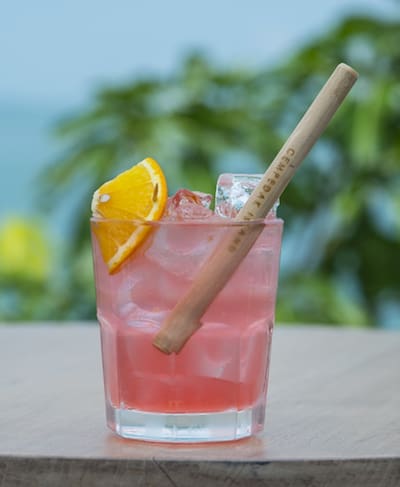
For example, Cempedak offers guests a range of quirkily flavoured sodas, made from produce on the island or from its farm in Bintan. Their ‘nutmeg’ version is made using the flesh of the fruit (a waste product), rather than its more commonly used seed.
“The fruit is usually wasted, it isn’t seen as having great value.” The sodas are also made with overripe fruits that have intensity to their flavour but cannot be served to guests whole. Finding alternative ways to use up the ingredient helps Cempedak reduce its overall waste. It also presented a business opportunity to its staff at the same time.
“One of our old staff set up a nutmeg plantation and another one of our staff is buying the fruit from him and making the drink, so he’s got a little business going and he’s trying to expand it,” said Dixon.
Using products created by independent businesses begun by their staff, lets Cempedak tap into the ‘community’ and ‘commerce’ angles of The Long Run’s four core principles of sustainability.
It also gives Cempedak a great opportunity to offer a one-of-a-kind product to its guests, as well as weave a pretty strong story that does wonders for their marketing.
The same idea goes for Cempedak’s famous bamboo straws. “We’ve taken a waste product and turned it into a marketing product… companies are always trying to get a brand in front of people, and people are taking ours home.”
“The straws are made by one of the staff member’s families. That started because six years ago… we were playing around with different bamboo we could find here and there wasn’t much of a selection… and he turned up one day with a straw, and it was perfect.”
But instead of poaching the product for the hotel’s own use, it was leveraged as another opportunity to empower the local community through Cempedak’s own staff.
“We could have easily had someone at the back, as part of their job, making bamboo straws. Now, he’s actually got a decent little business going,” said Dixon.
In fact, the staff member behind the bamboo straw is currently fulfilling an order for one hundred thousand units, to be exported to the UK.
Turning waste to wealth – sustainability doesn’t mean customers have to give something up
One of the key drivers behind Cempedak’s strategy is the belief that opting for more sustainable solutions should not have to mean forgoing services and facilities associated with a luxury experience.
In marketing Cempedak as a private island resort, Dixon said, “We don’t try and sell ‘eco’, I hate the word. I think it’s over-used…and it’s often an excuse for giving something up. I don’t want customers to give something up.
“We’d like to think that people come here because they enjoy their stay, not because it’s a green hotel. We like people to come here because we’re a good hotel.
“We’re looking for ways to upcycle, so products become more valuable, a lot is about turning waste to wealth. At the top, we’re trying to reduce [waste] altogether. Then we look at solutions for trying to reuse or recycle [the rest].”
For example, with their homemade sodas, “I want customers have a better drink than they would have if it came out of a can, and I can make more money out of it, tell a cultural and conservation story, and save the waste.”
And it doesn’t stop at the bar. Cempedak’s waste management system is elaborate to say the least, particularly when it comes to its biggest waste source – food.
All organic material is composted, with the exception of cooked food and meat waste, which are stored in separate bins. In these bins, black soldier flies lay their eggs. After they hatch, the maggots feed on the waste for approximately three weeks, before they are then fed to chickens, or the fish in Cempedak’s pond.
That pond is home to tilapia, a freshwater fish that is also being farmed and used to feed staff, despite originally being used to eat mosquitoes. While they haven’t served any to guests just yet, the hotel is experimenting to see if this exercise can be done on a bigger scale.
It is quite an original attempt to reduce food waste for a hospitality company, proactively finding ways to feed it back into the life cycle of the surrounding ecosystem.
“We took a waste product that was difficult for us to manage and found a way to make something.”