
After 10 years working in private equity, Foo Lee Lian decided she needed a break. “PE’s an aspirational career when you’re starting out but it can be very stressful and intense. It’s also very male-dominated and as a woman, it’s hard to see your way to the top.”
Aware of the glass ceiling, she decided to take a break and thought she would make a comeback into finance at some point. Around the same time, she was introduced to Stephanie Chai, founder of The Luxe Nomad, who was looking for a number two, to take the travel startup founded in July 2012 to the next level.
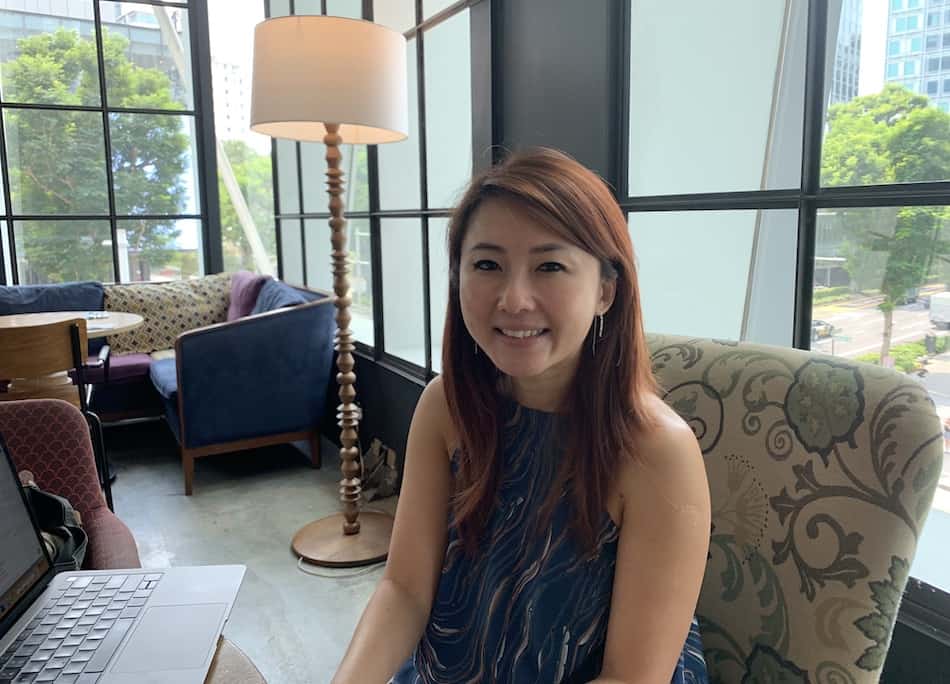
“She said business was growing, it was too much for her to handle and would I be interested? It sounded interesting and I was thinking of travelling anyway, so I thought, why not?” she laughed.
That was in April 2016 and Foo has probably done more travelling than she bargained for in the last three years. “I wanted the challenge and yes, it’s been very challenging. In private equity, you never get involved in running a company but when you run a business, it’s different and you have to deal with issues you never appreciated.
“Before I’d sit across the desk and asked management why they weren’t hitting targets – I never appreciated the challenges of running a business and now I know.”
From flash sale to villa management
As COO, Foo has taken equity in the startup that was founded initially as a flash sale site to sell luxury holidays. Indeed, The Luxe Nomad is a good example of a startup that has had to adapt at various stages of its journey to remain viable.
From its flash sale phase, it found a niche in the villa market. “But we knew selling standalone villas wasn’t enough. Our customers are discerning and very busy individuals. We brought on concierge services to cater to our customer needs and to further enhance their whole travel experience,” said Foo, recounting the company’s evolution.
In 2015, it expanded into Niseko, a popular Japanese destination for Singaporeans, and became an OTA focused on vacation rental. It worked with villas, ski lodges and property management companies and sent customers to them. That model worked well and it became one of the company’s biggest revenue generators.

(Image credit: AYA Villas Niseko)
“But it faced challenges because it didn’t control the whole travel experience. As an OTA, there’s only so much you can do to influence the booking experience. Whatever happens after is up to the property company. Our customers were receiving such a range of services due to such a fragmented industry. Additionally, as an OTA it was difficult to scale and you have very little control on the pricing strategies.”
That’s when Foo came into the picture and “we discussed the opportunity to connect these two by going up the value chain and taking on vacation rental management. This gave us more control while at the same time creating a holistic travel experience for our clients.”
In 2017, it acquired BaliOn, a villa management company which had 36 villas on the Indonesian island. That was its first foray into property management. Earlier this year, it completed another acquisition in Thailand, Luxury Villas and Homes with 50 villas in Phuket and Samui.
“Property management allows us to control the entire offline experience as well,” said Foo.
Chai and Foo are now intent on establishing The Luxe Nomad as “Asia/Pacific’s largest luxury villa management company, by creating a brand of villas synonymous with the most exceptional stay possible”.
“We want to standardise villa standards, and curate four and five star properties. It’s a fragmented market so we need to consolidate to become a player with scale. We will focus on the villas that we manage but in certain destinations where we have good relationships such as Niseko, we will work with partners to maintain those standards.”
Next step: Tech platform to allow guests to book villa, concierge and ancillary services
It’s shifted its focus to just concentrate on Asia-Pacific so it now has a curated list of about 650+ partner properties on its site, having removed all non-APAC listings.
Its biggest markets are Niseko, Bali and Thailand and its customers come from Australia, Singapore, Malaysia and Hong Kong where Chai is now based. Its database is 80,000, but its reach, when you take its social media and online magazine, Wanderluxe, into account, is about 300,000. Over 55% of the customers are women, and the majority aged 35 and above.
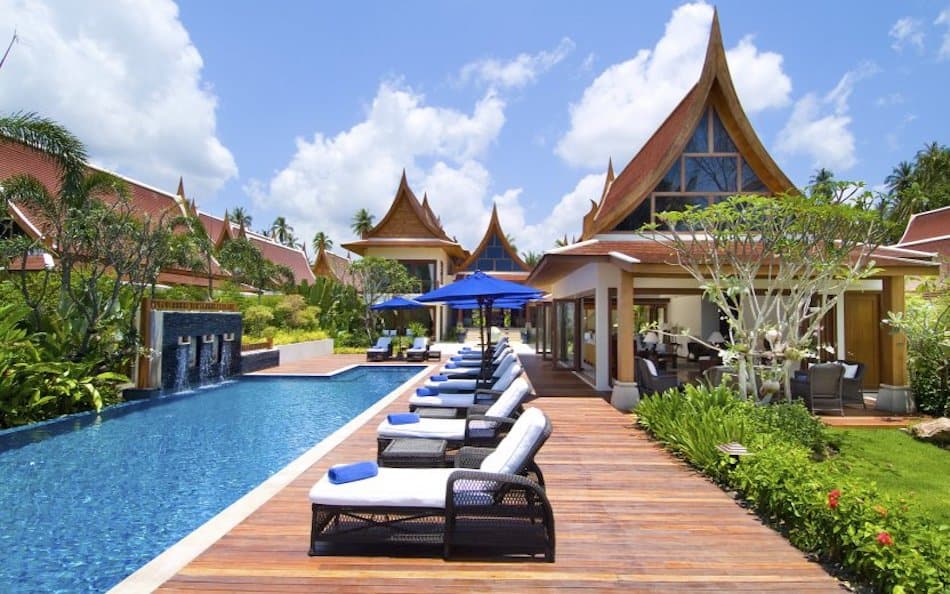
(Image credit: Baan Tao Talay)
Its priority now is to build a tech platform that will allow it to integrate its bookings and concierge services including restaurant reservations in an app for a better customer experience.
It is aware it is competing with OTA giants such as Booking.com and Agoda which are increasingly getting into this space, as well as Expedia-owned Vrbo but The Luxe Nomad believes it has enough of a niche play in Asia to be different. Brand building is done through working with selected influencers, email marketing and Wanderluxe.
About 40% of its business come through direct channels with the rest coming through third party agents and OTAs. “We are very different from what we used to be, today’s model is more interesting, more management.”
It’s been a challenging three years, Foo acknowledges. The first thing she did was put processes in place which enabled the company to multiply revenues in the last three years. Gross sales have grown 8x through a combination of organic growth and acquisitions, she said.
The thing about “zombie startups” – “that’s the way men think”.
Since founding, it’s raised US$3.5m – $4m, a relatively small amount considering the funding that’s been coming into travel startups in Asia. Foo admits, “We haven’t raised that much, we want to control it. Some startups have such crazy valuation, and are raising a lot of funding. We believe in steady, sustainable valuation.”
Asked how she felt about companies that pursue unprofitable growth, she said, “For the first few years, yes, but at some point you have to show traction and profitability. As a PE, I want to see that this company has the potential to be profitable.”
Asked how she felt about derisive comments sometimes made in the fund raising world about “zombie startups”, those with slow growth, Foo said, “That’s the way men think. We prefer to be more practical and sustainable, and grow in our own way. We can also raise tens of millions of dollars but whether or not we can realistically use the funds in an effective manner is another thing. We prefer to be more conservative and raise funding as we deem necessary.”
Commented Foo, “I feel more fulfilled, sitting at this side of the table. Every decision I make has influence on the business. I do miss the challenges of evaluating investments, now we are building something.”
One key thing she had to unlearn was not to be too risk-averse. “In PE, you tend to do a lot of analysis and you want little chance of failure, especially when you are dealing with investments of $100 million and above. In a startup, you cannot ensure everything is covered. It’s a fast-paced environment, and you have to take risks, go with your gut and determine what your baseline risk is.
“Stephanie and I complement each other – she’s entrepreneurial, I evaluate a bit more, so it’s a balancing act. I also learnt to be more open-minded.”
Note: Foo Lee Lian will be speaking on the WiT Main Stage on October 15. See full programme here. Sign up here.
• Featured image credit: Villa Tantangan in Bali, Indonesia