
US Federal Aviation Administration (FAA) has downgraded Malaysia’s air safety rating from Category 1 to Category 2, which will not allow the country’s airlines to add new flights to the United States.
In a press statement issued on 11 November, the FAA said it “has found the Civil Aviation Authority of Malaysia (CAAM) does not meet International Civil Aviation Organisation (ICAO) safety standards, and therefore has received a category 2 rating based on a reassessment of the country’s civil aviation authority.”
It added that a Category 2 International Aviation Safety Assessment (IASA) rating means that CAAM – a body equivalent to the FAA for aviation safety matters – “is deficient in one or more areas such as technical expertise, trained personnel, record-keeping and/or inspection procedures.”
Under this rating Malaysia’s carriers can continue existing services to the US, but are not allowed reciprocal codesharing with US airlines. They will also be subject to additional checks at US airports.
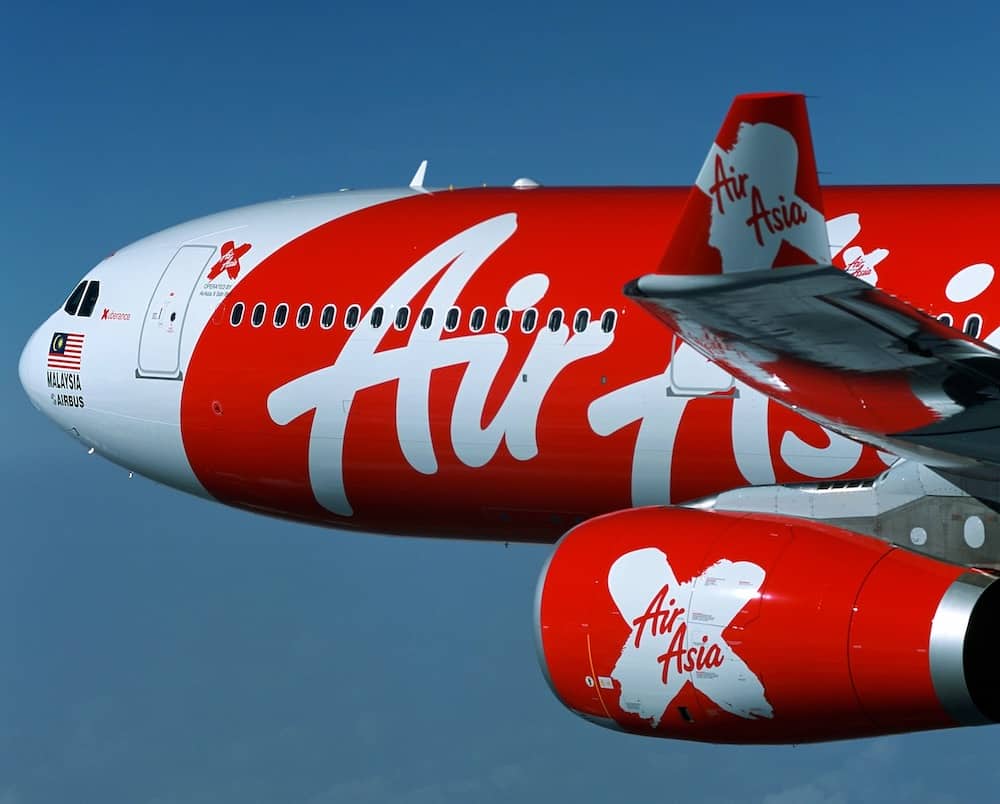
(Image credit: AirAsia)
Currently only AirAsia X, the longhaul arm of AirAsia, operates from Kuala Lumpur to Honolulu, Hawaii via Osaka, Japan. It started the seven weekly flights on 16 August 2018.
Malaysia Airlines does not fly to the US. The airline suspended its four times weekly service from Kuala Lumpur to Los Angeles via Tokyo from April 30, 2014 as it was not economically viable. LA was then the airline’s only link to the US, as it cancelled its thrice-weekly flights from Kuala Lumpur to New York via Stockholm in October 2009 due to drop in demand.
However, the flag carrier has codeshare agreements to fly routes to and from the US through its partners in the oneworld airline alliance. One of its partners, American Airlines, has announced it will end the codeshare with MAS according to this report on travel website FlyerTalk. It quoted American Airlines’ senior corporate communication manager Andrea Koos as saying the decision was in compliance with FAA’s downgrade.“We are working with affected customers to rebook their itineraries,” she said.
Downgrade only covers CAAM’s role as regulator: Agency chief
Malaysia was first assigned Category 1 in 1996 to the then Department of Civil Aviation (DCA), which has been corporatised and renamed as CAAM now, meaning the aviation body complied with ICAO standards for aviation safety oversight.
In an immediate response CAAM said it viewed the downgrade as “serious”, and accepted it is due to its “shortcomings and failures” as an aviation regulator. The agency stressed this is not an assessment of Malaysian airlines, airports or air traffic services that fall under its purview.
“While CAAM acknowledges that in carrying out its duties as an aviation regulator, some shortcomings exist. We wish to emphasise that the assessment only covered CAAM’s role as an aviation regulator,” its chairman Captain Ahmad Ridzwan Mohd Salleh said in a late night statement (Novmber 11).
He added the downgrade is a result of an FAA review of CAAM that was carried out in April 2019. “The FAA carries out such audits of regulators who oversee the operation of flights into the US. The audit covered areas of legislation, oversight, delegation of authority, as well as adequacy of the number of technical personnel employed by CAAM.”

(Image credit – KL International Airport)
According to Ahmad Ridzwan, FAA’s assessment and subsequent categorisation is “solus and unilateral in nature, and their rights as an ICAO member state.”
CAAM has a seat on the council of the ICAO and “remains fully in compliance with all ICAO standards and legislation, having being audited by the ICAO as recently as the middle of 2019”.
Ahmad Ridzwan said the agency has made a request to the FAA to conduct a re-assessment to restore CAAM’s status as a Category 1 aviation regulator. It is confident of meeting the US aviation authority’s requirements, and aims to regain its status within two years following the downgrade.
“It should be noted that plans are already well under way to address the findings of the audit.”
He added: “Given the critical nature of aviation CAAM takes the FAA’s assessment constructively, and has moved to make serious changes in its structure and operations.”

“This is a big deal,” says Timothy O’Neil-Dunne of the downgrade.
Meanwhile, CAAM clarified the resignation of its former chief executive officer Ahmad Nizar Zolfakar was not due to the downgrade. He resigned on November 1, even before FAA made its decision and recategorised the agency. The search for a new CEO has started and the replacement is expected in a few months. An interim CEO is currently taking care of implementing the agency’s plans.
“This (downgrade) is a big deal,” is the initial reaction of industry analyst Timothy O’Neil-Dunne to the news of the downgrading.
“The US FAA has had its own share of credibility issues with the Boeing 737 Max problems demonstrating key deficiencies of their processes. So one can expect them to be a lot harder on certification of any kind,” he opined.
On Malaysia, he noted: “There has been a concern among the different regulator bodies stemming from the exposure of flaws, which resulted in the losses of MH370 and MH17. This could not have gone unnoticed.”
To recap, Malaysia Airlines MH370 carrying 239 passengers and crew mysteriously vanished on its way from Kuala Lumpur to Beijing on 8 March 2014 (and to date the aircraft has not been found). Four months later, on 17 July 2014, MAS flight MH17 was shot down while flying over eastern Ukraine killing all 298 people on board.
Malaysia is not the only country with a FAA Category 2 rating. Other countries included in the list are Bangladesh, Costa Rica, Curacao, Ghana and Thailand.
• Update: The story was updated with announcement from American Airlines ending its codeshare with Malaysia Airlines
• Featured image credit (klia2 runway): klia2