A report by the Malaysian Association of Hotels states that over 157,000 rooms in Malaysia were cancelled as of February 17, resulting in an estimated RM66 million (US$15 million) loss in revenue following the coronavirus (Covid-19) outbreak.
Now the picture is even more dismal with the implementation of the Movement Control Order (MCO) from March 18 to 31 by the Malaysian government to curb the spread of the virus. With 1,030 cases positive cases (as of March 20), Malaysia now has the highest number of infections in South-east Asia.
The order covers the whole country with a ban on public gatherings, shut down of all businesses and stores except those selling daily necessities and supplying essential services, barred Malaysians from going overseas and tourists/foreigners from entering the country.
Although hotels in Malaysia are listed as providing “essential services”, it does not mean that they can continue to operate as usual. They can only serve guests who have already been staying there before the two-week shutdown, and cannot accept any new bookings, while food and beverages are only served in-room.
About 95% of all hotels in Malaysia, or 5,600 properties, are independents and they may be the hardest hit due to limited budgets and not having the deep pockets of big brands to ride through the storm.
Independent hotels in South-east Asia make up 95% of hotels in the region, totalling 56,000 properties, revealed Dan Lynn, co-founder of ZUZU Hospitality, during a session at last week’s WiT Indie in Penang on how vendors and intermediaries can add value to indie properties. “The (hotel) industry is an independent hotel industry and we can’t forget that.”

So what can these small hotels with limited budgets in the partially locked down Malaysia and within the region do to survive through the current crisis?
One clear message from the panellists is: “Don’t drop your rates”. A tough decision, no doubt, to take at such dire times, but they believe that those who persevere will come out stronger.
They and participants at the event’s hospitality workshop offer some solutions: look inward at the domestic market as more countries shut their borders with promotions like the Singapore Hotels Association’s staycation deals; have flexible pricing and refundable options for cancellations; add value like room upgrades with no additional charges or discounts at F&B outlets and services like spa; work with retail partners to diversify offers.
Kim Ong, vice president strategic sales & account management – Asia Pacific at D-EDGE Hospitality Solutions, suggested that as indie hotels do not have the luxury of the resources that big brands have, such as big teams or the means to have the technology to work with, they can turn to a vendor.
“Go to a vendor, which has that capability and enjoy the economy of scale from it.” According to her, companies like D-EDGE helps independents share cost and provide the expertise they need. “We spend US$6 million a year on research and development, something we can pass on to our partners.” (D-Edge is owned by Accor).
Ong cites the 90-room Penang’s Lone Pine Hotel as an Indie “willing to try”… “Don’t be afraid to try even if you’re a small hotel. Look at what unique selling point you have and leverage on it. There are lots of things you can do. If you are willing to do so, you’re on the right path.”

Francois Sigrist, Lone Pine’s general manager, told WiT that occupancy in the hotel has plunged since the start of the virus outbreak. but now with Malaysia closing its borders for two weeks there is no movement at all.
But he said working with a partner like D-Edge benefits his property as “alone I may not have all the capability and capacity to do marketing and distribute effectively. If I can have a system that helps me do it faster, better and put me one step ahead of the rest of competition and maximise my opportunity, why not?”
Sigrist added, “I have to make sure I am available everywhere – in every bookshop.”
To a question from ZUZU’S Lynn on the one thing to remember in distribution and marketing, especially now when everyone in the travel industry is fighting to survive, here are the responses:
Yoges Bala, hub head, north, OYO Hotels & Homes: “Be adaptive especially now with Covid-19 around us. Make fast decisions, move fast, you can’t wait and see, or just wait for help. Get your industry peers to sit down, listen and work together. To me it’s all about communications.”
Lone Pine’s Sigrist: “Strengthen the experience we offer our guests. Communications is important. Be transparent. Be confident that tourists will come back to your destination when the black cloud is gone. Work with the tourism boards to find ways to restore confidence in travel. Keep your rates.”
D-Edge’s Ong: “Being prepared, as in every situation things will come around; this is not going to be here forever. So go back and look at what we’re doing right now, and we may have to change and adapt. Use the time now to think about what are the things you have been wanting to do, perhaps it’s training, perhaps it’s revamping the website. Make sure when the situation improves, you’re ready. The last thing you want to be is to be left behind while everyone is moving ahead and welcoming customers.”
ZUZU’s Lynn added his take: “Write your plan on how your business will survive with 50% less revenue or more, and be ready to pull the trigger fast. Do the things you wanted to do for your hotel that you never have time to do, as you have the time now.”
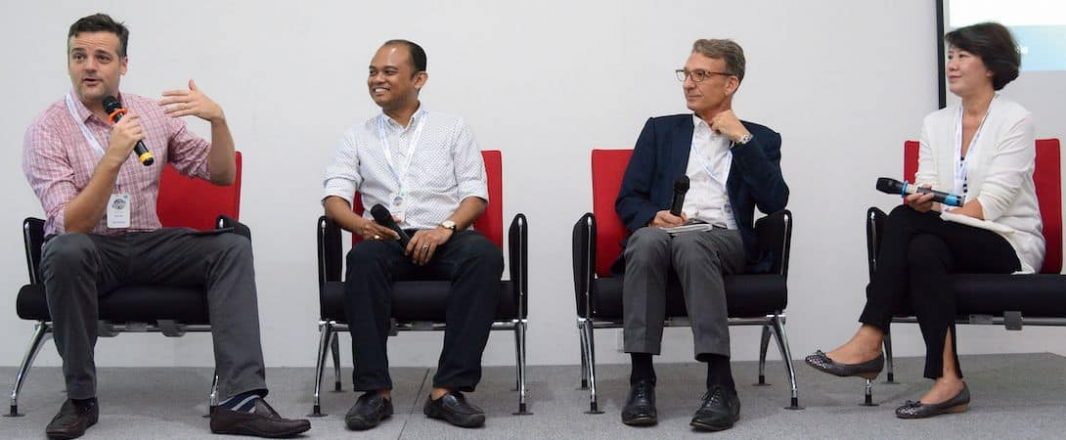
• Featured image: From left – ZUZU Hospitality’s Dan Lynn, OYO Hotels & Home’s Yoges Bala, Lone Pine’s Francois Sigrist, D-EDGE Hospitality Solutions’ Kim Ong