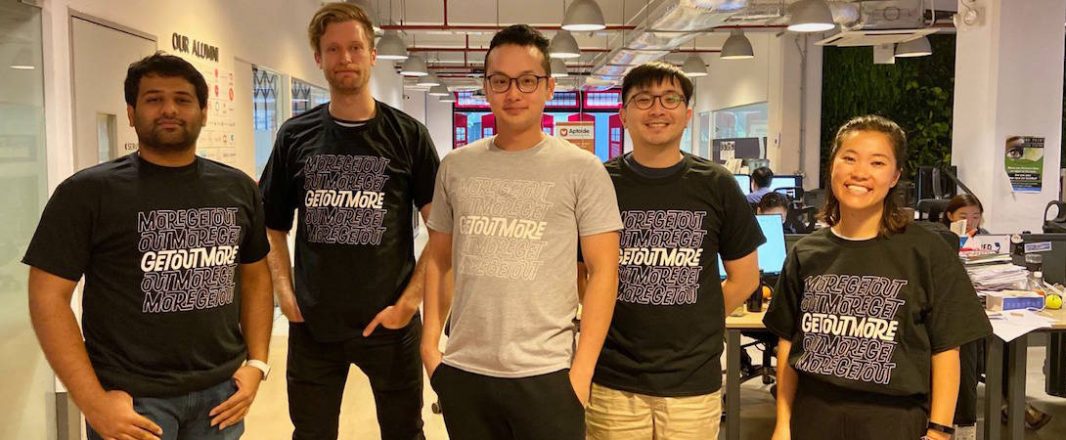
The current climate is challenging for virtually all businesses, but it is arguably those most nimble in the face of change that will fare best. In this interview, Dylan Tan, co-founder, Split spoke of how he repurposed his startup to adapt to what both consumers and businesses need at a time of high economic uncertainty.
Split, which won WiT Singapore Startup Of The Year in 2018, began with a mission of enabling consumers to book trips instantly and help them pay in instalments. “We give customers the ability to not have to spend everything today to get what they want, and we give businesses the customers that they want and full up-front payment without having to offer steep discounts,” said Tan.
“Our value to consumers is clear – pay in three equal instalments, completely interest-free with no late fees or hidden charges.” Split takes a small transaction fee from the merchant.
However, the current paralysis of the travel industry and impact of Covid-19 on the broader economy meant that Tan needed to refocus his business on more sectors that are active, if he was to keep Split from falling apart.
On one side, you have thrifty consumers who are watching their budgets carefully and on the business front, brands and e-commerce platforms are fighting for consumer spend.
“Businesses will struggle to stay afloat when consumers are cash flow sensitive… if you differentiate yourself with discounts, it’s a price war to the bottom… Split bridges the gap.”
To help both consumers and sellers manage the economic fallout in a way that is beneficial to both sides, Split adapted its services to partner with non-travel services, looking specifically to e-commerce and retail across electronics, fashion, accessories and lifestyle brands.
To do so, Split’s engineering team rebuilt its interface within a week from its original ‘OTA’-looking interface to more of a ‘Shopify’ one. “We are fortunate that payment services are easily applicable to other sectors… We built a scalable way for businesses to be able to add Split to [their] websites in just five minutes.”
With that shift came a rush of demand from merchants to adopt its payment solution across Malaysia and Singapore. “At Split, we don’t just power instalment payments; we are a lead generator for [them]. We do co-advertising, marketing, some PR as well to drive customers to these merchants… this is a brand new way for Malaysians to shop and we’re going to milk this news and get as much business for merchants as possible.”
“Right now, we’re getting overwhelmed with the number of merchants coming on board… we have big and small partners that demand equal attention to get on-boarded, so we’re learning to spread our efforts and time a bit better… as we grow, we’re going to see more processes come into place,” Tan explained.
“We’re contributing up to a third of our merchant sales,” said Tan. Also, Split’s customer feedback reports show that many would not have bought the products at all had the solution not been available, showing how Split has enabled greater spending power.

Payments are still a green field of opportunity
Despite current uncertainty, South-east Asia presents itself as a fairly green field of opportunity for payment solutions like Split.
As South-east Asia’s adoption of digital payments increases, Tan predicts we will see “a lot of neat services and solutions come up…because the infrastructure is there to do it. “The lack of credit card penetration… [means] there is need for customers to get point-of-service financing… [which] fits in perfectly for consumer online shopping.”
Beyond online shopping, Tan has a greater vision for how payment solutions can help South-east Asia’s financial landscape evolve to offer services to many of those who are unbanked or under-banked.
“There’s a gap in South-east Asia outside Singapore. There’s a lack of financial information on a big portion of the population… approximately half of adults in SEA are unbanked and 100m or so are under-banked – they lack access to advanced financial services,” said Tan.
“It would help the ecosystem as a whole if everyone had information on customers spending and their bank accounts… so that banks or companies like Split can offer them the right financial products.”
Tan painted a future where customers could opt into a scheme with Split that assesses spending patterns, and reliability of payment schedules, to develop a customer credit score, which could therefore grant them greater access to more financial services and products.
Until that day comes, Tan remains focused on helping make shopping for affordable, keeping businesses afloat and of course, putting Split in a position of strength for when some level of normality returns.
But where does that leave travel? Given the rapid success of Split’s transition into retail and e-commerce, it ponders the question of where the travel industry will fit in once the engines start churning once more.
Tan put it down to basic economics. “The travel industry will always remain attractive to me out of the sheer size, how much people spend as proportion of their budgets, it’s a big spend every year… just compare the spend on new clothes versus a holiday.”
“[Split] has set a foundation of offering [this service] for the travel industry… as soon as it recovers, Split is there and ready to use… the moment they say they’re ready, we’re ready.”