2020 was meant to put Malaysia on the global tourism map with the ambitious Visit Malaysia 2020 campaign, which the country had hoped would bring in 30 million international tourist arrivals and add RM100 billion (US$364 billion) to the national coffers. Then came the coronavirus, and the campaign was nipped in the bud as the country went into lockdown on March 18.
Three months later, with the virus outbreak “successfully under control”, the government allowed the crippled domestic tourism sector to resume operations from June 10. Tourism authorities and industry players, welcoming the reopening, see this sector as leading the way to the eventual recovery of travel and revival of the country’s economy.
Tourism, Arts and Culture Minister Datuk Seri Nancy Shukri said the focus on domestic tourism is not only to revive the tourism industry, but also to market the country as a safe holiday destination even though the Visit Malaysia 2020 campaign has been cancelled.
She added that the positioning of Malaysia as a safe country for future visitors could start with domestic tourism when locals can travel safely within the country to enjoy its sight and sounds. This could be a draw for future travellers to choose Malaysia when the pandemic is over and borders are open to foreign visitors.
Nancy stressed that all tourism services and products have to adhere to the SOPs (standard operating procedure) of the National Security Council, especially on safety and cleanliness. This is to ensure that tourists feel safe when exploring the country.
The minister revealed that a survey conducted by Tourism Malaysia on post-movement control order (MCO) domestic travel found that 50.9% respondents believe that travelling within the country will happen after the MCO (the current recovery MCO is expected to end on August 31).
Findings also showed that about 84% stated that Covid-19 has changed their travelling habit, with 71.3% saying they would prefer to travel within Malaysia than overseas and mainly with families and relatives
The tourism ministry’s recovery plan will include a public relations campaign to instil confidence among consumers to travel again, and using digital platforms such as e-marketing and social media for promotion, Nancy disclosed.
The private sector has come out with various initiatives to help industry players market their products and services. A locally-developed platform, ditofa.com, was recently launched that lists holiday packages, offers as well as facilitate bookings for hotels and accommodation.

While food, shopping, culture and arts are popular with local tourists, green tourism is a trend that’s come out of Covid. Is this going to resonate with the domestic audience in Malaysia? – a question asked at the recent ‘Malaysia Tourism – On the Border’ webinar hosted by Delivering Asia Communications (watch recording here).
Reza Cockrell, co-founder of The Habitat Penang Hill, a nature park and rainforest Discovery Centre, said this trend was prevalent even before Covid, not just in Malaysia but globally.
He thinks green tourism will appeal to Malaysians. “The shoe box hotel model is slowly losing interest among many people who are looking for interesting experiences to share with their children. Nature based tourism offers a lot of that, whether it’s a beach resort or tracking through national parks. And of course, the big trend like glamping.”
He noted a spike of interest in The Habitat, especially among travellers from Kuala Lumpur on the staycation route. With easing of restrictions from lockdown in the country, “many people wanted to be outside, be healthier and to reconnect to nature. And I think nature based tourism has a lot to offer.”
Dato’ Tan Kia Loke, managing director of Sunway Group, a business conglomerate that owns hotels and theme parks, added that one of its products, The Banjaran Hotsprings Retreat in Ipoh, is “currently is doing far better than before Covid with 80% occupancy and four digit room rates.”
He attributed this to the resort’s unique location in a 22.7-acre valley alongside 260-million-year-old Paleozoic limestone hills, rainforest, geothermal hotsprings, natural caves and waterfalls. It offers 45 villas and a spa/wellness centre.
“I think places like this (The Banjaran) are safe places where there is less density and is a natural habitat. People are happy to go to this type of resort.”
Domestic tourism, a strong performer
Tourism Malaysia is optimistic that the domestic sector could grow 30% over the next six months to a year.
The sector has remained resilient with expenditure and numbers of travellers on the rise for the past few years. In 2019, domestic tourism expenditure registered a double digit growth of 11.5% to RM103.2 billion compared to RM92.6 billion in 2018, revealed the Department of Statistics Malaysia (DOSM).
The growth in expenditure was driven by an increase in expenditure by tourists and day-trippers, spending a total of RM67.9 billion and RM35.3 billion respectively.
DOSM said 2019 was the fourth consecutive year of double-digit growth in domestic tourism expenditure.

The number of domestic tourists also saw a 8.1% growth over 2018, increasing to 239.1 million.
The DOSM’s statistics showed the increase in number of domestic visitors was supported by a 8% and 8.3% growth in day-trippers and tourists respectively compared to 2018. In total, they made 332.4 million trips domestically, of which 42.3% was to visit relatives and friends.
Selangor was the most popular state with domestic travellers in 2019 with 33.6 million tourists, followed by Kuala Lumpur (22.6 million), Sabah (22 million), Perak (21.1 million) and Sarawak (19.8 million).
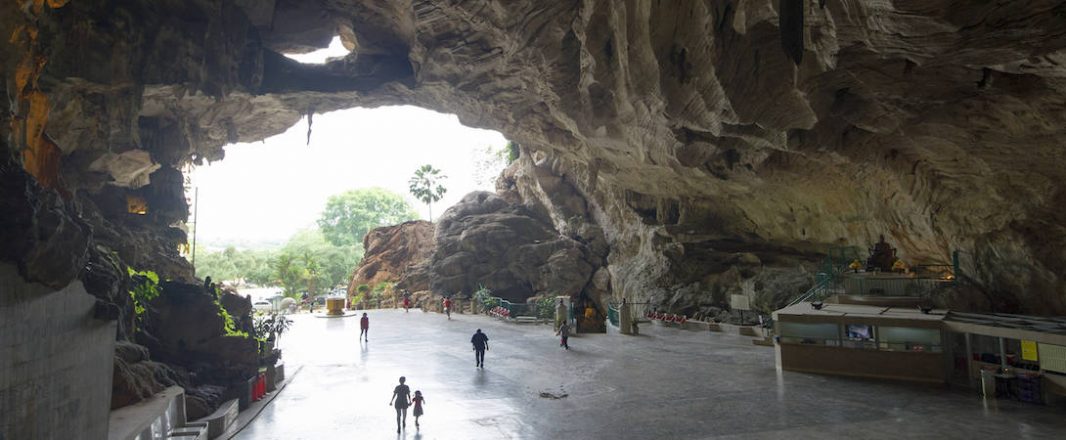
• Featured image credit (Kek Lok Tong limestone cave temple near Ipoh, Perak, a popular tourist attraction): RAVINDRAN JOHN SMITH/Getty Images