As Airbnb prepares for its much-anticipated IPO, Amit Saberwal, founder and CEO of RedDoorz, predicts that good travel companies will emerge out of Covid and there will be a lot of focus on getting these companies public.
“The good companies that will emerge will go on to become your unicorns and you’re going to have a lot more activity in the public market for these companies. Some of these companies should have gone public a few years ago but the private market was more profitable, but that has changed.”
Asked if one of these good companies could be RedDoorz, Saberwal said, “We have always stated that publicly, that’s our aspiration. Personally, I want to return our investors’ money and some kind of public event would be a logical conclusion.”
Could another logical conclusion be an acquisition by a global company, I asked. After all, a company that has deep domestic markets right now could be interesting to global companies that have breadth but not depth?
“We can’t rule anything out. We have a good domestic story, there’s a lot of capital available to good companies which can go into growth mode. Why don’t we think of a scenario where we work with people with more capital and look at acquisition targets rather than us being a target?”
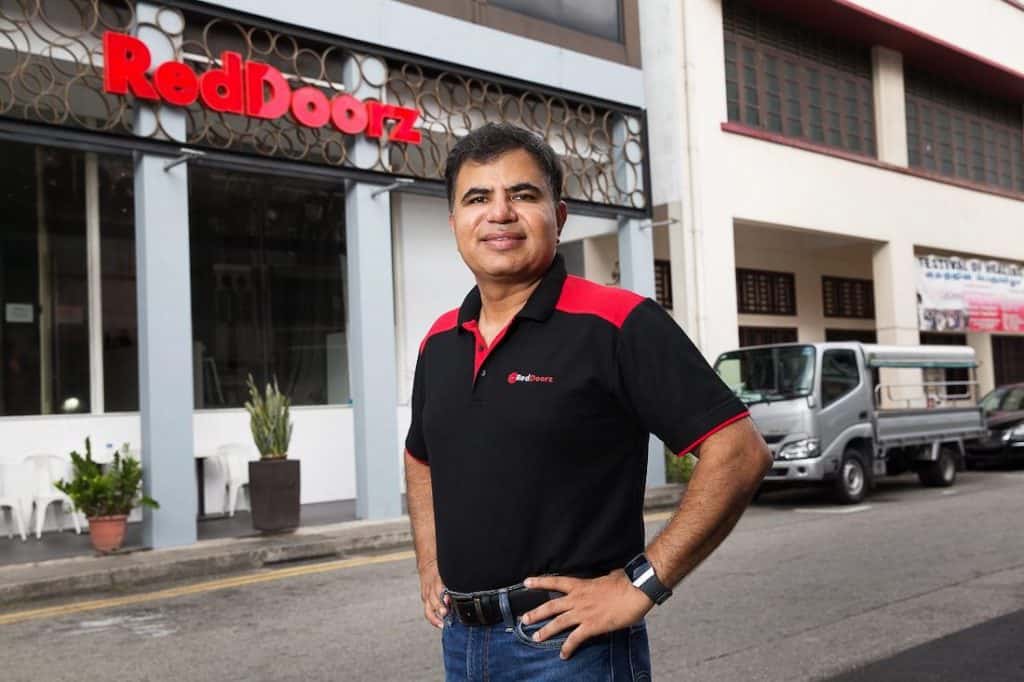
RedDoorz, billed as Southeast Asia’s largest online hotel management and booking platform, was launched in 2015 and late last year, raised Series C funding of $70m and Saberwal said unicorn status was within reach “in the next three years”.
“This is still possible, this is still an aspiration,” said Saberwal.
Salary cuts reinstated, continued quest for profitability
For now, it’s about survival and Saberwal said fast decisions made early on have enabled it to “dodge the bullet” so far. In fact, it reinstated salary cuts in July, something it promised to do if targets were met.
In February, when the first signs of trouble appeared, it scrapped plans to launch in Thailand, furloughed and laid off staff and cut as much costs as possible. In March, it cut senior management pay and later wage cuts for remaining staff.
“It was something I didn’t like to do but we had to do it because we still couldn’t balance the books. We said the salary cuts would be till December but these are the targets and if you achieve the targets, we will reverse the cuts, so the team really rolled up their sleeves and worked really hard. They met the targets, so we have reversed the cuts.”
He is mindful of the fluidity of the situation and he is confident that he has a leaner, smarter company (staff numbers have been reduced to 950) and the goal hasn’t changed – to achieve profitability. “That was always the plan for 2020, it got accelerated. We’ve done everything we need to do.”
Entering positive recovery territory
RedDoorz is in positive recovery territory, he said. He called out the Singapore government for its pragmatic and supportive approach to tackling the crisis. “Some of our properties are serving stay-home notices and this piece of business has been really helpful. The Job Support Scheme (JSS) has also really helped. The Singapore government operates at a level that is unheard of and I can say this because we have operations in many countries, including India, where our tech team is.
“The JSS, the S$320 million in domestic tourism vouchers they are giving out, the training of employees, internships for youths, reskilling of older workers – they are way ahead and they will be the first off the block when things start to look better.”
In Indonesia, he said, “Domestic recovery is happening. Again, the Indonesian government has been very pragmatic and things are starting to look better. The Philippines is in a different place, a different pace – but I think slowly things are looking better even there.”
Saberwal referred to the most recent interview on Channel News Asia with Raghuram Rajan, India’s former Central Bank governor, who said advanced industrialised countries and emerging markets had to have two different strategies in the handling of the pandemic. “He wasn’t critical but he expressed concerns about prolonged lockdowns because the human cost in many markets is much higher.”
On other markets, he said, “Vietnam was looking up and will come out of it, but whatever people say, Vietnam has a high dependence on international travel. Like Thailand – the infrastructure is more geared up for international tourists, just like Bali.”
Recovery in Indonesia is happening in cities like Jakarta and Bandung because they are domestic travel destinations, and what’s helped RedDoorz is its depth and breadth of local inventory in second and third tier cities. “Ninety six percent of our business was domestic in Indonesia. Even in the Philippines, we were predominantly domestic.”
Hygiene Pass, Hope Hotline launched, tech accelerated to improve operations
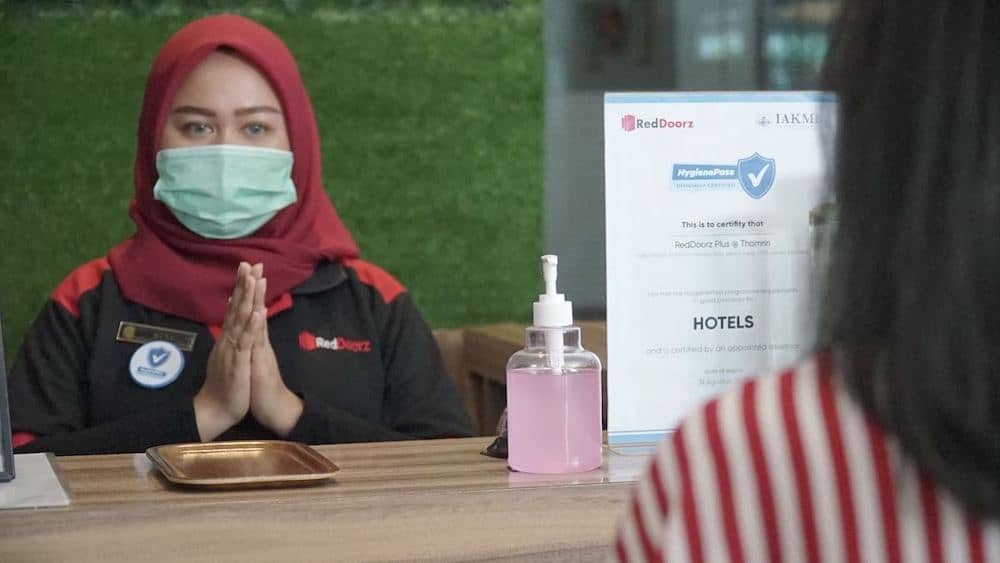
Responding to the crisis, RedDoorz launched its Hygiene Pass for employees as well as for its hotels, with certification from an independent body in Indonesia. It borrowed the idea from the SG Clean initiative started in Singapore and adapted it for Indonesia. In July, more than 300 properties received the certification.
“We accelerated tech in our operations, looking at the whole piece from customer service to quality property management. Previously, as a startup, when you have a problem, you throw people at it and then eventually you throw tech at it to make it more efficient, except we had to grow up really quickly and we needed tech to replace people really quickly especially in the operations side. This was a big piece for us.”
It also launched a “Hope Hotline” in Indonesia, a mental health support programme for employees, hotel partners and the industry, in collaboration with KALM, an online counselling service.
Weaning off “immediate fix” of online marketing, digging deep into CRM to drive direct business
Asked what thinking Covid-19 has challenged him on, he said, “I think it would be more around availability of future venture capital at acceptable terms and the need for us to be self-sustaining became so much more urgent.”
He added, “This has been a wake-up call. We are charting our own destiny. We have become far more mature from a cost perspective for a startup of our tenure. We started controlling costs, we started leveraging our own CRM to generate business without spending money, so I think the overall health of the business is going to be much better.”
With no funds to spend on Google, it dug deep into its CRM and SEO. Its branding work last year also paid off in driving more direct traffic – about 75% of its business already comes direct.
Because its business is more domestic, it was able to do more localized searches, as opposed to a more global search like London to Jakarta, it could do Jakarta to Bandung. “We can choose our markets in a way which is domestic so there are a lot of alternatives available for us.”
Said Saberwal, “Online marketing is like a drug, because it’s an immediate fix. When you want to grow, and you are not able to hit your targets, you spend money and you hit your targets, and you just have to be very efficient about it because you want to spend a finite amount to get finite results.
“The problem happens when startups want to grow, they move from this really efficient customer acquisition to a highly inefficient model to go for growth because the market is rewarding growth. Well, that’s changed.”
As Saberwal sees it, there is a pre-WeWork world, a pre-Covid/in-Covid world and post-Covid world.
“In the pre-WeWork, people were just going for growth and growth was rewarded. Then reality set in and people started looking beyond top line growth, so companies were being valued less, due diligence became stronger and people realized, there is no unlimited money which is going to keep coming in.
“This period, in-Covid and post-Covid, it’s about survival. You do what you have to do to survive.”
Commenting on news that some travel companies’ Google accounts have been suspended because of non-payment, Saberwal said, “One of the first things we decided was we had to pay people and we worked out a payment plan for everybody so that we could spread our payments over six months.”
Saberwal said even though it is not spending any money on Google now, that’s not to say it won’t go back to advertising on Google. “The only thing is, there will be a level of efficiency which we will maintain. We are also big believers in Facebook and we will also be spending on brand but in survival mode, I am prepared to forgo a few hundred bookings if it means spending money I don’t have.”
He added, “We have to adapt to the fact that Covid is going to be here for a while. I think 2020 can be written off but by 2021, there will be more clarity.
RedDoorz’ mascot, Reddy the honey badger, has never been more appropriate at this time, said Saberwal. “It’s fearless and this trait has helped us a lot. The fear of Covid has made people react irrationally, some have over-reacted. Its ability to hunt too is useful at this stage. We have to be fearless and be good hunters to survive this.”
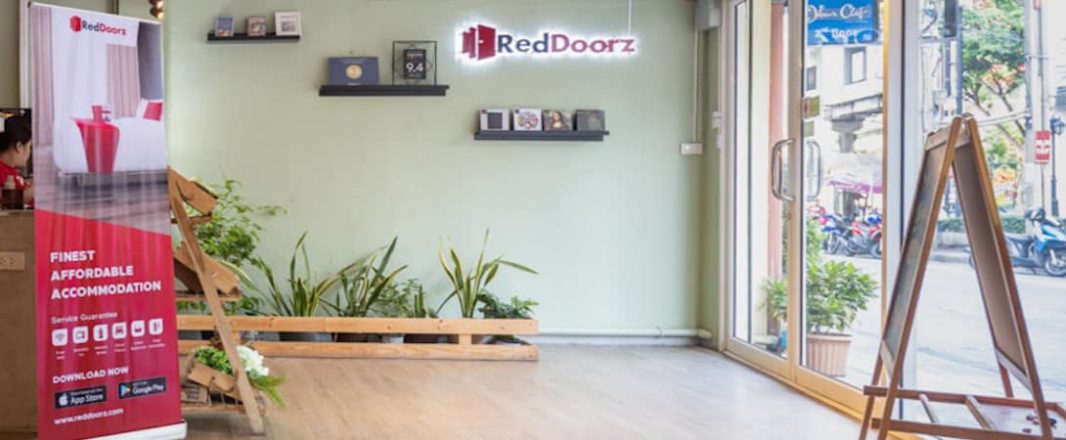
• All images credit (featured image is RedDoorz @ Folk Poshtel Silom, Bangkok): RedDoorz