THE Asia Pacific aviation industry has made a commitment to work with governments to reopen borders, ensure the continued safety of aviation, as well as revive air travel.
This affirmation was made in a joint declaration issued at the end of 64th Assembly of Presidents of the Association of Asia Pacific Airlines (AAPA) on November 13, together with the International Air Transport Association (IATA) and Airports Council International Asia-Pacific (ACI Asia-Pacific).
The summit held virtually this year against the background of the Covid pandemic expressed support for ICAO Council Aviation Recovery Task Force (CART) guidelines.
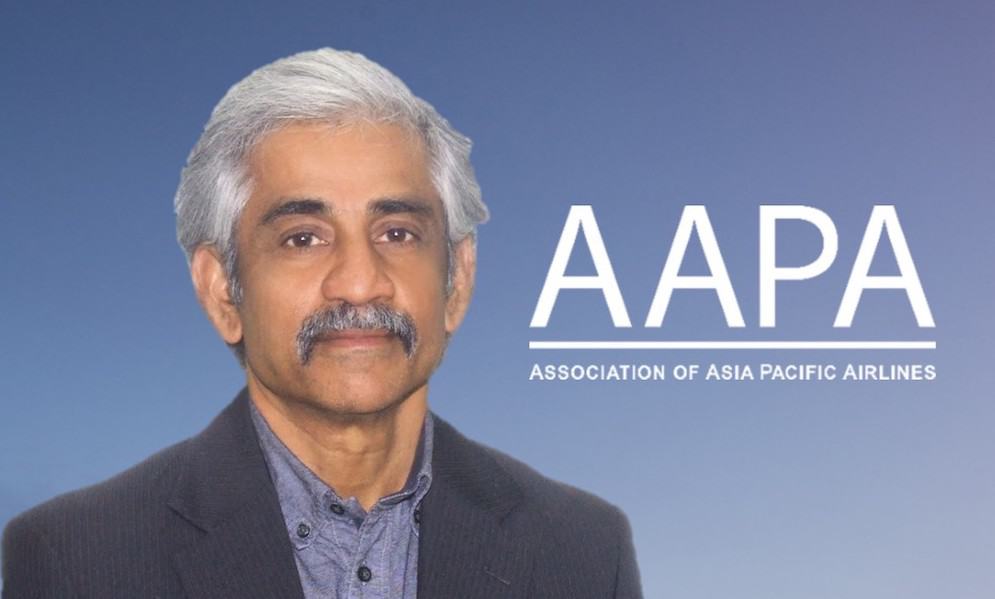
“The ICAO CART guidelines established earlier this year provide practical guidance to governments and industry to restart aviation and recover from Covid-19 in a coordinated manner, while keeping the safety, health and wellbeing of the travelling public as a top priority,” said Subhas Menon, director general of AAPA.
The industry will partner with governments to “harmonise” cross-border measures to ensure safe, smooth and sustainable air transport. It also supports the establishment of globally accepted Covid testing protocols as a way forward in reopening borders without onerous travel restrictions.
Menon opines that strong multilateral collaboration among governments to relax travel restrictions and quarantine requirements based on risk assessment and medical evidence is key to the aviation industry recovery.
Impact of Covid
In addition to the joint declaration, the summit also outlined the impact of Covid on the aviation industry in Asia Pacific and how the industry is faring.
According to AAPA, the pandemic has dealt a devastating blow to the Asia Pacific travel and tourism sector, traditionally the fastest growing market, with most of the top 10 air travel routes in the world.
“Travel restrictions and blanket quarantine requirements by governments have severely inhibited international air travel. Abrupt re-impositions of border closures by some countries due to the resurgence in Covid-19 cases have further dampened already weak demand. As a result, international passenger demand has remained at extremely low levels with little sign of any meaningful recovery as the year wore on,” said Menon.
Losses for airlines exceeds US$84 billion worldwide this year, with Asia Pacific airlines accounting for more than a third of the losses or US$29 billion. The fall in traffic is also steepest in Asia Pacific.
“The state of international air travel is particularly grim, with Asia Pacific airlines currently carrying less than two million international passengers per month, compared to 39 million a month in 2019. Seat capacity on international routes has accordingly fallen by 89% compared to 2019,” said Menon.
There are however two positives, Menon revealed. One, domestic travel is recovering well, with traffic in September reaching 67% of what it was a year ago while domestic capacity is already at 80% due to relaxation of internal travel restrictions in some countries.
Two, the air cargo market is even more resilient, reaching 83% of its 2019 level in September 2020, although the drastic decline in international bellyhold capacity is constraining global supply chains.
With indefinite border closures in the region, despite having achieved a relatively low infection rate, airlines are “under enormous pressure to minimise losses and conserve cash” to survive the crisis. Despite taking all possible measures to avoid job losses including slashing flights, deferring aircraft deliveries, suspending all non-essential spending, freezing recruitment, offering furloughs and early retirement schemes, many Asia Pacific airlines are now announcing job redundancies.
“Some 1.8 million direct aviation jobs in the Asia Pacific are potentially at risk as the pandemic persists and borders remain closed. More broadly, the air transport sector accounts for 3.1% of Asia Pacific GDP underlining the wider impact of travel restrictions on communities and livelihoods in the region,” disclosed Menon
The summit thus issued these resolutions calling on the governments to:
- Fully adopt ICAO CART, coordinate and harmonise aviation health measures, support development of mutually recognised testing framework and collaborate with industry to restore traveller trust.
- Work together and with the industry for the effective implementation of CORSIA & to develop alternative fuels that are environmentally sustainable.
- Refrain from putting further financial strain on industry by increasing burden of aviation levies.
Green lanes and travel corridors
Touching on this area that could hopefully lead to the gradual resumption of international travel, Menon stressed again that travel corridors, which have been sprouting within the region, have met with limited success because the requirements are very onerous, preventing a quick return to travel.
“For travel to really pick up you need to look forward to a quarantine free travel bubble, which at the moment is only taking place in a very limited fashion.”
He cited the Singapore-Hong Kong travel air bubble, starting on November 22, without the need for quarantine as a positive step in the right direction. “So, we can keep our fingers crossed that this will also start travel bubbles in the rest of the region.”
Looking ahead, Menon said that emerging and developing market would recede for the first time in the next few years. IATA has predicted international travel market will not return to 2019 level until at least 2024.
There are, however, some bright spots to break the doom – the Pfizer’s announcement of a 90% effective vaccine followed by US-based Moderna Inc with a second coronavirus vaccine that it said is 94.5% effective.
Then there is the prospect of more travel bubbles with the start of the Singapore-Hong Kong bubble.
Another is the inking of the Regional Comprehensive Economic Partnership (RCEP) on November 15, described as “the world’s biggest trade agreement”, by 15 Asia-Pacific nations (ASEAN plus five) at the conclusion of the annual summit of Southeast Asian leaders and their regional partners, held virtually this year due to Covid.
“Hopefully that (trade pact) will also spur some movement as countries look at the economic damage that the grounding of air travel is doing to their economies,” said Menon.
• Read the AAPA report of the “State of the Airline Industry” (PDF) here.
UPDATED: The travel bubble between Singapore and Hong Kong, originally, slated to start on Sunday November 22, will be deferred by at least two weeks after a spike in infections in Hong Kong.
• Featured image credit: anyaberkut/Getty Images