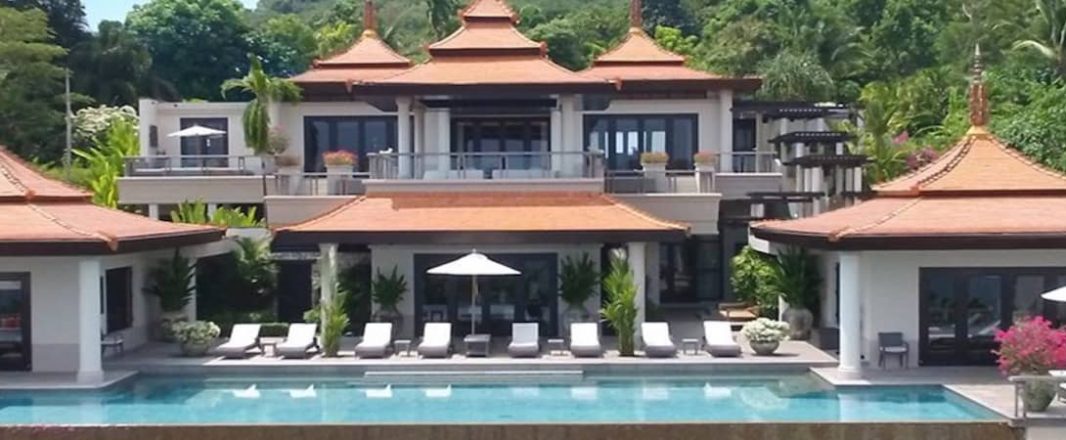
LIKE other hotels in Phuket, the award-winning luxury resort Trisara had been looking forward to closing April on a healthy note because domestic travel in Thailand had been gathering steam but then, came the third wave of infections, the largest outbreak in the country since last March.
Said Kittisak Pattamasaevi, CEO of Montara Hospitality Group, “We are now getting cancellations. We had been hoping for a strong April.”

Kittisak Pattamasaevi says new innovative ideas on how to engage with guests kept its team motivated.
A spike in infections came on the cusp of the Songkran new year, and there is mounting concern that it could impact the Thai island’s plans to reopen for international tourism by July. The government had planned a mass vaccination drive in Phuket in a bid to quickly inoculate at least 70% of its 500,000 population and achieve herd immunity.
Like other hotels in Phuket dependent on inbound tourism, Trisara has been badly affected. Before Covid, less than 10% of its revenues came from domestic and its top three international markets were the UK, Hong Kong and Germany although Kittisak said it was fairly evenly spread.
Today, the picture is completely changed with 100% domestic guests. “Business wise, it’s been very tough,” he said.
He moved from Bangkok to Phuket with his wife and daughter last year to be closer to his team in Trisara. The resort stayed open throughout, even at the start of the pandemic, because it wanted to ensure that villa owners were well looked after. It was this core of owners that proved valuable as a repeat source of motivation, word-of-mouth, and revenue through the pandemic.
To keep its team motivated, “we always had something for them to work towards”, said Kittisak. “We came up with new innovative ideas on how to engage with guests even if they weren’t coming to the resort.” It delivered ingredients and recipes from its Michelin-starred restaurant PRU to customers so that they could cook at home. It created videos of exercise classes done on the resort’s grounds.
Its new purpose-built wellness resort & residential community project, Tri Vananda, announced in 2019 and now completed, could not have been planned at a better time. Developing it kept the team busy and thinking about the future. When it was announced, the group said it would invest about US$220 million to create “Asia’s largest and most comprehensive wellness residential community”
Tri Vananda, which means “Forest of Lasting Happiness”, will feature 298 villas, anchored by a wellness resort “specialising in integrative and functional medicine and cognitive wellbeing”. Villa sales started in July 2020.

“We had been thinking about what to do with this plot of land near Trisara, four times the size of Trisara, and we were using it for our nursery,” said Kittisak, whose father founded the company in 1999. “We thought wellness would work well, Phuket and Thailand have been successful at medical tourism and it was a natural next step.”
Personal family experience involving his father, overcoming many challenges by achieving cognitive resilience through mindfulness practice, also strengthened the conviction in the family-run business that this was the right thing to do. “My father was able to manage stress and think clearly to overcome crises with mindfulness. There’s also been growing awareness of wellness through the pandemic,” said Kittisak, “so we believe it is the right product at the right time.”
As a young CEO, Kittisak admitted to the difficulty of cutting costs in a family business. “When I was in school, I learnt that if something like this happens, you cut deep and you cut once, so the people who remain are less impacted. But when you look at your colleagues as family, it’s very difficult to do that. You want to protect everyone but it’s hard when you don’t know how long this will go on for.”
The key word is to do it “gracefully”, he said. A mix of early retirement packages, salary retention and salary adjustments were made. “We did not cut wages of people who were at the frontline, earning low income, but they suffered too because service charges make up half of their income. We couldn’t retain everyone, we had to let a few people go,” he said.
Looking to the future, one key lesson he and other Phuket hoteliers have learnt is that to be more resilient, they need a strong domestic market plan. “Ideally you should have a business that can cover fixed costs with domestic, that’s a more resilient model. If you have fewer numbers of guests, then how do you get them to repeat and engage them at home as well? We have to change our business in the long run so that when international opens up, that will be the icing on the cake.”
One challenge is changing the product to meet the tastes of a domestic guest vs an international visitor but as it turned out, in 2017, the group started renovating Trisara to cater to regional guests. “One clear thing is, the younger generation and regional customers prefer lighter colours and those villas and residences have proven popular with the domestic market.”

And even though it had to adjust its rates downwards for domestic guests, it found that local customers spend more on food & beverage and unlike the “fly and flop” culture of foreign guests, they like to stay active and so the hotel had to plan lots of activities around their stays. This has created opportunities for future ancillary revenues.
“The reality though is that the domestic market in Thailand is not huge and there is too much inventory,” said Kittisak. “We have to hope that, if possible, Phuket can still open by July. That means we need one million doses of the vaccine, for 500,000 people to be vaccinated twice.”
While a lot of restaurants and other businesses catering to inbound vistors have shut, “nature has been amazing. Our guests tell us this is a once-in-a-lifetime experience to see Phuket the way it was before the movie “The Beach” came out,” quipped Kittisak.
As for how the pandemic has made the family rethink the hospitality and travel business – other than Trisara, Montara owns Praya Palazzo, a boutique hotel in Bangkok and Prince Theatre Heritage Stay in Bangrak, Kittisak said, “It’s shown us how vulnerable the business is. One thing we must do is make sure we have a strong domestic base and create value for our customers who are not on property. Villa owners kept the business going, we had fewer customers but deeper engagement, so villa residential sales is a good way to go.”
Note: Kittisak Pattamasaevi is speaking at the WiT Travel Roadshow Episode 2 on April 29. You can sign up here.
• All images credit (featured image is of a pool residence at Trisara): Montara Hospitality Group