“The headwinds of Covid became tailwinds for our pivot”, says Dylan Tan
WHEN Dylan Tan and co-founder Vishvesh Suriyanarayanan made the decision to pivot their start-up Split in March 2020, it was a move borne of desperation. Sixteen months on, instead of desperation, it looks like inspiration that prompted the shift.
Split was originally founded to offer Buy Now Pay Later services in travel bookings. After winning WiT Singapore’s 2018 Startup Pitch, and subsequently raising VC funding from 500 Startups at the end of 2019, Split found itself in the right place, at the worst possible time.
“Can you imagine, raising money for a company that was specifically for travel, at end 2019,” Tan reflects, continuing, “it was pretty clear early last year that it probably wasn’t going to work out.”
But with a solid BNPL platform in place, Split’s offering was still sound, it just needed to find a new market, which it did, pivoting to e-commerce and retail merchants to enable them to offer BNPL services to their consumers.
Tan is candid about what happened, saying “we did not know this would work before we pivoted, but now looking back, we clearly see why it worked out in our favour. The headwinds of Covid [for travel] became tailwinds for our pivot.”
And it does seem to be riding those tailwinds strongly. Tan shares some growth figures, saying “it took us about five months to hit our first million dollars of sales we delivered to our merchants, it took us about two and a half months to deliver our next million dollars. And now we consistently deliver our merchants seven-figure sales every month.”
From a cold start, Split now works with around 700 businesses in Malaysia including big names like Dyson, and Apple’s premium resellers, and recently signed a partnership with the publicly listed Malaysian payments company GHL.
With an active user base of about 38,000 users, Split is also the first BNPL service in Malaysia to be certified Shariah compliant.
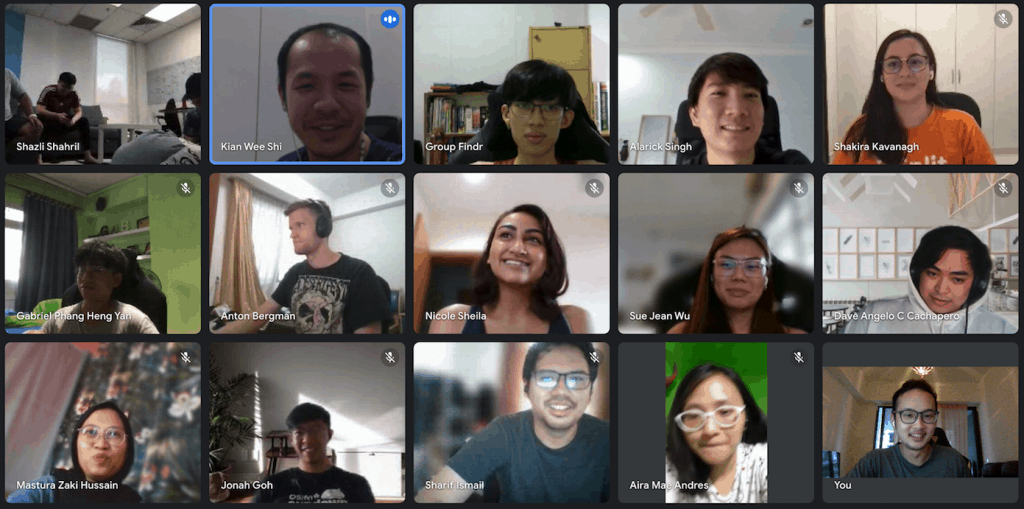
The team has also grown to 17 members (from five at the start of the pandemic), half of whom are based in Malaysia and whom Tan has only ever seen virtually.
BNPL solutions needed now more than ever
Indeed, Tan says, while not being flippant or downplaying the economic costs and generalised misery that the pandemic has caused, these exact effects were what accelerated demand for a platform like Split.
“With a global pandemic, people lose their jobs, people’s incomes get a bit more unpredictable, they need to budget their purchases a bit better,” he continues, “we give consumers the comfort and confidence to make purchases while spreading out their budget. Whereas for merchants, our value proposition is we deliver incremental revenue to them without them having to offer unsustainable discounts. We’re providing value to both parties, and that’s why adoption has been way better than we expected.”
Merchant behaviour and expectations also shifted considerably as a result of the pandemic, “everyone knows business is being done online” and where previously an average sales cycle might take anywhere from two weeks to a month, new merchants could be brought onboard virtually and in a single day.
Tan observes that this shift worked in Split’s favour enabling it to compete against well-funded competitors that had ground teams visiting merchants, while he was closing merchants in Malaysia from his bedroom in Singapore. In fact, Tan has yet to meet in-person any of the 700 merchants that Split has signed with since the pivot.
Risk management – more than just technology
More than a year on from the pivot, in what Tan refers to as “phase 3”, Split is building powerful analytics from consumer data on repayments and delinquency rates, which allows them to make approval decisions with greater confidence.
He gives the example of finding out that the kind of merchants they work with are huge indicators of whether customers will pay. “At first, we’ve discovered that different kinds of merchants will attract different profiles of consumers and therefore, a proxy to credit risk is filtering out the merchant in the first place.”
But it’s not as straightforward as that, factors like where the merchant is located, different price points, different product categories, can all affect repayment rates.
Tan explains, “[In this third phase] with enough data points, on whether consumers pay us back or not, we can put in a bit of computing power and then say ‘Okay, look for these past 100,000 payments, can you create a prediction – for every new consumer that comes in to use our service, compare them against the last X number of transactions – give me the probability of this customer paying us late or not late, based on a number of factors like where they are buying from, how much they’re buying, what they are buying, things like that.’ So very long story short, [when we] started out, we had no idea who’s going to pay us back. Now, we have a pretty high level of confidence on whether someone is going to pay us back or not.”
And of course, the more data they get, says Tan, the better they get at predicting repayment rates, though he is cautious of “overfitting”, a kind of tunnel vision that results in only ever accepting a certain consumer profile. To combat that, says Tan, Split consistently samples outside its focus parameters, to evolve and tweak the model.
So what happens when someone does miss a payment? Beyond investing in the technology to be able to predict good customers, Tan says, “when someone misses a payment, we inject a level of empathy instead of penalty, where we reach out to the customer, and work out a way to accommodate a new payment method or a new payment date without penalising. This creates a virtuous cycle where good consumers really appreciate that and will come back to use our service which also helps us reduce that risk.”

Looking toward the future, Tan hopes to close out Series A funding in the next six months, with a view to becoming “the unrivalled BNPL operator in Malaysia”.
And what does that entail? In this case, it isn’t just the platform, Tan says, “the actual product of offering deferred payment – an engineer could build it in a week or two. But the important part is the other parts of the puzzle. Your credit risk, taking that risk, your merchant partnerships – do you actually have merchants to connect with; do you have an active user base, who will be going to your merchants to buy; do you have a recognisable brand in the market; can consumers and merchants trust that brand; all these things have to be built on top of the core payments function.”
Despite the low barriers to entry, Tan sees competitors entering the market as a good thing, because it will drive adoption of BNPL and because he feels BNPL is not a winner-take-all space, comparing it to banking where “multiple profitable banks can exist, serving different segments of consumers”.
Asked about a return to travel, Tan believes that providers will need to evolve, building in greater flexibility, to cope with the unpredictability of lockdowns. If that happens, BNPL solutions can smooth over the other side of the equation – the unpredictability of incomes. Solve these two problems, he says, and you will give consumers the confidence to book something.
Until then says Tan, he is monitoring travel closely and “when there is an opportunity to partner with a travel company in this part of the world, we are ready to work with them.”
• Featured image credit: Duncan_Andison/Getty Images