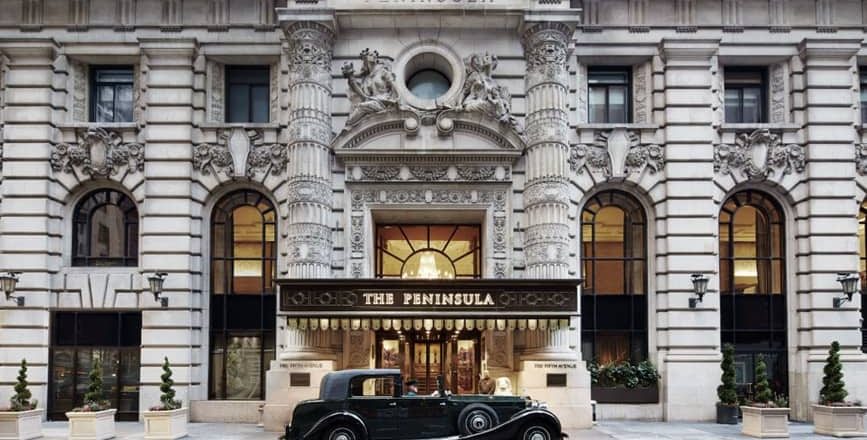
BUOYED by the success it’s seen with its first hotel client, The Peninsula Hotels, TechSembly, an e-commerce platform that builds local storefronts for businesses, is taking the plunge to focus on the hospitality sector.
CEO and co-founder, Amy Read, first met executives from the Hong Kong-based luxury hotel group at a conference three years ago in Hong Kong and “they saw a need for our software service which would allow each of their properties to manage their independent storefront”.

Since then, it has worked with the hotel group to evolve the product. “They wanted a push to food & beverage and didn’t want to outsource to delivery companies, so we created an f&b product for them which worked very well during the pandemic,” said Read, who has been based in Singapore since 2012.
“We now have an integrated checkout that supports multiple items – gift vouchers, mooncakes, f&b products, third party sales, for example, luxury bedding – with one payment gateway. They’ve been able to generate new revenue streams and the sales have been significant,” said Read.
Buoyed by the success it’s seen with Peninsula Hotels – case study here, Read now wants to focus the company on serving the needs of hospitality companies. “With the pandemic, hotels are more open to pivoting and generating new revenues beyond the room so it’s good timing for us,” said Read. “Our most in-demand feature is the ability for integrated checkout, and payment in local currencies as well as payout to individual hotels.”
Techsembly is Read’s second startup, which she established in 2018. Her first startup is Gifts Less Ordinary, which sells personalised gifts across Singapore, Hong Kong, Australia, New Zealand and the United Arab Emirates. The lessons she learnt from that first foray in 2015 led her to TechSembly.
In a media interview speaking about her decision to quit corporate life to become an entrepreneur, she said, “People assume you go into gifts because you’re a girl, but I also went into the (digital e-commerce industry) because I loved the tech.”
She told WiT: “With Gifts Less Ordinary, we were matching bespoke local artisan brands with global, and it was built on Magento. My co-founder built the original site and we customised it to build local storefronts for local artisans for local markets. But because we had to do so many customisations – every artisan had different needs – the tech became too complex and we were left in a difficult situation.
“We had spent so much money building and customising the platform but we realised we had to re-platform. So we invested whatever we had to rebuild it into a global ecommerce platform where brands could have centralised control of insights and analytics but each store or property could manage their independent storefront with their own theme and currency.
“We didn’t build it for hospitality but hospitality found us. We have learnt now how much revenues they can generate and what we have built for Peninsula is what every hotel wants – one integrated platform to sell multi products with one checkout. They can just plug and go.
“Focusing on hospitality means we can serve our customers better and add more value. We want to own a niche and evolve with that niche. It’s hard to compete with Shopify.”
She’s spent most of the year speaking to hotel groups and acknowledges it’s a long sales cycle. “The key is to understand their pain points and sign off process. There are many individuals you need to satisfy – security checks, sales, f&b.”
TechSembly offers two pricing models – a monthly recurring platform fee or a flat percentage fee. It closed a seed round end of March, raising £1m, and plans to do another fund raise in 2022. The 30-strong team is spread out over Singapore, Hong Kong and the UK, with a development team in Pakistan.
Said Read: “I needed to do Gifts to get me to TechSembly. It’s very hard to start a brand from zero, so you look at brands that already have a brand name, and awareness and customers, and you help them pivot, then you have a more sustainable business.”
Featured image credit: Peninsula Hong Kong (peninsula.com)