THE World Travel & Tourism Council (WTTC) and Trip.com Group (Trip.com, Ctrip and Skyscanner) have published ‘Trending in Travel’, a new report that provides an outlook on the shift in traveller behaviour and future booking trends in the wake of Covid-19.
The report focuses on booking trends, consumer considerations and consumer profiles, as well as features examples of markets whose resilience has provided a platform for the recovery of the travel & tourism sector.
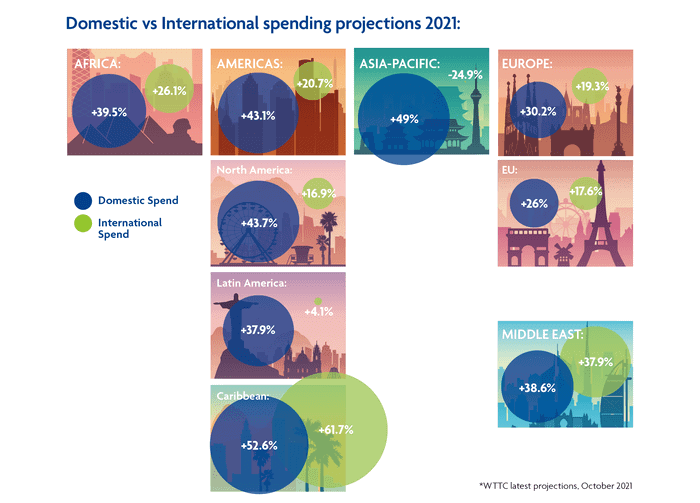
The latest projections from WTTC show strong growth in international spending for 2022 and beyond, expected to overtake domestic spending in 2022 as more destinations around the world ease restrictions and as vaccination rates continue to rise.
Following a 69.4% decline in 2020, global international spending is set to rise by 9.3% in 2021 and significantly by 93.8% in 2022, the organisation added.
The report also reveals how severe and inconsistent travel restrictions around the world have resulted in a significant rise in domestic tourism. , Domestic hotel bookings surge by more than 200% on Trip.com’s platform this year compared to 2019. Half of global travellers plan to travel for a domestic holiday in the next 12 months.
It, however, points out that although domestic travel will provide a much-needed boost to the sector, the return of international travel is critical to rebooting the global economy.
According to the findings Covid has changed the way people travel – from younger generations being the first to return to travel, to increased demand for longer stays, the importance of fee-free cancellations, and enhanced health and safety protocols.
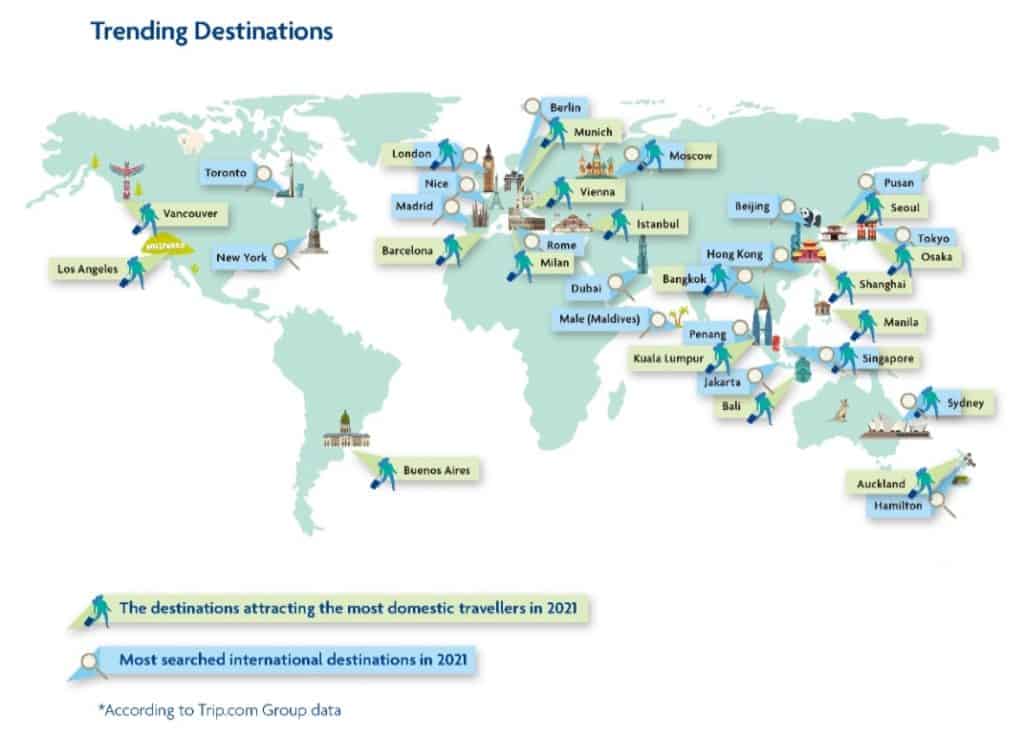
Due to ongoing travel restrictions travellers are increasingly seeking secondary destinations as their destination of choice. According to Trip.com’s hotel booking data, Abu Dhabi (UAE), Chiang Mai (Thailand), Doha (Qatar), Florence (Italy) and Frankfurt (Germany) are the most popular secondary destinations in their respective countries in 2021.
Ctrip data shows that bookings for the great outdoors will predominate in the short and medium term. For example, in China – one of the world’s largest travel markets – nature-related attraction bookings have increased by 265% in the first half of this year compared to the same period last year.
The pause in travel has also heightened consumers’ eagerness to travel more sustainably with more than eight in 10 (83%) of global travellers saying they would make sustainable travel a priority in the future.
Reinforcing this long-term trend, since its launch in 2019, the report shows 68 million travellers have opted to book a “Greener Choice” labelled flight on Skyscanner, a comparatively lower-carbon flight choice.
The report also finds 70% of travellers in many major countries such as the US, Spain, the UK, Canada and Japan plan to spend more on travel in 2022 than they have in the last five years, including 2019 – one of the best years on record for travel & tourism.
“It is clear that the wanderlust for travel remains. After almost two years without being able to travel freely, consumers are eager to explore, but they are aware of the impact their travel habits have on the world, and their preferences, needs and demands have changed, says Julia Simpson, WTTC president & CEO.
“As the travel & tourism sector adapts to these emerging trends, sustainability must remain front and centre of everything we do.”
Jane Sun, CEO of Trip.com Group, added: “Travellers around the world have shown their eagerness to travel, whether limited to domestic travel or able to cross borders, we see a huge amount of pent-up demand steadily being released.
“To better evolve with the recovery we must understand travellers, and as an industry adapt to emerging trends.”
Looking ahead, WTTC research shows the global recovery of the travel & tourism sector is picking up pace with the sector’s contribution to global GDP projected to rise by 30.7% in 2021 and 31.7% in 2022.
• Download the full ‘Trending in Travel’ report here.
* NOTE: The ‘Trending in Travel’ report was released before the recent detection of the Omicron Covid variant, which has since led to several countries announcing plans to restrict travel from southern Africa (where Omicron emerged) and a few nations (Japan and Israel) suspending entry of all foreign visitors. Projections in this report could thus be amended.
• Featured image credit: mihtiander/Getty Images