THE Wrap is a round-up of news in the travel and technology sector – new partnerships, product launches, aviation industry updates, innovative solutions, and more …
APAC airlines’ passenger traffic remains depressed

Passenger traffic volumes remain depressed for APAC airlines, while air cargo demand demonstrates resilience. (Image credit: Gudella/Getty Images)
There is still no uplift in international passenger demand for Asia Pacific airlines as a result of “the reintroduction of onerous travel restrictions” with the rapid spread of the highly transmissible Omicron variant.
This is the reason why international passenger demand remained markedly depressed compared to pre-pandemic levels, said the Association of Asia Pacific Airlines (AAPA) when releasing the preliminary January 2022 traffic figures.
The region’s airlines carried a combined 2.7 million international passengers in January, representing 8.1% of the 35.2 million recorded during the same month in 2019. international passenger demand averaged only 8.9% of 2019 levels (in revenue passenger kilometres), while available seat capacity was 17.9% of 2019 volumes.
The international passenger load factor averaged 41.3%, the second consecutive month where load factors surpassed the 40% mark.
Air cargo is again the bright spot for APAC airlines. The opening month of 2022 saw further growth in international air cargo markets due to increased shipments ahead of the Lunar New Year festive period. In addition, global manufacturing activity, while moderating slightly due to Omicron related disruptions, remained largely supportive.
“While year-on-year growth rates are expected to moderate in the coming months, conditions for air cargo remain positive in tandem with further expansion in global economic activity,” Subhas Menon, AAPA director general stated.
Despite the rise in Omicron infections dampening the anticipated recovery in international travel at the start of the new year, Menon noted that increased vaccination rates and the relatively reduced risk of severe illness from Omicron variant has led to a number of Asian governments adapting to living with Covid. This includes reversing or reducing international travel restrictions.
“As we move into 2022, recovery in international air travel should gain momentum.”
He, however, said airlines still face challenging operating conditions. “The current escalating conflict in Ukraine may have a wider operational and economic impact on Asian airlines, whilst elevated fuel prices threaten to suppress earnings in an industry already struggling to survive.
“While travel restrictions have been relaxed, much more progress can be achieved to increase confidence in the travel process, with greater harmonisation and easing of cross border travel measures based on risk assessment. To this end, AAPA continues to work cooperatively with industry stakeholders and governments for the safe and sustained recovery in air travel.”
Emirates joins hands with TAT in promoting tourism to Thailand

Joint efforts by Emirates and the Tourism Authority of Thailand to drive tourists to the Kingdom (Image credit – Buddha statues in Wat Arun, the Temple of Dawn, in Bangkok: structuresxx/Getty Images)
In the spirit of collaboration UAE’s Emirates has signed a Memorandum of Cooperation (MoC) with the Tourism Authority of Thailand (TAT) to attract travellers to Thailand.
Under the agreement, both the tourism body and Emirates will explore joint initiatives and opportunities for collaboration to enhance each party’s marketing and promotional efforts in the tourism drive.
Emirates will develop initiatives to boost tourism to the Kingdom by showcasing it to customers across its global network. The airline will also promote the country through its network of agents in key strategic markets, in addition to collaborating on joint familiarisation trips.
Yuthasak Supasorn, TAT governor, said the MoC would pave the way for strategic tourism collaboration efforts Emirates. “TAT will assist Emirates in developing airline passenger traffic from key strategy markets by supporting tour operators and travel agents in agreed target markets across the Emirates network with promotional giveaways, special promotional packages, incentives and marketing spend.”
Orhan Abbas, Emirates senior vice president of commercial operations – Far East, said since the launch of the airline’s operations to Thailand 30 years ago, “its destinations are among the most popular in our South-east Asian network, especially amongst holidaymakers from the US, Europe and the Middle East.”
The carrier launched its services to Bangkok in 1990, and in 2012 started direct flights to the resort island of Phuket (currently with 11 services weekly). It resumed operations to Bangkok in September 2020 and currently provides two daily services to Bangkok with the Boeing 777-300ER and an additional daily flight on the A380 aircraft.
Malaysia Airlines, Qatar Airways expand partnership to lead travel in Asia Pacific

Malaysia Airlines and Qatar Airways expand their long-standing relationship with a new MoU. (Image credit: Malaysia Airlines)
Long-standing partners Malaysia Airlines Berhad and Qatar Airways have enhanced their relationship with a new Memorandum of Understanding (Mou).
The two carriers said the MoU heralded “a new chapter” in their long-standing relationship to offer “unrivalled connectivity” across both airlines’ global networks via their key hubs – Hamad International Airport and KL International Airport (KLIA)
Both airlines will leverage each other’s network strengths and provide more access for passengers to travel to new destinations beyond their individual networks, while offering new and exclusive product to their customers soon.
Malaysia Airlines’ passengers will enjoy seamless connectivity to popular destinations in Europe, Africa, Middle East and the Americas with Qatar Airways’ network via Doha.
In turn, Qatar Airways’ passengers will gain better access to the domestic Malaysia market and key destinations in Asia such as Penang, Langkawi, Medan (Indonesia) operated by Malaysia Airlines via KLIA.
The two oneworld partners have also agreed to maximise synergies in other areas of the business such as air cargo, operations or commercial services that, they said, “will create a game-changing innovative synergy for both carriers in leading the new travel demand ahead.”
Izham Ismail, group chief executive officer of Malaysia Airlines Berhad said: “This partnership will provide better efficiencies and a more comprehensive network for our passengers whilst we further boost the growth of traffic flow via KLIA, which will serve as a primary gateway to Malaysia domestic and selected South-east Asian region destinations.”
He added the MoU with Qatar Airways is also an important part of the airline’s long-term business plan, while providing passengers with safer and increased choice of flights, wider destinations and greater flexibility.
“We believe the strategic partnership will put both full-service carriers on a stronger footing to compete in the highly competitive market as we continue to navigate recovery of the pandemic.”
Qatar Airways group chief executive, Akbar Al Baker, said this new strategic cooperation with its oneworld partner cemented its commitment to Malaysia that the airline has been serving for 20 years.
“As we move forward to a post-pandemic world successful business is driven by strong partnerships, and this close cooperation with Malaysia Airlines is a firm example of how symbiotic international partnerships can pave way to industry recovery.”
The two airlines launched their codeshare cooperation in 2004 and have expanded the partnership in recent years, which today comprises 62 codeshare destinations in Malaysia, South-east Asia, Australia, New Zealand, Middle East, Europe, the Americas and Africa.
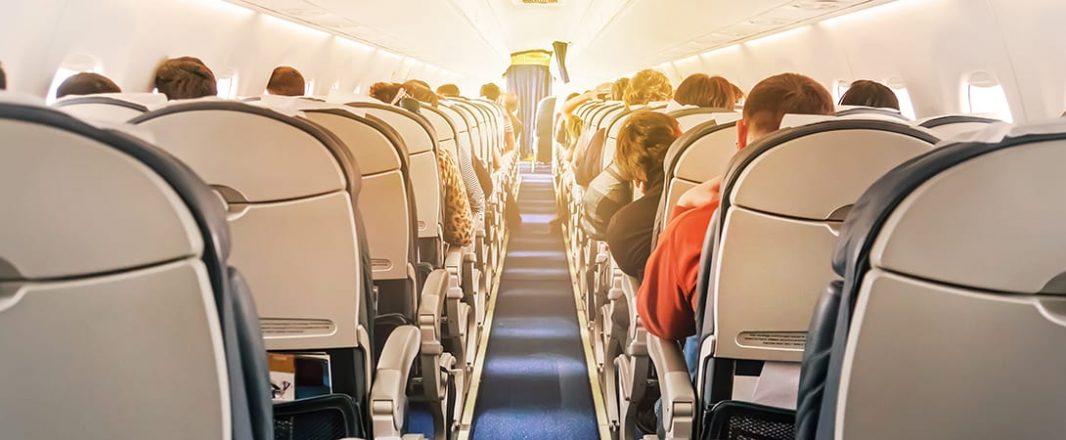
• Featured image credit: Diy13/Getty Images.