Amid Japan’s tentative reopening, Indonesia’s removal of tests, IATA’s Walsh calls for acceleration of recovery
THE two big gaps in Asia Pacific’s aviation recovery are China and Japan, noted Willie Walsh, IATA’s director general, in his keynote address at the Changi Aviation Summit this week.
“So long as the Chinese government continues to maintain their zero-Covid approach, it is hard to see the country’s borders reopening. This will hold back the region’s full recovery.
“While Japan has taken steps to allow travel there is no clear plan for the reopening of Japan for all inbound visitors or tourists. More needs to be done to further ease travel restrictions, starting with lifting quarantine for all vaccinated travellers, and removing both the on-arrival airport testing and daily arrival cap. I urge the government of Japan to take bolder steps towards recovery and opening of the country’s borders,” said Walsh.

Walsh urged Asia Pacific states to further ease border measures to accelerate the region’s recovery.
Japan is taking tentative steps towards reopening. The government announced that it would accept small-scale tours for vaccinated tourists from the US, Australia, Thailand and Singapore as a trial later this month toward the full-scale reception of foreign visitors planned for June. During the trial phase, small groups would go on fixed package tours limited to areas where prefectural governments have agreed to accept them so that their activities can be managed.
Only visitors who have had three Covid-19 shots will be able to participate, according to the Ministry of Land, Infrastructure, Transport and Tourism. The government is arranging to double the cap on arrivals from overseas to 20,000 people per day in June.
This week too, Indonesia announced that it would scrap all testing for vaccinated travellers from May 18, joining the growing list of test-free destinations in South-east Asia.
In his speech, Walsh urged Asia-Pacific states to further ease border measures to accelerate the region’s recovery from Covid-19.
“Asia Pacific is playing catch-up on restarting travel after Covid-19, but there is growing momentum with governments lifting many travel restrictions. The demand for people to travel is clear. As soon as measures are relaxed there is an immediate positive reaction from travellers. So it is critical that all stakeholders, including governments are well-prepared for the restart. We cannot delay. Jobs are at stake and people want to travel,” said Walsh.
The Asia Pacific region’s international passenger demand for March reached 17% of pre-Covid levels, after having hovered at below 10% for most of the last two years. “This is far below the global trend where markets have recovered to 60% of pre-crisis levels. The lag is because of government restrictions. The sooner they are lifted, the sooner we will see a recovery in the region’s travel and tourism sector, and all the economic benefits that will bring,” said Walsh.
Walsh urged Asia Pacific governments to continue easing measures and bring normalcy to air travel by:
- Removing all restrictions for vaccinated travellers.
- Removing quarantine and Covid-19 testing for unvaccinated travellers where there are high levels of population immunity, which is the case in most parts of Asia.
- Lift the mask mandate for air travel when it is no longer required in other indoor environments and public transport.
“Supporting and more importantly accelerating the recovery will need a whole of industry and government approach. Airlines are bringing back the flights. Airports need to be able to handle the demand. And governments need to be able to process security clearances and other documentation for key personnel efficiently,” said Walsh.
Walsh also called on Asia-Pacific governments to support the industry’s sustainability efforts.
“Airlines have committed to achieve net-zero carbon emissions by 2050. A key to our success will be governments sharing the same vision. There are high expectations for governments to agree a long-term goal at the ICAO Assembly later this year. Achieving net zero requires everyone to shoulder their responsibility. And among the most important things that governments should do is incentivizing the production of sustainable aviation fuels (SAF). Airlines have bought every drop of SAF that is available. Projects are underway that will see a rapid increase in SAF production over the next years. We see SAF contributing to 65% of the mitigation needed to achieve net zero in 2050. That will require governments to be much more proactive,” said Walsh.
Walsh acknowledged that there have been positive developments in Asia-Pacific. Japan has committed considerable funds for green aviation initiatives. New Zealand and Singapore have agreed to cooperate on green flights. “Singapore’s cross industry International Advisory Panel on a sustainable aviation air hub is a positive example for other states to adopt,” said Walsh. He also called on ASEAN and its partners to do more, particularly looking for opportunities in the region to expand SAF production.
At the same summit, transport ministers from seven South-east Asian countries pledged to work closely to urgently rebuild and restore air travel. In a statement, the ministers of Singapore, Malaysia, Indonesia, Thailand, the Philippines, Cambodia and Brunei said they will facilitate the mutual recognition of Covid-19 health certificates and the development of an ASEAN single aviation market.
Measures cited also include the harmonising of aviation-related public health and safety measures, as well as greater cooperation on sustainable practices such as environmentally sound new technologies.
Willie Walsh keynote address at Changi Aviation Summit
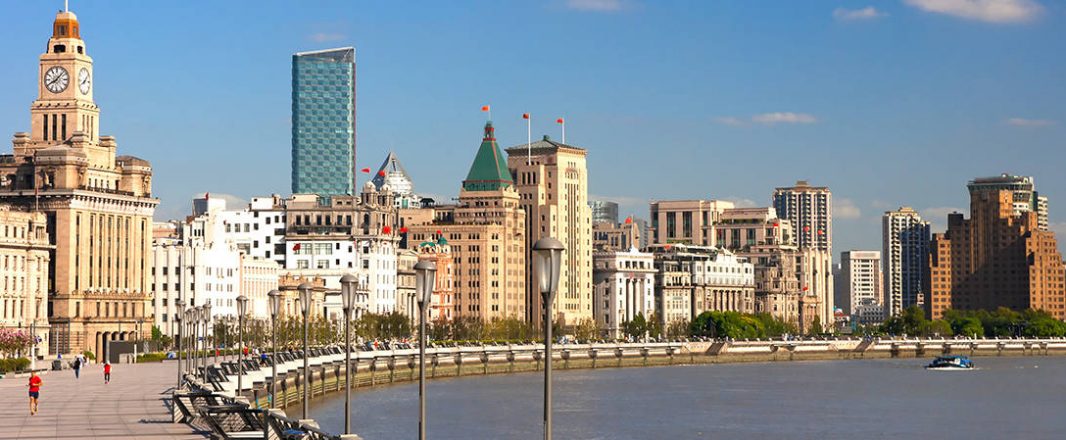
• Featured image credit (The Bund in Shanghai): huad262/Getty Images