US$8m fund raise to strengthen tech stack to bridge old and new world of airline retailing
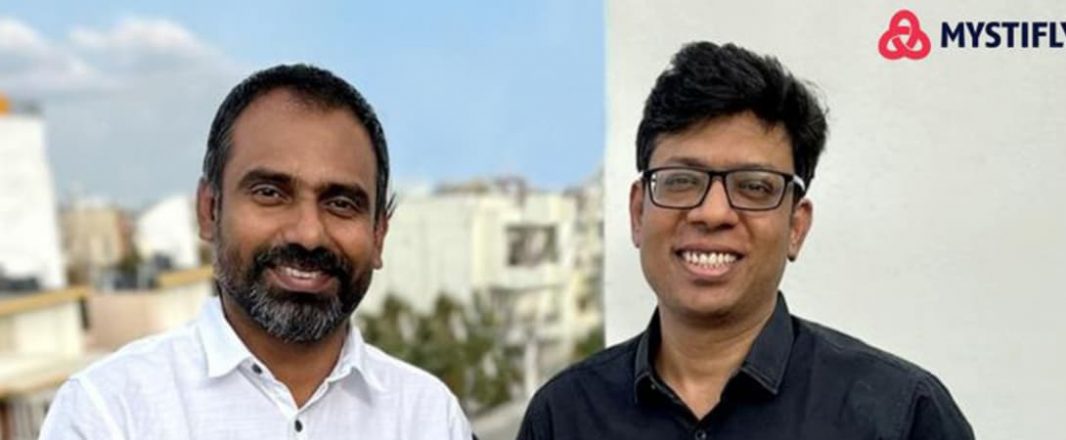
Its attempt to enter China cost it dearly. Then Covid nearly crushed it, at a time when its financial reserves had been severely drained. But Mystifly’s co-founders Rajeev Kumar and Bharat Goyal are back on top, still determined after 14 years since they started the flight startup to “make it easier for travellers to buy and experience air travel”.
The duo has raised US$8 million to continue to invest in building up its tech stack to enable intermediaries with an end-to-end shopping, fulfilment and payment solution and to build out a global business development team to scale the business.
Rajeev calls the latest Series B fund raise, from Cornerstone Venture Partners Fund (CSVP Fund) alongside earlier investor RSI, its “second chance” to pursue its mission of solving flight retailing at a time when he says the industry is going through a tectonic shift – “from operating in silos and a previous reliance on a single source of content to accessing carrier inventory across systems with a more holistic view”.
Speaking to WiT from his car in Bangalore where he was caught in a massive traffic jam – “it shows things are back to normal” – he said, “In truth, other than that adventure in China in 2018/2019, we had been on a sustainable growth journey and within six months of pulling out from China, we were back on track to profitability. We grew revenues three times and by December 2019, we had US$15m net revenues and we were tracking well from April 2019 to Jan 2020.”
Soon after the China mis-step, Covid hit and an already financially-vulnerable Mystifly found itself in deep waters. “Given the previous high cash burn, we faced a massive deficit,” he said.
It secured a bridge round of US$2.2 million from its first investor, Recruit Holdings, to help tide it through. “We took that money and we made it last for three years. We cut all marketing expense, we conserved as much as possible.
“We didn’t let go of anybody in the product and engineering teams. We had to fight the “Great Resignation” – health tech was aggressively hiring and salary levels grew almost 2-2.5x in india, from 2021 to 2022. We had to fight all of that, and we managed to run financially profitably in 2022.”
This was thanks to new revenue streams it created to adapt to Covid conditions – it set up a new call centre division, staffed it with 200 people, continued to invest in tech and product and launched a new platform called “Azygos” to enable non-travel players such as superapps, fintech’s and marketplaces to sell air easily.
Said Rajeev, “Our investment in multi-source search, servicing and payments platform has resulted in a self onboarding enterprise-level air travel platform for airlines and travel intermediaries. We’ve rebuilt the digital plumbing lines for airlines and intermediaries, enabling them to adapt to today’s e-commerce world.”
Rajeev calls it an attempt to bridge the old and new world of airline distribution, fulfilment and payments. “This whole journey started in 2012 and 2013 with the introduction of NDC and while we talked about the new world, there was a necessity to bridge the old and new.
“NDC addressed the offer side, without taking into consideration, fulfilment and payments. So you either end up with a crappy product or it takes too long – that’s what happened in the NDC world, it was conceived in silos, focused on offers, without considering the impact on settlement and order management.
“But now that payments and settlements have evolved to the level it is today, it’s become possible to build an integrated end-to-end single platform to bridge the old and new world.”
He added that given the fragmentation of airline content pipes, one single source is no longer enough and intermediaries need multi-source shopping solutions.
“Complexity is bigger on the shopping side today. Then servicing is the next challenge, you need multi-source servicing. What we have built is a multi-source shopping and servicing platform to allow intermediaries to bring their own contracts with airlines into the platform, with our API. It doesn’t need any intervention from Mystifly to onboard the platform.”
His intention with airline content is to “give power of content to our customers without creating dependency on Mystifly”.
This tech stack is a marked change from the previous Mystifly platform, which acted as a consolidator/marketplace where “anyone could get fares from us on a single API”.
“This entire, new flight stack – giving access to global air fares, LCCs included and where they can manage their own contracts with airlines – will help create a meaningful experience for travellers. Even though we are a 100% B2B player working with intermediaries, our mission is to take the stress out of travel.”