
Travel demand isn’t the problem, Visa’s Jay Patel told WiT Singapore. Conversion is, and the checkout button is where the traveller decides whether to trust you.
Travel is one of the most emotional things we buy. Weeks go into planning it: the destination, the flights, the hotel. Then comes the moment the finger hovers over the button.
“That button can control every experience after that,” said Jay Patel, global account director, B2B Travel of Visa, opening his keynote, “The Payments Moment: The Heart of Growth”.
“That button is where travel inspiration turns into revenue opportunity. But it’s also where the traveller decides if they’re going to trust us or not.”
He had no illusions about where payments sit in a traveller’s memory. “I don’t think anyone here has ever returned from a holiday and said, you know what the best thing was? Payment orchestration.”
Get it wrong, though, and it’s the one thing they will remember.
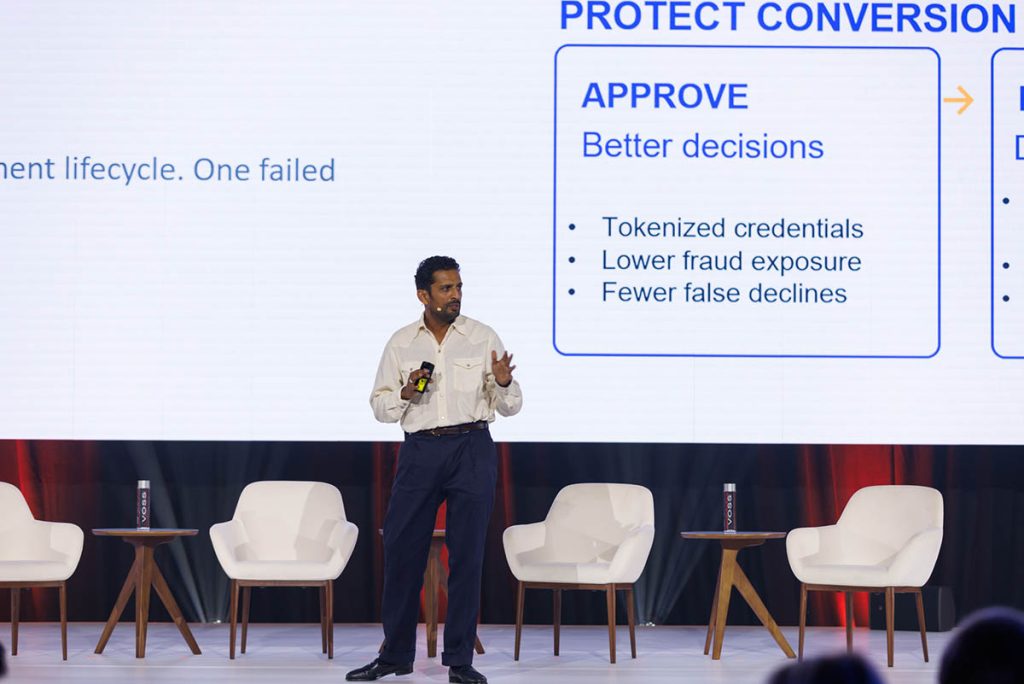
Demand is not the constraint
With travel demand higher than ever, Patel argued the remaining growth lies elsewhere. “Demand is not the constraint. We live for holidays.” The commercial question is how much of that demand actually converts. More journeys create more payment moments. Confidence decides whether the traveller trusts you with them.
He made it personal. Getting a family to agree on one destination and the right flight is hard enough. Add his football team’s fixtures and his wife’s schedule, and it becomes a negotiation. “You finally get to the consensus, everyone’s happy, you’re just about to book, and then it crashes. There’s no reason, it just doesn’t go through.”
At that moment, all the effort spent creating that demand “belongs to somebody else.”
The concierge, not the directory
Confidence, Patel said, does not mean giving travellers every possible choice. Ask a hotel concierge for a restaurant and you don’t want a directory of every restaurant in Singapore. You want two or three picks based on what you told them.
Checkout should work the same way. “You don’t want to see 27 buttons at checkout. That’s an eye test.”
What the industry should work towards: “One price, one credential and one confirmation.”
Traveller or fraudster?
Once complexity is stripped out, the next job is making trust work across the whole journey.
Patel’s example: a genuine traveller flies from London to Singapore, uses a new device and makes a high-value purchase in a different currency. To a traditional risk model, that looks suspicious. “But for everyone else here, that just looks like travel.”
The industry needs better intelligence to tell the traveller from the fraudster, rather than treating the legitimate traveller as a potential one.
Trust also doesn’t end at authorisation. It runs through approvals, confirmation, changes, refunds and disputes. Tokenisation already lifts approvals and cuts fraud. Patel’s sharper point was on refunds and disputes, which he wants the industry to stop treating as process. “This is a loyalty moment.”
Hit by fraud or a dispute on the road, would a traveller rather wait 26 days for a traditional chargeback, or have a rules-based solution settle it in seconds? “That’s the one you’re going to remember.”
When something goes wrong on holiday, it is so much worse than at home.
When the agent presses buy
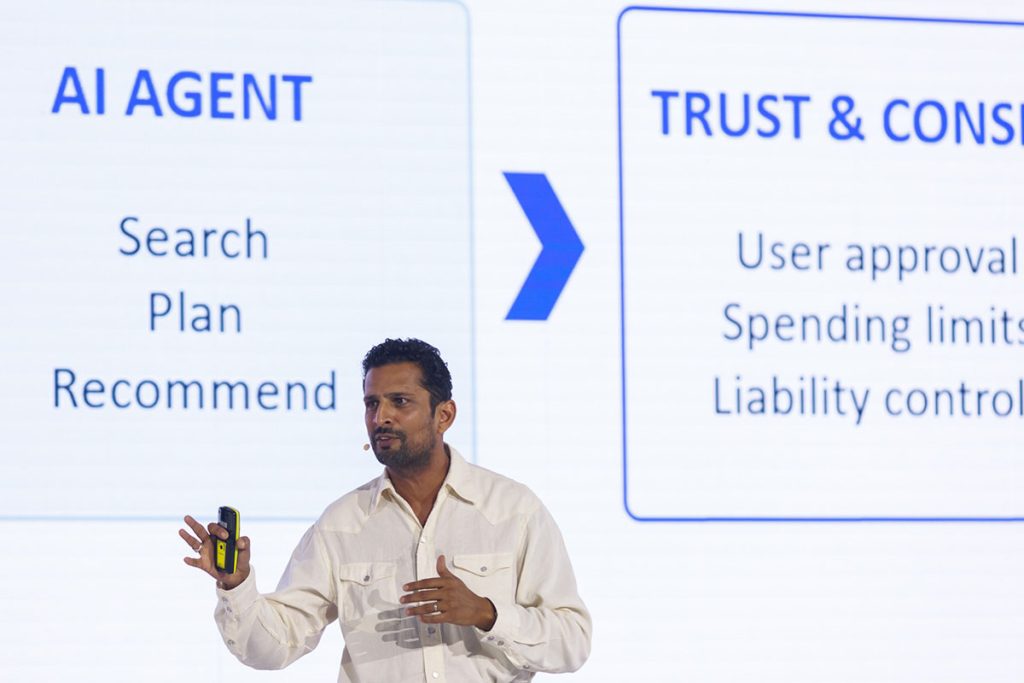
Trust matters even more when the traveller is no longer the one pressing the buy button. Many already use AI for inspiration and recommendations. The next commercial shift, Patel said, comes when the agent books and pays. Find me a weekend in Tokyo. This is the type of hotel I like. Direct flight only. Now go book it and pay for it.
The balance is giving the agent enough authority to do the job, “but not enough authority to the point where it goes and upgrades you to first class.”
Like watching a swan
Even one simple AI-made booking activates a much larger ecosystem: an OTA, a travel agent, a corporate, an airline, a hotel, a mobility partner, an experience provider. The traveller expects one coherent confirmation, however the businesses fulfil the journey.
That puts the weight on supplier payments: embedded payments, virtual credentials, automated reconciliation and real-time visibility that give suppliers certainty.
Great travel, Patel said, is a bit like watching a swan. Smooth on the surface. Underneath, tools, suppliers and reconciliation processes paddling hard. The traveller shouldn’t have to see any of it.
Three moves
His winning strategy came down to three areas:
- Convert more. Show relevant choices and make better decisions so conversion is as strong as it can be.
- Trust through identity, consent and controls. Tokenisation sits at the core.
- Connect the ecosystem. Get supplier payments right, so what the traveller doesn’t see runs smoothly and cleanly.
None of this means the simplest payment infrastructure. Behind the scenes, it will look more sophisticated, even complicated. The goal is “to make the most sophisticated payment ecosystem in history feel like the best travel experience in the world.”
His closing line: “You unlock payments and you unlock the heart of the traveller.”
Watch Jay’s full session here: