
Fajin Hu, the airline’ s senior manager of e-commerce, said that although the majority of air fares placed on its website were lower than those in its other distribution channels and yes, the airline does want to push direct sales, “our goal is not to reduce intermediary costs”.
He said that it was a way of providing self-service for customers and strengthening interaction with end users through the Internet.
Customers want to interact directly with us, he said during a panel on “Channel Distribution vs Direct Sales” at the China Travel Distribution Summit 2010 in Beijing last week.
The only way to provide self-service and improve engagement and thus loyalty was through its own website, he added.
Hu said that compared with OTAs such as Elong and Ctrip, Air China’s direct sales was still weak. “My team is only 20 and although we have control or product or price, we can do better.”
Only four percent of total sales comes through its own website – 10% including call centres. This compares with the 20-30% direct sales and 10% call centres being done on average by Star Alliance member airlines.
In the future, he said, Air China would use its website to deploy a price strategy. “It is not our low fare channel, we want to provide content and services to grow loyalty.”
Delta Air Lines’ director China and Hong Kong, Sandeep Bahl, said that in China, retailers such as Ctrip and Elong were very strong.
“For us in China, we do not have the resources – how many website channels can we open? The question to ask is, who are our partners and how can we benefit from each other?”
He said that since the merger of Delta and Northwest, the focus has been on providing information to customers on their mobiles and the airline has launched iPad and iPhone apps.
Airline commissions were another hot topic during the discussion moderated by Larry Liang, general manager, airline solutions for Travelsky.
As in other markets, airline commissions are also dwindling or disappearing in China. In April this year, Air France KLM stopped paying commissions. All Nippon Airways, China Southern and Air China went from five percent to three percent in July, while Lufthansa and Swiss International cut from three to one percent from August.
And in 18 months’ time, Air China has said it will cut commissions on domestic tickets.
Morton Huang, CEO of Yiqifei, said that after depending on commissions for the past 10 years, his company has had to adjust to the changes and has developed new products and new profit streams. It now charges a low service fee, “adding value to overall service, so customers will choose us”.
People think selling tickets and hotel reservations are standard services, he said, and he has to constantly his staff that now the lowest fares on their website were also available on airline websites “so we have to become competitive with service”.
Air China’s Hu said with price transparency on the Internet, there’s equal power now. “Commission reduction is happening around the world. Twenty years ago, airlines sold directly. Then we found out there was so much demand and we cannot meet it. Now with new technology, we can reduce costs and make our product more accessible to customers. The value of selling the ticket is reduced – that’s why we have to reduce commissions.
“Agents have to find their position. In the end, it’s about serving the end customer. If they provide value added service, then they should charge consumers. We have to make the service sector stronger.”
Commissions was also on the mind of Michael Chen, vice president of Jinling Hotels & Resorts Corporation. He said some hotels had no choice but to try and develop direct sales as commissions from third party distributors were eating into profits.
Of the 14,000 hotels in China, he said, only 10% were operated by hotel chains, the rest by individuals. Some channels are charging 10-25% commissions, hence he said hotels had to find other ways of distributing.
For his group – its website says it manages 68 hotels in China, Ctrip accounted for 3.5% of sales and all the OTAs combined, no more than five percent – these were numbers Chen said Jinling had to improve upon.
At the same time, it has to promote its own brand. “We are building a lot of hotels, we have 20 sales people selling, it’s hard to find sales people and they are not reliable, so we have to expand our distribution channels. We have to strike a balance between OTA commissions and direct sales.”
To the question of whether the cost of direct sales is actually higher than most believed, Chen said, in effect, hotels were paying for Ctrip’s marketing campaigns. “Which costs are higher? Why would low cost airlines go online if the costs are high?”
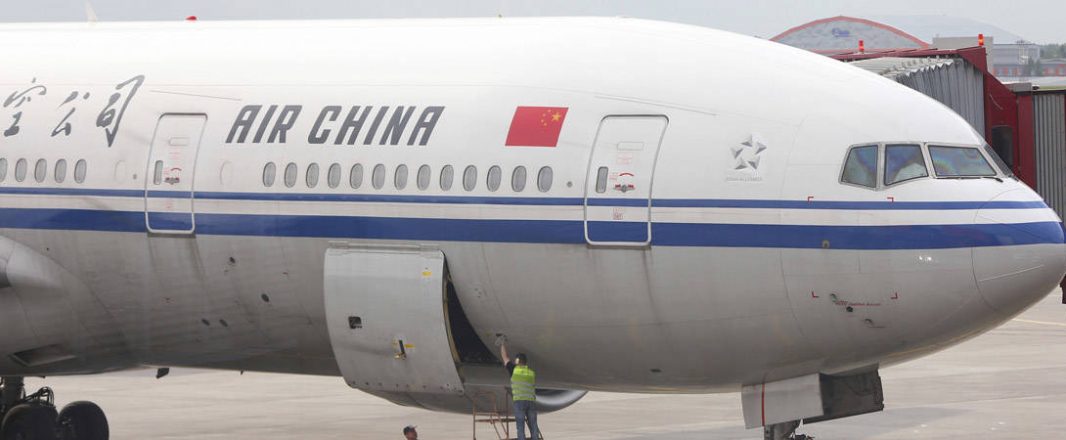
Featured image credit (Air China): Ockra/iStock