
I was sitting at the swanky spanky new Booking.com office at Marina Bay Financial Centre waiting for my appointment. Next to me was a young Singaporean-Malay man, looking somewhat nervous. At my age, everyone looks young.
“You here for a job interview?” I asked.
He nodded. “Yes, for a customer service lead position.”
“Why do you want to work for Booking.com? Had you heard of them before?” I felt I was doing him a favour really, prepping him for the interview to come.
He told me he was looking to advance his career. He’s worked seven years at a telco but feels it’s time to move on beyond just handling customer complaints which is the bulk of his job at his current company.
He admitted he hadn’t heard of Booking.com before the job opportunity came up. His favourite sites when he travels are Airbnb, TripAdvisor and Agoda. “But now I know more about them and they’re really big,” he said. “And I hear they are really focused on customer service.”
This is his second interview. “I hope it will be my last, I really like the feel of this office and the environment.”
As the battle for talent escalates in Asia – and trust me, there is a major war going on – I’ve seen companies invest not only in their physical environment but also put more thought into building a great corporate culture that speaks to a younger generation of talent.
The Booking.com office is at a prestigious address, has lots of space and is spread over two floors. No more tiny pantry areas but full blown dining areas. People know how important food is out here.
Brands expanding in Asia
As a signal of how serious it is in building up its Asia team, it’s transferred its global head of talent and learning, Marnix Mali, to head human resource in APAC.
In his previous role, Mali was responsible for developing managers worldwide in line with Booking.com’s core principles. In the last five years or so, Booking.com’s team has grown to 1,000 – one third of whom are in customer service and half in hotel accounts management. B.com has customer service centers in Shanghai, Tokyo and Singapore and offices in 27 locations across APAC.
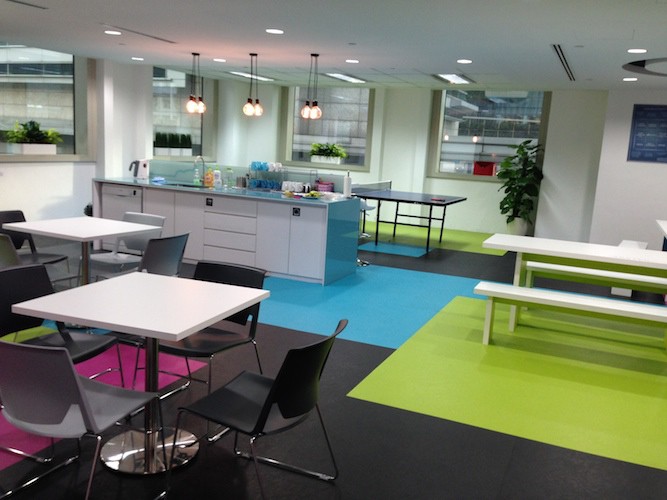
Skyscanner’s office at Robinson Road comes with splashes of bright colours.
Another company that’s expanded fast in Asia is Skyscanner which has had to move office a couple of times to accommodate the growth. Its new office in Robinson Road comes with splashes of fresh colours – teal, green, pink – which makes you happy just looking at them. There’s a table tennis table right in the middle.
TripAdvisor has also moved and its office is now in the financial district. The layout is fun as well, big Ollie eyes welcoming you, lots little spaces for private telephone calls and meetings and there are notes on the wall to help employees understand local slang and culture better.
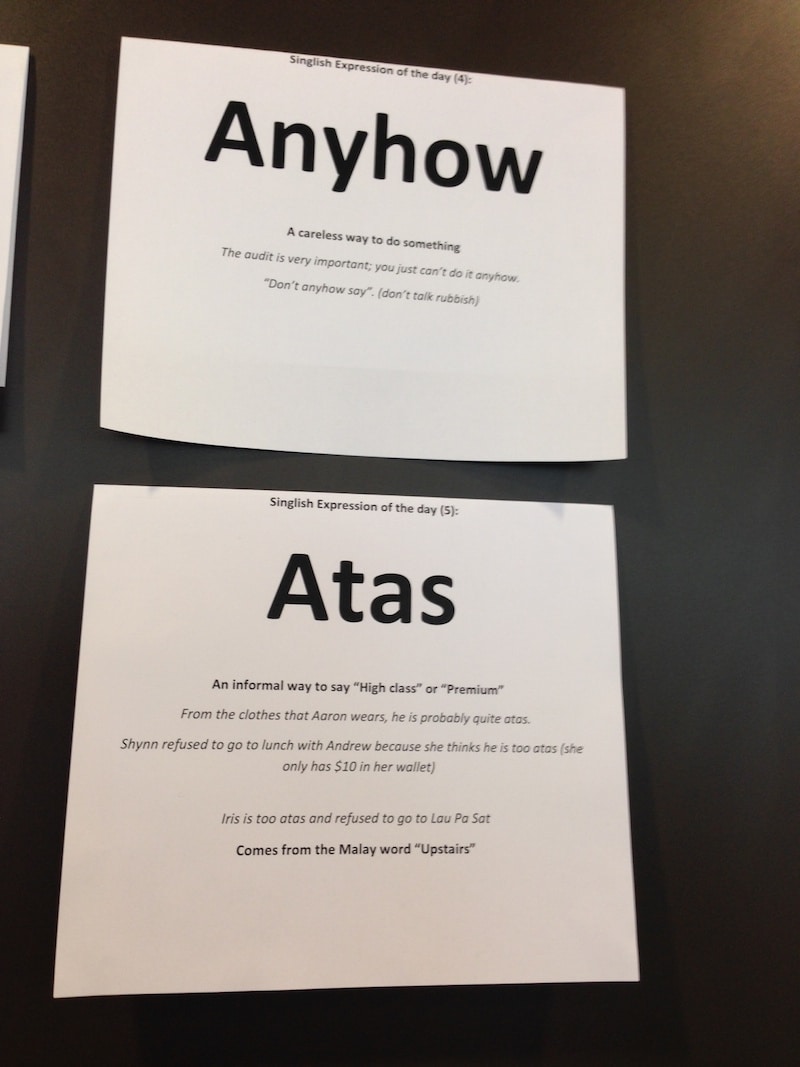
TripAdvisor’s way of explaining local slang to employees.
Some companies have opted for shophouses. Airbnb is a three-storey shophouse in Neil Road, the heart of Chinatown. The walls are works of art in themselves, telling the Airbnb story.
Very cool and funky, and definitely appealing to the young talent this new company is hiring in spades.

Traci Mercer: Intention is to grow and scale in Asia.
Expedia’s shophouse is also bursting at the seams as the brand ramps up its expansion in the region. Its Lodging Partner Services division has 70 positions listed as open. Traci Mercer, vice president, market management for APAC, said the intention is to grow and scale in Asia.
It’s not easy finding talent, though, on the ground.“There is no established pipeline of talent in countries like Sri Lanka, Nepal, Vietnam, Myanmar, Indonesia, Thailand or Malaysia. Schools and colleges do not have online travel or revenue management in their curriculum,” she said, adding that Expedia is currently looking for a Asia Pacific director of compensation who can come to grips with the compensation landscape in the region.
Which city will emerge as the alternative to Singapore for travel start-ups?
Singapore is currently the hottest battleground for talent among travel technology start-ups and I can’t help thinking there needs to be an alternative to Singapore if Asia is to develop a healthy start-up ecosystem.
Singapore wins hands-down for efficiency and friendliness of starting a business. There’s an ideas hub emerging – the more start-ups congregate here, the more vibrant and dynamic the scene becomes. There’s access to funding – although not quite the major league yet – but enough to get businesses off the ground and staying afloat the first couple of years.
But talent is a major squeeze. The authorities are clamping down on foreign workers although this impacts more of the lower level jobs than the kind of higher skill jobs the travel technology start-ups are offering. But salaries are skyrocketing. Every company I’ve spoken to has had to “revise expectations” of salaries.
In the last couple of weeks, I’ve heard of senior industry people moving and when they move, well, they bring along their team – and so begins the revolving door of talent.
New names are coming to Asia – Duetto, described as the “Uber of hotel pricing” in a TechCrunch article, is setting up its APAC office in Singapore and Patrick Andres, formerly Sabre Hospitality Solutions and Travelport, is taking the lead. Homeaway’s just appointed Dan Lynn, formerly of Expedia, then Groupon, to head the region and he’ll be looking to build a team. Facebook too is expanding its travel team and guess where it’s getting its staff.
The travel brands that have been in Asia are fighting to hold on to their people as new players come in with promises of a brave, new world packed with higher salaries, better incentives and a bigger purpose than just selling travel.
Airbnb is promising a sense of belonging for everyone associated with it – hosts, customers, employees. And honestly, when I speak to their team, they really believe in the company and what it is trying to do.
I think it’s going to be that kind of conviction and belief that you can cultivate in your people that will differentiate the winners and the losers as the battle for talent escalates into a major warfare.
And if the travel start-up scene is to flourish in Asia, there needs to be an alternative to Singapore. Lately, I’ve heard of people contemplating Bangkok, Manila, Kuala Lumpur, even Penang as an alternative, Hong Kong – but all of them still do not hold all the cards as well as Singapore. For now.
• Marnix Mali, VP for Human Resource Asia Pacific for Booking.com, will be joining a panel at the WIT Conference to discuss “Track 9: The P Factor – The Ultimate Differentiator”.