
I guess if someone had been asked 20 years ago what an OTA 1.0 might look like, few people would have the answer – until Booking.com and Expedia did it in 1996 and Ctrip followed in 1999, and showed the way.
It’s a testament to these three that two decades on, they are still on top of their game and ruling the online travel industry which, according to Phocuswright, made up $638 billion of the $1.4 trillion gross travel bookings in 2018.
By any standard, it’s still a small share of the total market so there’s plenty of headroom for growth for the trio, as well as the numerous other players that have made and, in some cases, barged their way into the industry.
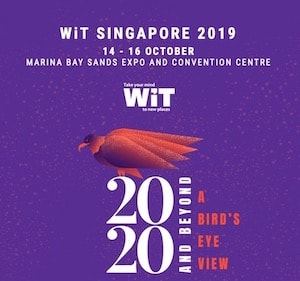
WiT Singapore 2019 theme urges the industry to take a bird’s eye view of trends and imagine what the future of travel will look like in the next decade.
So when John Wroughton Brown, CEO of Agoda, was asked at the first Skift Forum Asia held this week in Singapore what OTA 4.0 would look like, as he spoke about the evolution of the OTA model from 1.0 to 2.0 and now at 3.0, he was honest enough to say he didn’t know.
What’s clear is, it will look very different from what it is today and if it took more than 20 years to get from 1.0 to 3.0, 4.0 will happen way sooner and, to all intents and purposes, it is already taking shape before our very eyes – just that usually at the moment when history is being made, we rarely see it except on hindsight.
So let’s take a bird’s eye view of the industry as it stands today and extrapolate current trends into the future into what could be – which, by the way, is the theme of the WiT Singapore conference happening Oct 14-16: “2020 and Beyond: A Bird’s Eye View”.
The OTA is not dead. It will just look different.
First up, the good news. The OTA is not dead. It will just look very different as each find their own path, whether with better tech, new verticals or new customer segments or an all-in-one model.
As Greg Schulze, senior vice president, Expedia Group said, “We sold $100b worth of travel last year, it’s a 1.6 trillion industry (by 2021), we are a small fraction of that industry. There’s plenty of room to grow, it’s an exciting time.”
Especially if you are operating in Asia, particularly China, added Marsha Ma, managing director, China of Booking.com. “Travel is the most exciting industry, you have emerging markets like China and India – plenty of opportunities. In China, less than 10% of the population have passports.”
And these brands are banking on tech – the use of data, machine learning and AI – to provide better customer experiences so that they keep their customers and win new ones.
Rakuten, for example, is banking on belonging to the bigger world of the Japanese e-commerce giant and using AI and big data to provide better user experiences, with head of travel business Yoshiyuki Takano commenting, “If you buy dog food, you can get recommendations on pet-friendly hotels.”
How recommendations followed me in Iceland
So is OTA 4.0 about providing recommendations?
Booking’s Ma thinks so. “Our study shows 60% of our customers want us to recommend places to them. With AI and big data, we can truly understand customer behavior needs and serve them seamless recommendations in-destination.”
I saw this in action during my recent holiday in Iceland when I used Booking.com to book my apartment in Reykjavik and then used it to book other accommodation on my road trip round the island. It followed me with recommendations of things to do and offered me discounts on everything. It also offered me discounts on my next accommodation booking.
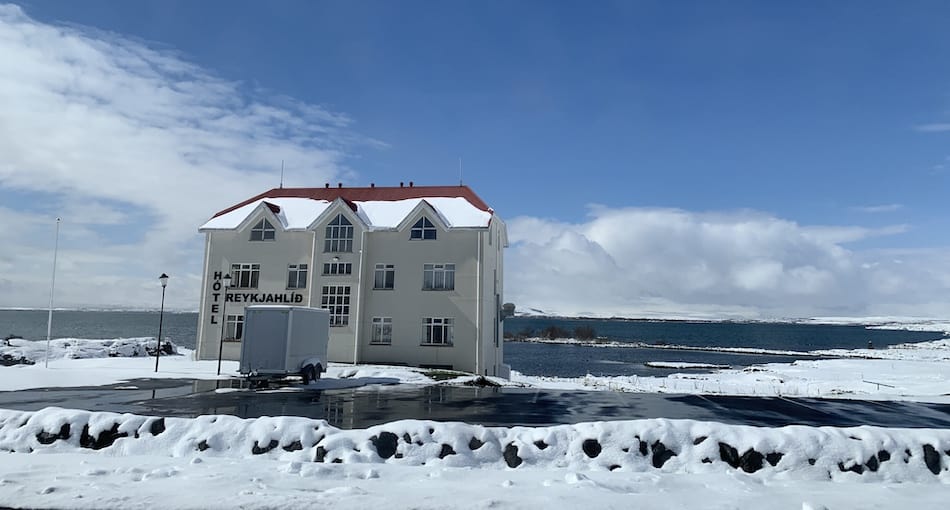
While the recommendations weren’t personal – no, there’s nothing in my profile that would indicate I would love to go glacier hiking – I appreciated them because it gave me at-a-glance list of things I could do. But clearly, price is still the main incentive.
After two to three days though, I found it rather annoying – this constant barrage of “recommendations” that weren’t relevant to me, but just trying to sell me stuff.
Which brings me to what Expedia’s Schulze said, “If you have a customer-first mindset, you need to be aware of what customers like and what they expect. We are mindful of customer data, the key is not to monetise shopping patterns and selling but make the shopping experiences easier. We had a research of Asian millennials, which showed that 60% found the travel search process overwhelming, they spend 10 hours researching and 55% will go back to same places so they don’t need to do that research.”
See, that’s the difference between a millennial and a baby boomer – I wouldn’t go back to the same place because I am lazy. I’d dig to find the things worth doing.
Will OTA 4.0 be about tours & activities?
This brings me to the topic of tours & activities, the hottest space and most-funded right now in online travel. Will OTA 4.0 be about cracking this in-destination piece?
Right now, there’s no clear road to profitability for any of these well-funded brands (namely, Klook and GetYourGuide). Both are building brand, buying market share and subsidising and using funds to scale.
As an entrepreneur who launched a travel startup in 2005 said to me, it’s a different game today. “We spent $10 million over seven years to get to the scale we wanted. These players are spending tens of millions to get to the scale they think they should have.”
He sold his business eventually for a handsome sum to a company who wanted to get into a new vertical but it does make you wonder whether these new OTAs will find buyers rich enough to afford them – that is, have they become too expensive to be acquired? Is their end game to evolve into a OTA 4.0?
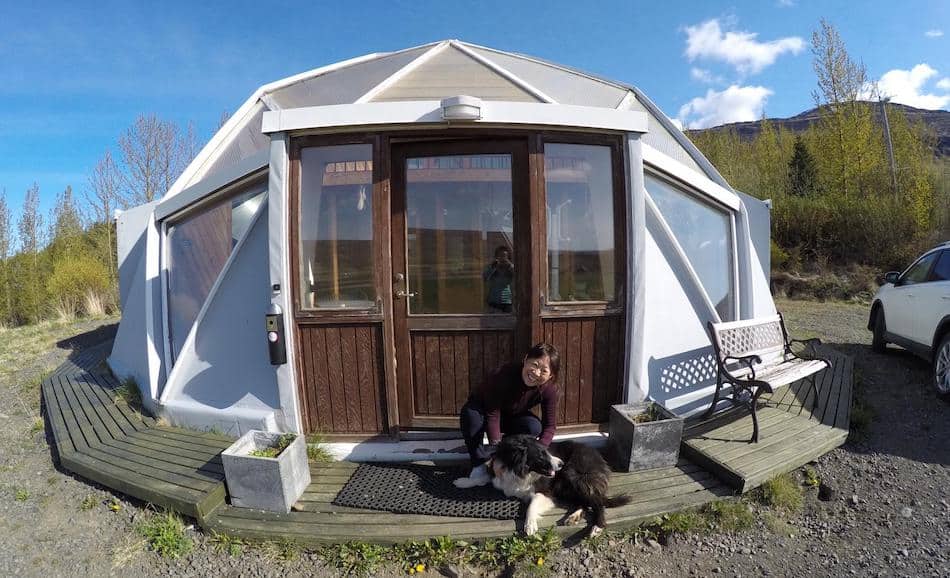
As a traveller, though, I don’t find much differentiated content in these players. Everyone is selling the same low hanging fruit – the Golden Circle tour of Iceland is being sold by every online and offline by Jon, Sigurour and Guomundur (the three most common Icelandic names apparently) – so if you want different experiences, you really have to dig deeper or wider.
I tried Airbnb and got myself a stay in a geodesic dome on a working farm where the accommodation is the experience.
Will OTA 4.0 be about unique inventory? What about convergence?
Will OTA 4.0 therefore be about unique inventory – offering things others don’t have?
Could Airbnb with its interesting accommodation choices and local hosted Experiences, that delve into the very longtail of travel content, be the OTA 4.0 – after it adds flights? Can it pull off this convergence?
Said Siew Kum Hong, regional director, APAC for Airbnb, “When Airbnb founders first started, they were told it will never work. Eleven years later, it has worked. We have been diversifying the offerings on our platform – it is about who provides the most magical experiences for consumers; we have been working on end to end integrated platform.”
On flights, he said, “We are working through the different ways where we can reimagine and transform in a way that has not been done before.”
You could argue Airbnb has an advantage – it does not rely on Google for customers. Said Siew, “We have a powerful brand which allows us to grow through this growing community. More hosts mean more guests and that allows us to offer unique, high quality experiences for our guests.”
Then let’s look to South Korea where a tour & activities startup MyRealTrip is trying converge at a local level – what started as a P2P tour guiding model became a tours & activities marketplace for South Koreans which is now offering hotels and flights and founder Donggun Lee claims it is seeing good conversions and cross-selling.

Pundits say it won’t be that easy to pull off given how tough flights are to do in a market like South Korea but I would give them the benefit of the doubt right now.
Talking about flights, which used to be the hardest to do online, and then OTAs and meta searches managed to crack the model, well, that too is a different ballgame today.
Scott Kirby, president of United Airlines, which is currently in a legal skirmish with Expedia, to the question on whether the world needs OTAs, said, “The world has changed. We can offer a better product than through OTAs. Explaining the choice that customers have, we can do a better job. We had a long term relationship with Expedia and possibly we still will but it is different today. We don’t need Expedia but we can maybe work together but it is a different ball game.”
So OTA 4.0 will have to adjust to that new ball game or maybe OTA 4.0 could look like an airline trying to be an Amazon of travel, which AirAsia has declared it wants to be.
Said Expedia’s Schulze on this ambition, “We had a JV for many years, I have huge respect for the team, they transformed travel for South-east Asia. My advice is, know what makes you a great airline doesn’t necessarily make you great at running an OTA. Offering more could be a distraction; but it is a giant industry. I am happy and I would like to see how they negotiate with other airlines.”
Will OTA 4.0 look like full frontal nudity?
Then of course, while we are worrying about who’s going to steal our bananas, there’s the gorilla in the room. Now that the mist has blown away, we now see Google in all its glory, dominating travel at the top of the search funnel and then leading all of us down the Google-paved road in the Land of Travel.
As a traveller, it’s hard to leave the Google comfort zone especially when it’s your first time in a destination. You want to make sure you don’t get lost especially in an extreme place like Iceland where in 15 minutes, you can go from green pasture to snow-clad peaks and roads, and the wind is like a sword piercing your very bones.
Maps are a powerful tool, they are the very foundation of discovery and exploration ever since the first human left home shores. Layer onto this building block of civilization, search and book functions across all travel segments – flights, hotels, trips, restaurants – and what do you get?
A machine that strips everything and everyone naked. There’s no room to hide in the Google Glare.
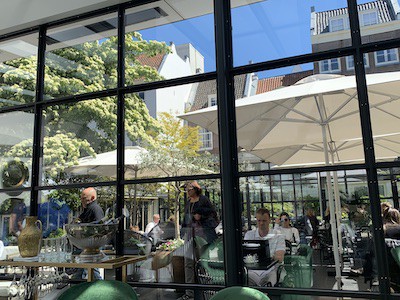
The Pulitzer, Amsterdam – hotel rates have been rendered naked by Google.
In Amsterdam, depressed by the darkness in my room at the Grand Amrath, I searched for an alternative hotel. I went to Booking.com to look for what was available that night and found a hotel I had heard about, the Pulitzer. It’s the name, it draws me in as a journalist. I went to Google, typed in Pulitzer and it showed me a listing showing different prices by different OTAs. The lowest price for the two days I indicated was on tablet.com, by at least 20 Euros.
As a traveller, it shows me the industry in full frontal nudity. How awesome is that for consumers, and how worrying is that for the OTAs? And for the meta-searches like KAYAK and Skyscanner, which are also evolving their model from search to book.
Agoda’s Brown had this to say about OTA 3.0 and naked rates. “If you look at meta today, you will see a tonne of rates from different sources, there’s a proliferation of rates today and we have said, we are a customer centric brand so it’s our duty to contract the lowest rates to consumers. We will do whatever we can to get the rates out there for consumers.”
So just as Google is stripping OTAs naked, OTAs are stripping hotels naked with the leaking of wholesale rates onto online channels and while Brown said OTAs can help hotels rationalize the chaos, won’t that just lead to more consolidation and put more power into the hands of OTAs?
Schulze of Expedia said, “It is important to recognise Google’s strengths all over the world except China. For us, they are an important tech partner. Our view on Google is we want to partner with them, this industry is big enough for people who play by the rules. We just want to make sure everyone is playing by the rules.”
The key is, who’s writing the rules? We have seen tech giants like Amazon, Facebook, Google, Uber, Airbnb all writing their own rules until someone comes along to slap them down – and usually that takes time and a couple of scandals that leave us reeling one moment and then forgetting the next.
Booking’s Ma said, “Previously everything started from the search box, but we have seen Chinese customers totally bypass the search engine altogether and they go to individual app to search for inspiration. We should think about how we can use AI, data and content to engage them meaningfully.”
Rakuten’s Yoshiyuki said, “It is difficult for Google to replace the OTA. We have 280 sales people in Japan ensuring we have good inventory. OTA is an important client for Google.”
That’s China and Japan though, two very distinct markets with strong local characteristics and dynamics.
Will OTA 4.0 look like the Swiss army knife?
Or will the OTA 4.0 look more like a superapp, the Swiss Army Knife of travel? (In Iceland, never travel without it)
On why Agoda is partnering with Grab in South-east Asia, Brown said, “Our customers increasingly come to Agoda looking for flights, experiences, rides, not just hotels. So we say, let’s partner with these suppliers and see what customers want. You can see other companies going in the same way. We are customer-centric, we give customers what they want.”
Cleartrip probably had the same idea when it agreed to power flights by Amazon in India.
Booking.com, which is also partnering with Grab, is choosing to do it itself in China. Said Ma, “From the data we see, consumers want a one-stop shop within an app, a seamless experience within one app. We are developing a Chinese specific app, giving more content and engagement to customers to support their travel journey, end to end.”
So clearly a different horse for a different course …
Who will rule the Seven Kingdoms? Traveller 4.0 probably
At WiT Europe, William Bao Bean, general partner at SOSV, advised travel brands to use their trust to sell customers “stuff” and not give “stuff” to others to sell. That’d be like handing over the keys to your own kingdom, is his thinking.

“People want convenience and if they trust you, they will buy from you,” he said, adding this was the way it’s going in China.
Andrea Traversone, managing partner of Amadeus Capital Partners, is not sure this approach will work in Europe with people more cautious about the power of tech giants in the wake of data privacy issues and fake news and social media accounts changing political landscapes.
Markets like China, Japan and South Korea which have big domestic markets and distinct characteristics that can mute the power of global tech giants, are developing their own version of OTA 4.0 – with messaging platforms leading the way in the form of Wechat, and LINE and Kakao coming into travel by taking equity in LINE Traveljp and Tidesquare respectively.
In Africa, we have Travelstart evolving into its own version – this week, it brought in a new investor that will give it access to funds to acquire across different verticals, geography and customer segments on the African continent.
In Indonesia, Traveloka is morphing into something that’s unrecognizable from its 1.0 version. It now has tours & activities, restaurants, tickets and is expanding across Asia.
It was amusing to hear Brown compare the competition to “Game of Thrones” as we did in this article. Season 8 just ended in a thrilling finale – we know who died.
Said Brown, “In 2005, when Agoda first started in Thailand, it was wholesale inventory and we brought it online that was version 1.0. Now we are 3.0, let’s go back to wholesalers and get whatever rates and use Google PPC to drive demand. Our competitors used to be Asian and now our competitors include Airbnb, Google, Expedia, Amazon. Our competitors are giants and not regional players anymore.”
So who will rule the Seven Kingdoms? Perhaps there won’t be one ruler – in “Game of Thrones”, the kingdom was split – Bran Stark (the Three-Eyed Raven) was chosen as King of the Six Kingdoms of Westeros and The North under Sansa Stark chose to remain independent.
Will Asia be that independent North? (incidentally ruled by women)
For sure, Asia is blazing its own trail. At Skift, there was a lot of talk about South-east Asia being where travel will be tested. That testing began 20 years ago – WiT was founded 15 years ago – and now Asia, powered by China, is leading the way in what OTA 4.0 could look like.
Ma observed that Chinese digital consumers are leading the world – navigation habits are changing due to device usage, there are challenges and opportunities due to mobile payment which has become a must-have enabler and we are seeing content-driven engagement in mobile where brands can leverage different touch points to drive new opportunities for transactions.
Given what all these OTAs keep saying about how customer-centric they are, I will have the last word.
As a traveller, I am not sure I want to give all my custom to one superapp, one giant, one airline or one hotel group. The world needs diversity. David Attenborough certainly believes so and has made it his life’s purpose to push this message for Planet Earth. The same applies to Planet Travel.
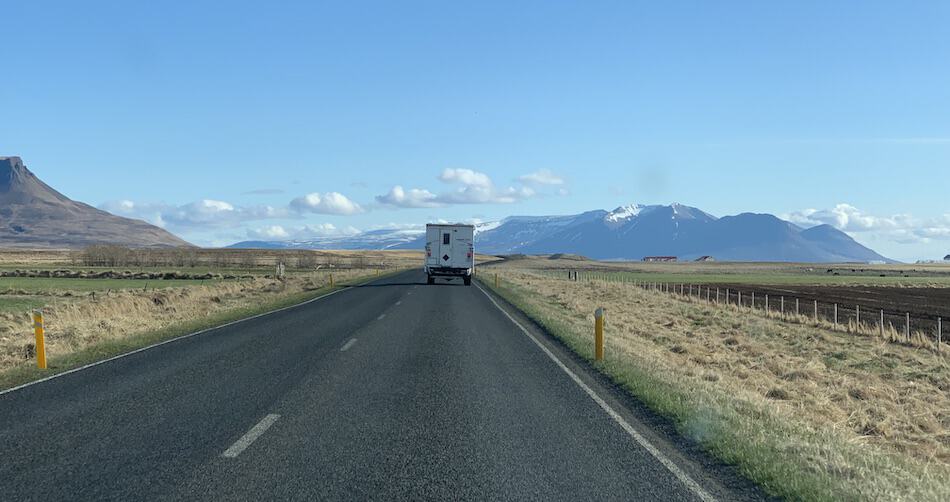
In Iceland, I did not stay in a single hotel, I picked cottages, apartments and lodges. As for activities, I did my own research, reading blogs to dig below the surface of tech and, listening to podcasts. I find I like travel better when I plan less, it’s less stressful.
I also take heart from the fact that if we truly believe that competition is healthy for everyone, then perhaps this is the healthiest time in travel because it’s never been more competitive. And that has to be good news for all travellers, whether we are Traveller 1.0 or 4.0.
• To watch the interviews with William Bao Bean and Andrea Traversone at WiT Europe, click here
• Registrations now open for WiT Singapore – book here
• Featured image credit: Ian-Dyball/Getty Images