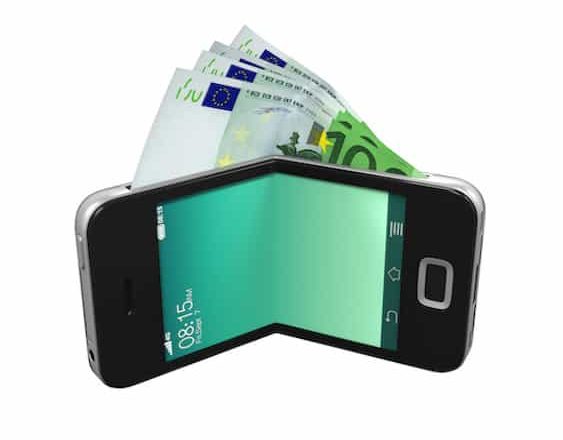
Asian travellers are most keen to go cashless and adopt alternative forms of payment, according to Amadeus’ Travel Payments Guide 2019, a new report charting the rise of alternative payment methods.
According to the report, alternative ways to pay for travel, such as e-Wallets and bank transfers, take the lead in Asia, with 58% of travellers choosing these modes of payment over cards and cash combined (42%). Europe follows closely behind with 53% of travellers using alternative payment methods, followed by Africa (49%), North America and Middle East (both at 38%), and LATAM (19%).
It is no surprise that China was charted to have the largest B2C e-commerce volume (US$1.03 billion). In that market, e-Wallets are also now twice as popular as cards in China, accounting for 49% of the country’s $155B digital travel spend. In comparison, e-Wallets may replace cards as the most popular way to pay in the US only by 2025, having gained an additional 4% share of the market in the last 12 months.
“This data highlights how quickly the payments landscape is changing and the increasing complexity facing travel merchants. It should be noted that despite less travellers paying with cards directly, many e-Wallets do rely on the card networks in the background. So, cards will continue to be essential payments infrastructure for our industry,” said Bart Tompkins, managing director, Payments, Amadeus.
Other data points of interest include:
- Singapore leads the way in terms of e-commerce spent on travel (31%)
- Hong Kong has the highest average e-commerce spend per capita at US$2,959 – more than a US$1,000 than second place China at US$1,935
- Cash remains king in the Philippines with 47% preferring to transact this method. Philippines is also the only country in APAC where cash is the dominant form for payment.
- Singaporeans and South Koreans love their credit cards with both countries ranked top (74%) when it comes to paying with cards
- Malaysia is the only country in APAC where bank transfer is their preferred choice of payment at 47%. Such a figure is also the highest across the region.
- When it comes to e-commerce spent on mobile, South Korea is ranked top at 61% followed by Japan at 58%
Meanwhile, Amadeus announced a new partnership with PPRO, a leading cross-border payment specialist. With the integration of PPRO with Amadeus’ Payment Platform, “travel companies can now easily accept the widest range of alternative, local payment methods such as real-time bank transfers, e-Wallets and direct debit methods”.
To download the full report, click here.