After years of toiling away at the fringe, Greenview finds its moment in time
FOR more than two decades, his was a voice in the wilderness. Although Eric Ricaurte started his company, Greenview, to focus on sustainability practices in hospitality, in 2008, the Singapore-based executive has been involved in the space for as long as he can remember. In fact, you could say his roots in sustainability were planted from childhood.
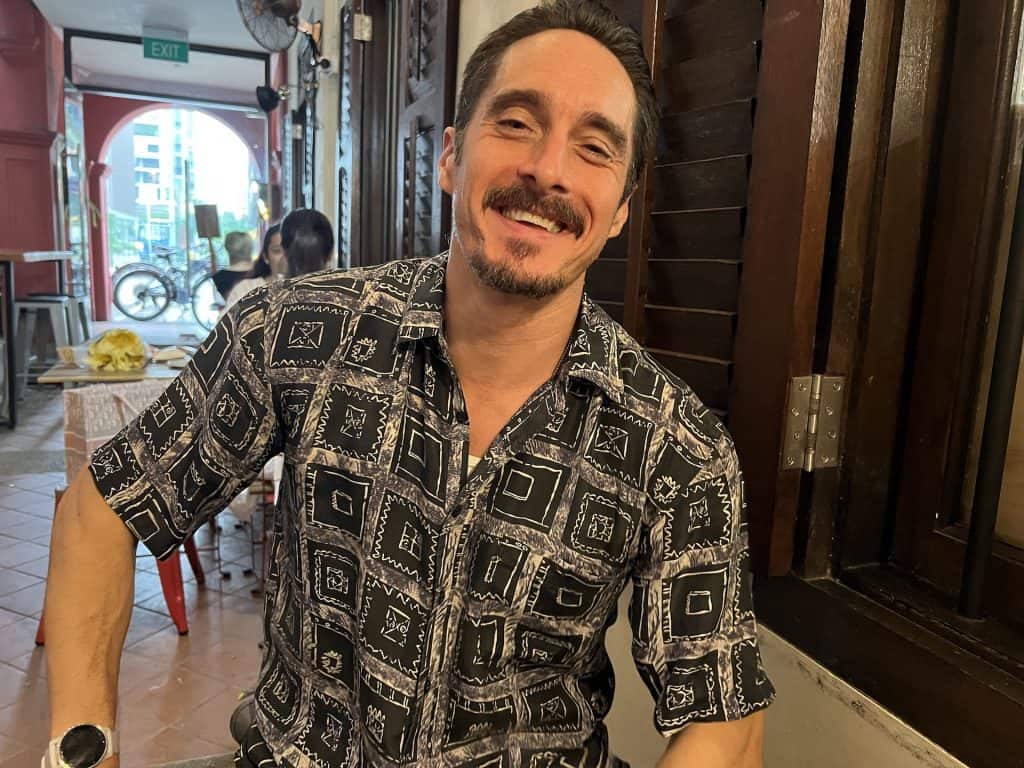
Eric Ricaurte: “Now everyone wants to talk about it. Everyone coming out with ESG software, everybody is getting into the game, lawyers, consultants, tech companies – but there’s not enough talent that’s really qualified to do all this stuff.”
Born in Mexico to an Ecuadorian father and American mother, Ricaurte was raised in the small town of Toledo, Ohio. “My mother was a maverick greenie – she started urban farming, we grew our own peppers, tomatoes, herbs, blackberries, we were always in nature.”
But it was a student stint in Costa Rica that set Ricaurte on his path. “I was working in an eco-lodge, in the north-eastern corner of the country. There were no boats and phones and that opened up the sustainability door for me.”
At hospitality school in Cornell University, he focused on the subject of sustainability. “We did a field trip to Belize, it was a 20-room eco-lodge in a massive forest. It was community-based tourism at its heart. I asked, how do you guys support yourself? Turns out it was the Wisconsin electric power plant that was an early adopter of carbon offsetting in the early 90s.
“The idea that a tree has value was eye-opening for me, and it was the strategy for the resort and destination. How do you create these small, great experiences within a forest and protect it? If you can get someone to pay for the forest, what a great idea that is.”
The hotel footprinting tool that started it all
That was the start of Ricaurte’s foray into the quantification of carbon calculation in travel which he got into in 2001. “I helped standardise the way you calculate the carbon footprint of a room night, working with WTTC (World Travel & Tourism Council), Sustainable Hospitality Alliance, and 20 hotel companies in 2011.”
That hotel footprinting tool was the foundation on which he built Greenview, the company he now runs and which is described as “the leading platform for sustainability software, data and programs in hospitality”. The tool is powered by data from over 20,000 hotels around the world collected via the Cornell Hotel Sustainability Benchmarking Index and using the Hotel Carbon Measurement Initiative methodology.
“This hotel footprint data is publicly available and interfaces with travel buyers and OTAs,” he said.
So from years of having to knock on doors and having to convince hospitality executives that they needed to invest in sustainability practices and reporting, Ricaurte now finds himself in the position where companies are knocking on his doors and where “every joker doing carbon calculation is raising $50 million”.
In other words, he’s gone from voice in the wilderness to a very loud, busy, crowded space in which every travel supplier is trying to get certification and asking questions like, how do we get started?
So when I caught up with him, I couldn’t resist asking, “How does it feel to be the world’s most wanted man in travel right now?”
“It’s not me,” laughs Ricaurte. “It’s the topic, the consequence of it. Turns out there are very few people out there who know this stuff – there were very few people in this space years ago, now everyone is claiming they are experts and everyone wants to be certified.”
It’s been a long and you could say, lonely, journey for Ricaurte and Greenview since 2008. “We launched it and then three weeks later, the global financial crisis hit. So you can imagine sustainability wasn’t top of the agenda back then.”
Greenview started offering sustainability reporting for companies such as Marriott, Wyndham and Hyatt. He could sense that it was going to become a big thing. “Big companies were pushing things down, and I could tell it was only going to be a matter of time.”
But he hadn’t reckoned on it taking as long as it did – for years, Greenview struggled to find more customers beyond “the big brands and real do-gooders”. Hoping to build business, it took a detour into the events industry from 2011 to 2017, thinking this was the bigger industry and a sector that would also grow but that didn’t go well, with Ricaurte calling it a mis-step.
2015 – the year that changed everything
Then two things happened in 2015, which changed everything – the UNDP launched its Sustainable Development Goals and the Paris Agreement came into being.
The Sustainable Development Goals (SDGs), also known as the Global Goals, were adopted by the United Nations in 2015 as a universal call to action to end poverty, protect the planet, and ensure that by 2030 all people enjoy peace and prosperity.
The Paris Agreement is considered a landmark in the multilateral climate change process – it is a legally binding international treaty on climate change, adopted by 196 Parties at COP 21 in Paris and its goal is to limit global warming to well below 2, preferably to 1.5 degrees Celsius, compared to pre-industrial levels.
Said Ricaurte, “These two events set everything in motion. It was a government call for action and investments and the whole ESG movement started taking off among companies.”
At the same time, a Youtube video of the turtle which had a plastic straw up its nose aired in 2015, went viral and consumer awareness exploded. With pressure coming from all sides – consumers, governments, investors – it was time for the space to be green-lit – and then came the pandemic which raised awareness to an all-time high. “You had C-suites home with their younger kids, everyone had their pet projects, there was a pause on what was there but once the pandemic restrictions were lifted, it was go for broke.
“Now everyone wants to talk about it. Everyone coming out with ESG software, everybody is getting into the game, lawyers, consultants, tech companies – but there’s not enough talent that’s really qualified to do all this stuff.”
With every travel brand creating the position of Chief Sustainability Officer, Ricaurte himself has lost staff members to this great migration. In the meantime, his team has grown from 10 people in 2018 to 25.
As an aside, a marketing communications executive, with two years of experience, told me she was offered a position of heading up sustainability at a major hotel brand. “I am not sure I am qualified enough, I studied marine biology but I specialise in marketing about the field, not to run a division,” she said.
Ricaurte said, “That profile does not exist – you need two years of actually implementing sustainability programmes, reporting, working on disclosures, managerial competencies. There’s overwhelming demand for the role and very few who are qualified.”
The overnight rise of Singapore as its best market
And here’s an interesting twist – while Greenview is based in Singapore, which Ricaurte and his wife/business partner believe is a great place to do business, the company did not have any clients in Singapore until end of 2021. Overnight, Singapore became its best market last year. “This shows what can happen when you have pressure from governments, investors, corporate customers and now everyone is saying, I need to do ESG, how do I get started?”
The Singapore Tourism Board (STB), along with the industry, has developed two sustainability roadmaps – one for hospitality and the other for MICE. Both set clear targets for industry players.
The Singapore Hotel Sustainability Roadmap requires that at least 60% of hotel room stock to achieve internationally-recognised hotel sustainability certification (e.g. by the Global Sustainable Tourism Council) by 2025 and for hotels to commence tracking of emissions by 2023, reduce emissions by 2030, with a view to achieve net-zero emissions by 2050.
The Singapore MICE Sustainability Roadmap has three targets – develop sustainability
standards by 2023 and aim to be internationally recognised by 2024; obtain sustainability certification1 for purpose- built MICE venues & 80% of SACEOS members by 2025; and start tracking waste and carbon emissions by 2023, reduce waste and achieve net zero emissions by 2050.
“Every hotel wants certification right now, every hotel needs to do local sourcing. There is a chance to get scale for procurement – we can bring the hotels together and get scale for sustainable seafood, locally grown vegetables,” said Ricaurte, who said he hoped that by 2023, it would implement sustainability practices across 75-100 hotels in Singapore. It hopes it can use this platform to scale globally and implement it in destinations such as Phuket and Bali, for example.
Even though Singapore also has the MICE Sustainability Roadmap, Ricaurte has reservations about getting again into the space. “It was a good lesson learnt, we lost lots of money, it is a big sector, potentially bigger, but it’s hard to implement, city by city, event by event. We want to focus on hotels and owners.”
For him, the biggest mis-step hoteliers can make right now is not to involve owners from the start. “Development people never sold it to the owners and so they were left with inefficient hotels. You have to engage with owners early on.”
One perception by owners is that sustainability is expensive and although Ricaurte said it’s too big a topic to generalise about, he added, “Some things cost more, some things don’t cost anything, some things save you money. If you want to build a green hotel, of course that will cost more upfront but in the long run, you will save costs.”
Acknowledging the competition that’s coming into the sector, he said, “There’s so much noise. Everyone is competing in the area of software, carbon footprint measurement, advisory service and now you have general companies entering hospitality.
“The good thing is, we are experts in hospitality so we are ahead of the curve. Carbon calculations are getting more sophisticated, as it is accelerating, no one knows where it will move. The big thing right now is suppliers seeking certification and the next big thing is net zero.”