Amid the bad news, investors pick bright spots – Japan leads the way
Hoteliers who follow their mother’s advice “to share”, learn to embrace the “new economy asset classes” and learn to work with OTAs are the ones who will win in the new world of hospitality, said Miguel Ko, chairman of CapitaLand Investment.
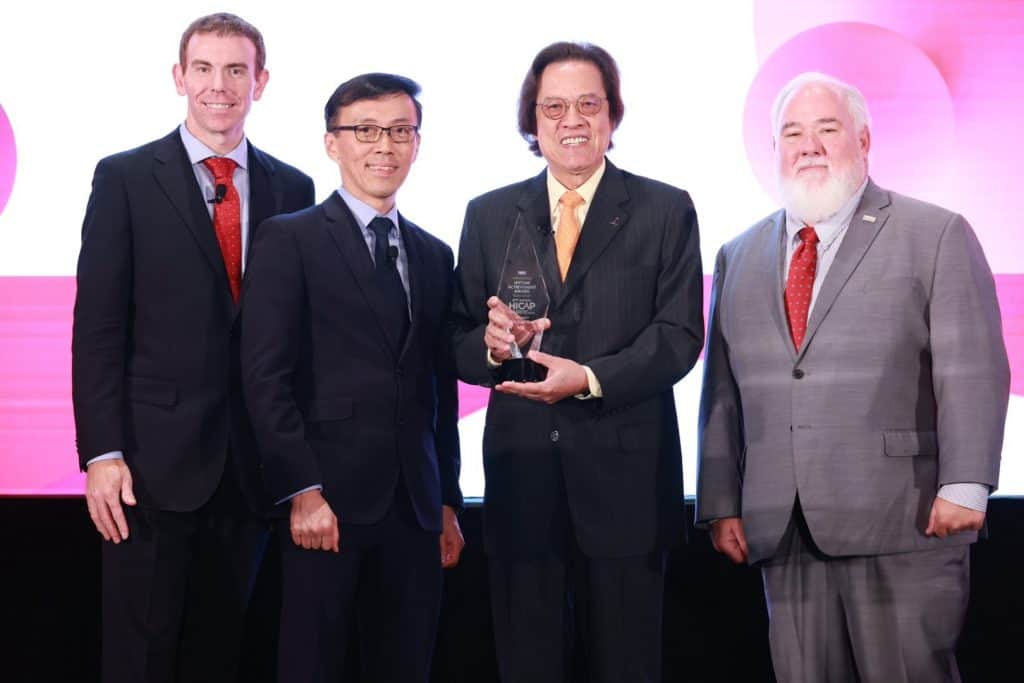
Miguel Ko (second from right) accepting the HICAP Lifetime Achievement Award – from left, Jonathon Zink, COO, The BHN Group; David Ling, City Developments Ltd; and Jeff Highley, CEO, The BHN Group.
Accepting the HICAP Lifetime Achievement Award at the HICAP conference in Singapore this week – “it’s my time because I am that old”, he quipped – the veteran hotelier, who received a standing ovation, showed exactly what he was made of when he spoke about the future of hospitality.
First, hospitality’s ability to bridge “new economy asset classes and old economy asset classes”. Tied to trends such as the future of work and the rise of digital nomads, he said the industry can emerge into the new economy asset classes by creating alternate forms of hospitality.
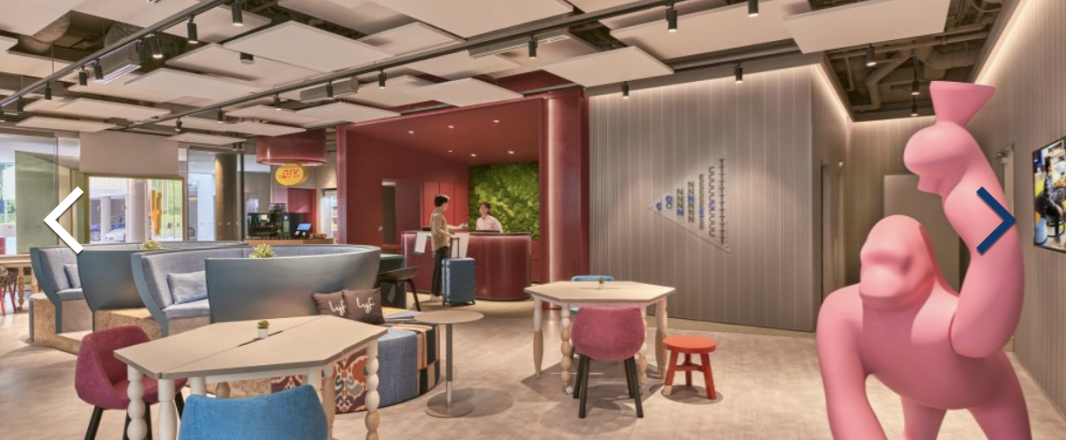
During the pandemic, he said CapitaLand found its Ascott service residences fared better than hotels, and that thinking has evolved into its Lyf co-living brand.
Earlier in the day Wong Kar Ling, managing director SEA, Head Strategy and Global Ops, CapitalLand, speaking about the Lyf brand, said co-living was an “above interest” asset class and that the brand had huge ambitions to open 150 properties by 2030.
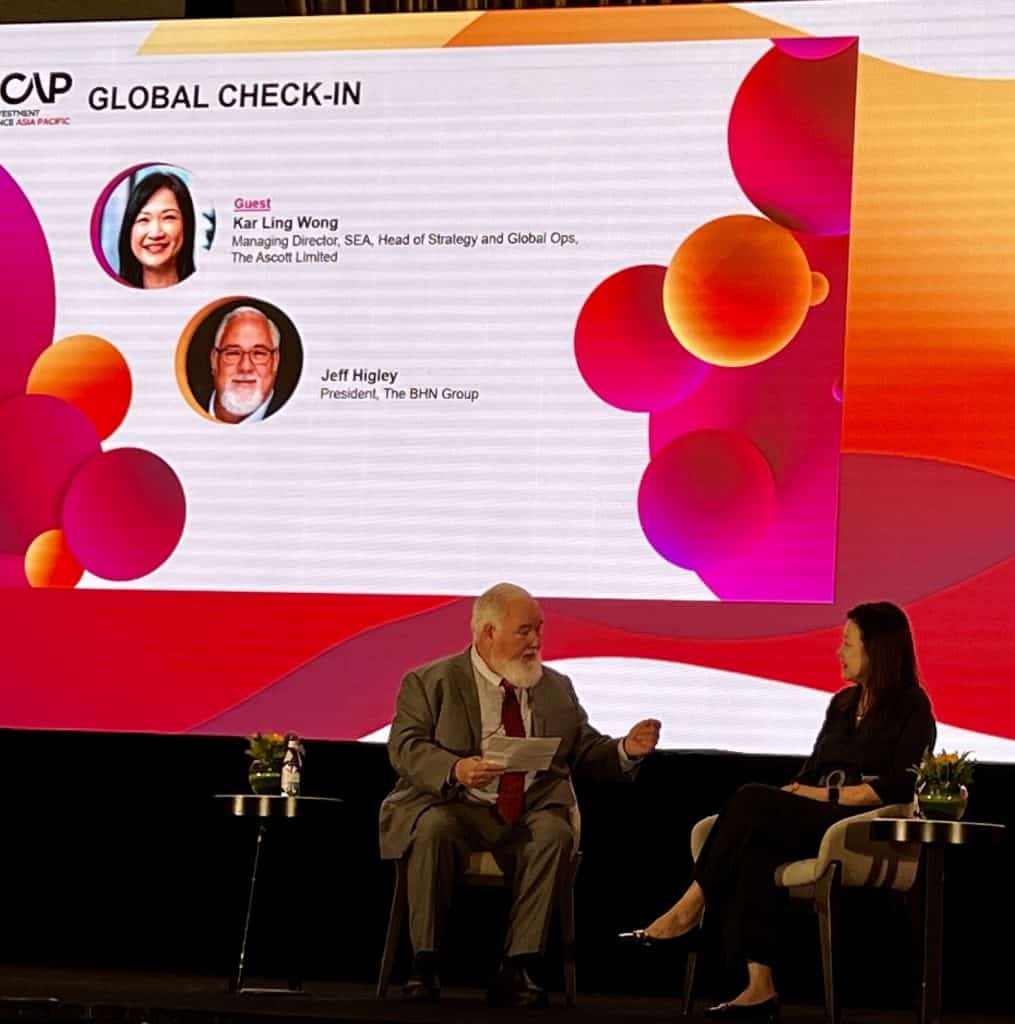
Wong Kar Ling: Plan to grow to 150 Lyf properties by 2030.
“This is a new model of living around affordability, convenience and community,” she said. Ideal for digital nomads, it’s when social spaces become shared facilities and the arrival experience is all around making connections. In the past 12 months, occupancies of its three properties in Singapore have been at 85% occupancy. “There is demand for this product class,” she said. And Ko added the Lyf brand would evolve into student housing and multi-family rentals.
Second, working with OTAs. Recalled Ko, “When they first came into the picture, we were worried that they would take over the reservations business and it was a battle of who will survive.”
So circa 2000 in Starwood, the company made a decision to close off weekend sale in New York to Expedia. Expedia responded by saying, if you don’t need us in New York, we will also shut down Honolulu. “So they shut down 6,000 rooms in Honolulu and while we ran 100% occupancy in New York, we ran 50% in Honolulu. This tit-for-tat went on for three years and now we have learnt to live with each other, that we have to cooperate and compete,” said Ko. “Now it’s about how much we can manage their commissions, not about excluding them.”
Third, mother’s advice about sharing. Recalling his own mother’s advice – “son, you have to learn how to share” – Ko said the entry of Airbnb and the growth of the sharing economy meant “everything within the four walls of a hotel has to be shared”.
Room service has given way to food delivery, business centres to co-working spaces, the guest comment card gave way to social reviews. “The four walls of a hotel are no longer there, and we have to share the profit. A good general manager knows how to share and benefit from this. How do you leverage services within a city to offer a total guest experience?”
Ko’s words of wisdom were exactly what the investors and deal-makers in the room needed to hear after a morning of gloom-and-doom news from economists and analysts who shared so much data that at one point, I thought I was in a thunderstorm in Phuket – which, by the way, also got mentioned, along with freakishly unseasonal wet conditions in resorts across Asia.
The weather though may be harder to predict than the economy – and the two economists who opened the day gave it their best shot. Mostly, it was bad news, with the occasional bright spot.
War in Ukraine. Recession in UK. Near zero growth in US. Strong US dollar. Weakening currencies almost everywhere. Asia “deep in the global crossfire”. And this time, it’s different – there’s no China to boost the global growth and indeed, Jennifer Kusuma, senior rates strategist for ANZ Bank, said, “We are not expecting China to reopen for the duration of 2023”.
Arup Raha, head of Asian economics, Oxford Economics said that while Asia is no stranger to crisis, two factors make this one different – pressure on currencies and “China is not going to be the China we have known for the last 40 years”.
The bright spots, which were hard to find in both their presentations, are that India is the breakout market, Thailand is expected to perform better in tourism with Raha saying “our best guess is it will reach 20 million (half of pre-pandemic’s 40m arrivals a year) in a couple of years”.
“Travel is a luxury good though. So if I have to tighten my belt, that trip will go out of my budget,” he concluded.
With that kind of outlook, you’d expect the deal makers and investors gathered in the room to be pretty muted about the hospitality industry but no, every hotelier and investor I spoke to was more optimistic than pessimistic, which goes to prove macro economics may paint one picture but when it comes to doing business on the ground, there are always pockets of opportunities.
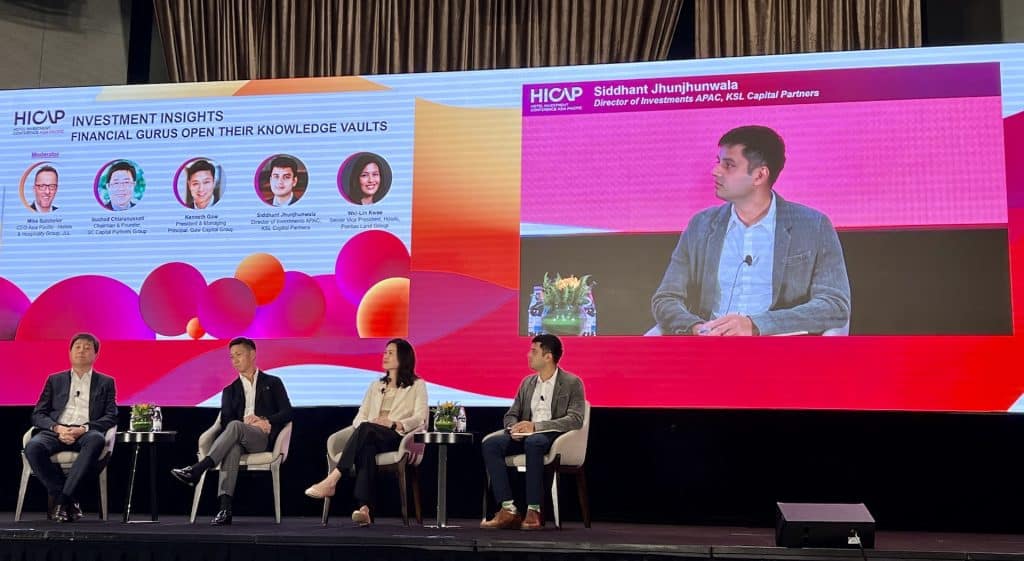
KSL’s Siddhant Jhunjhunwala (extreme left) speaking at the HICAP panel: “With normalisation comes opportunities.”
The four most active markets right now in terms of hotel investments are Japan (the most actively traded market), followed by South Korea, China and Australia, according to a panel on Investment Insights. These four markets represent 72% of deals or the equivalent of $8.5 billion worth of activity, said Mike Batchelor, CEO Asia Pacific, Hotels & Hospitality Group, JLL.
And while other investors may be on “wait and watch mode”, Siddhant Jhunjhunwala, director of investments, APAC, KSL Capital Partners, one of the most active funds in travel and leisure, said its latest fund, closed in April 2019, has seen the fastest deployment pace of the last few funds.
“We have found some interesting opportunities and deployed them across Asia Pacific, Europe and the US,” he said and rather than the chaos suggested by Batchelor, he said the post-pandemic landscape had seen “a return to normalisation” in which “assets are being priced to their level of risk”, which is creating opportunities.
One of the more interesting moves it made in 2019 was an investment in Soneva, which operates luxury resorts in Maldives and Thailand. In July, KSL Capital Partners acquired the W Maldives and the Sheraton Maldives Full Moon Resort & Spa.
Siddhant said Japan was still top of mind for the fund – “taking 60% of our time” – but it’s also keeping an eye on South-east Asia. “It’s a bit overlooked but interesting part of the world” where there is not likely to be the same fallout, he said. “More labour pools, more self-sufficiency in food, should get more control of their P&L,” he observed in the panel.
When it comes down to it, despite the uncertain economic conditions, those with an eye on the future will always find their spot in the sun. Oh, did I mention, resorts are much sought-after as well and I hope investors also heed the advice of Suchad Chiaranussati, chairman and founder of SC Capital Partners Group, “Buy, don’t build.”
I will however reserve the last word for Miguel Ko. When asked what his greatest satisfaction was, he said, “At the end of the day, the hotel you built, the profit you make, they are forgotten. What’s left is the people, and the goodwill.
Read my related interview with Miguel Ko here
Featured image: Lyf one-north, one of the three Lyf properties in Singapore.