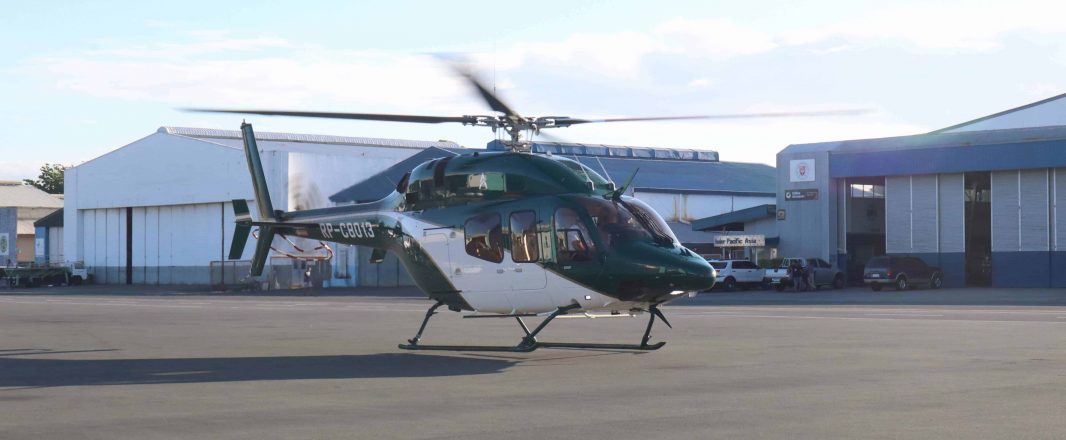
Ride-sharing has gone up to the skies with newcomer Ascent joining the fray with a pioneering concept – helicopter ride-sharing.
The Singapore-based startup, founded last year, has already seen some initial success in Philippines where it started its service earlier this month with support from local air operator, INAEC Aviation Corporation (INAEC) that provides the fleet. Passengers can buy a seat on the helis to fly between busy locations in Manila such as the Ninoy Aquino International Airport, the Makati, Bonifacio Global City and Quezon City CBD and other regional destinations such as Clark and Tagatay.
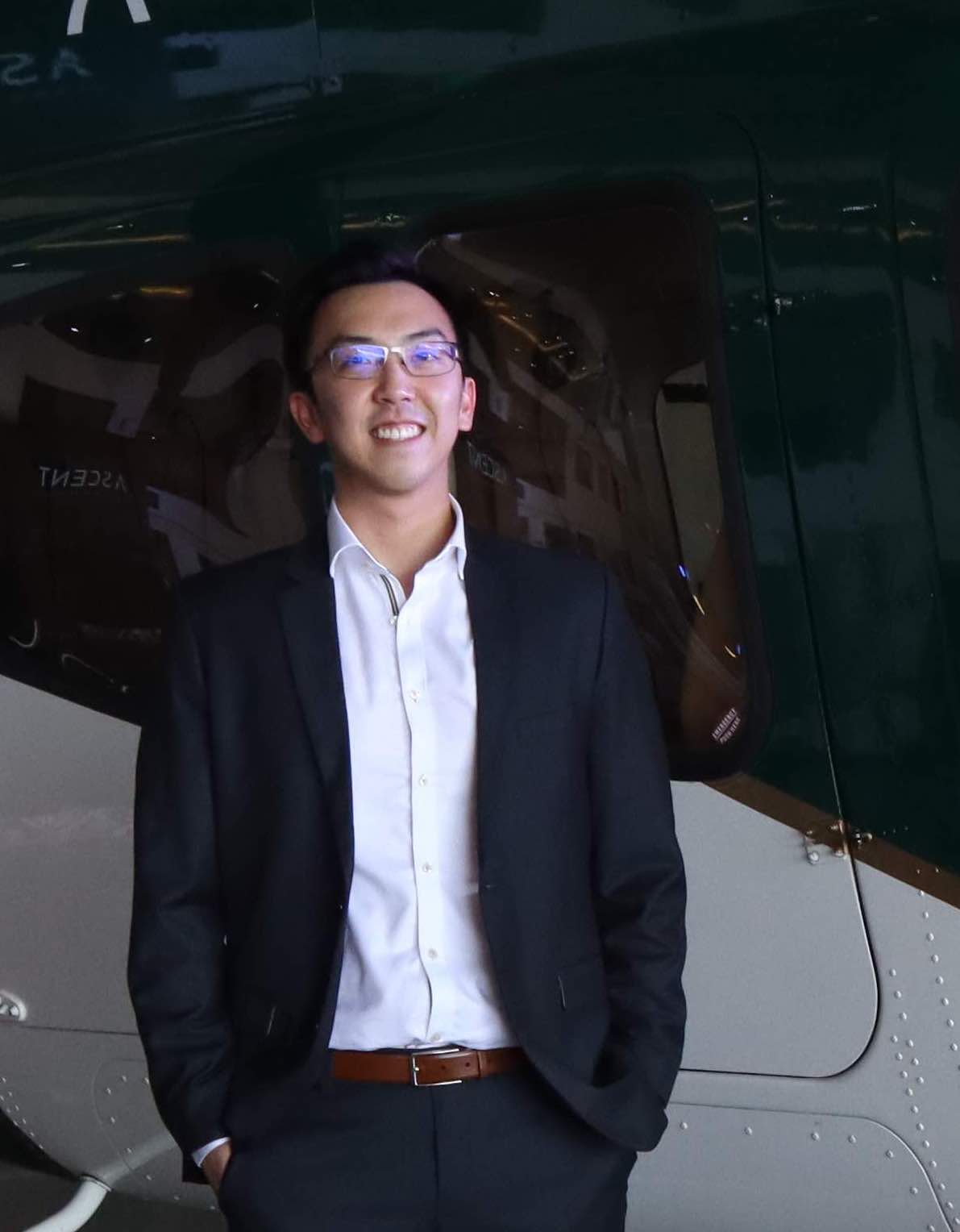 “It has only been a few weeks since launch, but the response has been very encouraging. We’re surpassing 30,000 visitors on the website with more than 200 inquiries across our digital platforms and have sold close to 50 seats. These 50 seats have come from three main segments: the business community who are time sensitive; passengers using the service for leisure; and tourists who want to see the Philippines from the skies,” said its co-founder and CCO Darren Tng (pictured right).
Tng, who came from the tech industry and his partner Lionel Sinai-Sinelnikoff who is from the aviation trade, saw an opportunity to provide such a service to alleviate traffic congestion in capital cities and connecting major cities. And the Philippines was the ideal launch pad, said Tng.
“Philippines is an attractive destination for businesses. However, traffic congestion and connectivity issues are significant choke points for members of the business community. Helicopters and heliports there are also experiencing low utilisation and offers sufficient supply. Last, the Department of Transportation in Philippines is an advanced, open-minded and supportive body. Given these conditions, we’re hopeful of what we can do in the Philippines,” explained Tng.
Sinai-Sinelnikoff added that CBDs in Manila present an untapped transportation opportunity as there is a good number of helipads and helicopters with low utilisation. Ascent aims to connect CBDs more easily and promote the country’s cities access and ease of movement through urban air mobility.
However, Ascent sees similar potential in cities like Bangkok, Jakarta and Kuala Lumpur and hopes to be in there by 2020. While it is focused on the Asian cities right now, it is open to going further afield and “welcomes the interest of [any other] entities and cities”, said Tng in an interview with Web in Travel.
“We are going to expand our footprint soon in order to bring this traffic solution to more cities, with the intention of creating more impact and making a strong case on why helicopter flights can now be considered as new, viable way to commute,” said Sinai-Sinelnikoff.
Ascent also offers services such as luggage transport, on-ground guest assistance, airport transfers via helicopter, shuttle services to dedicated heliports, and enterprise solutions.
The company continues to look for fresh funding and partnerships to support its expansion plans. Ascent had a local Philippines partner, PhilJets, during its test phase. With this partner, it was able to “study closely how to most effectively enter the market”.
However, “while scaling up is certainly exciting”, Ascent will continue to make customer experience and feedback top priorities, insisted Tng.
“We believe in building not just scalable but also sustainable businesses that add value to our consumers,” he added.
Featured Image credit: Ascent