


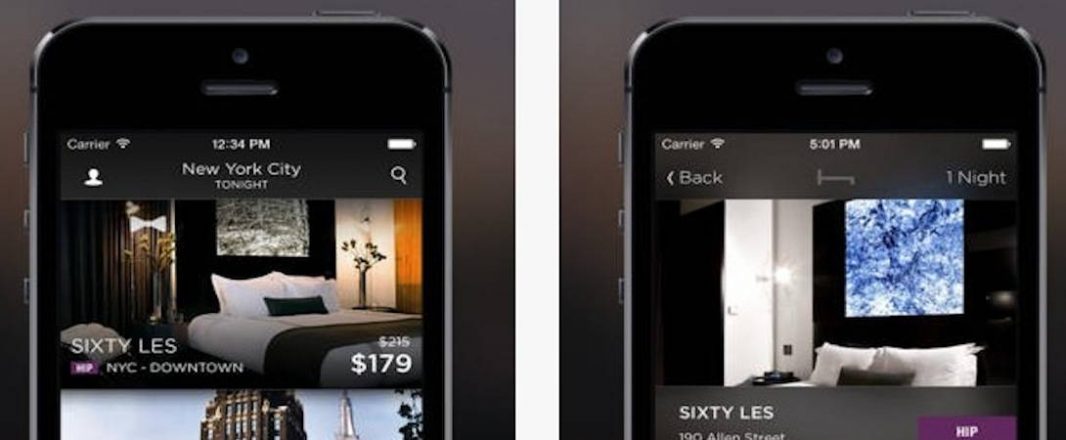
HotelTonight, The World Tomorrow: Focus key to success
Yeoh Siew Hoon interviews Sam Shank, CEO and founder of the same-day app that pioneered a completely new model in hotel bookings, and asks him about growth plans and the trends he’s seeing with his customers.
.gif)
Sam Shank
Q: I see HotelTonight has launched in Europe. When will you enter Asia? And why Europe first before Asia?
European expansion was always part of our strategy, but first we felt it was important to prove the business in the US. Of course, we want to be responsive to our customers first and foremost, and the thousands of inbound requests we received to add European markets sealed the deal for us. London is one of the most vibrant and visited cities in the world, so it was an obvious place to kick off our expansion beyond North America. It’s also a strong starting point for moving into the rest of Europe, so it made sense for us to place our EMEA headquarters there.
We do not publicly disclose expansion/market launch plans. I can say that international expansion is a top priority for us. We plan to continue our determined push to reach new users worldwide in 2013.
Q: How’s the expansion in Europe going? Obviously a very different market from the US which is homogenous. What challenges are you encountering and what cut-through have you had?
We knew that we would face many new challenges in Europe, but the response to our expansion has exceeded our lofty expectations and forecasts. One of the biggest differences in Europe was that we didn’t have first-mover advantage like we did in the US. Others had cloned and launched the idea in Europe before we got there, which changed the focus of our partner discussions from one of educating them on the model to demonstrating how and why HT was going to be a success where other companies had failed.
Fortunately, we were able to draw upon the vast operational experience we gained here and are growing at the same level in Europe as we did in the USA. London and Paris are poised to be as large, if not larger than New York City, our largest US market.
Unlike the US, we don’t view Europe as one market, but rather as a collection of individual markets, each with its own nuances and personality. With every new country, we look for ways to leverage our strengths, but focus on customizing our approach for the local market. As a result, we have reinvented many of our processes and practices, some of which we’ve then applied to the US market as well. In the end, our ability to adapt and react has made us an even stronger company globally.
Q: You’ve come a long way since start-up days. Raised funding, managed to scale. Was it hard in the beginning to get traction? What was the most challenging part of the start-up process?
HotelTonight invented the category of last-minute hotel booking apps by being hyper-focused on mobile travel, committed to innovation and continuing to push the boundaries.
And despite external pressure, we have stayed remarkably true to our original vision. For any company that is serious about improving its customers’ travel experience, focus is very important. For instance, in order to ensure we are providing the very best experience for our bookers and hotel partners, we are very disciplined about focusing exclusively on the same-day booking use case.
Some might argue that creates the challenge of staying top of mind with customers. However, we’re strong believers that the all-things-to-all people approach taken by the big OTAs results in a lowest common denominator experience for everyone. In contrast, by focusing on improving the experience, we have built a brand that customers love to talk about, which has resulted in over 6 million customers globally (and counting).
Q: What was the biggest milestone crossed that made you go, yes, I think we’ve made it?
One of the most memorable moments for me was the first weekend when we did twenty bookings on a Saturday! It took a few months to get there initially, but we haven’t looked back since.
Q: In the US, what kind of customer behaviour are you seeing? And are they different from what you’re seeing in Europe? Is there a pretty similar set of customer demographic you’re seeing across markets? What’s the mix between business and leisure travellers? Men vs women?
About half of our customers are business travellers who often don’t know where they need to be until the day-of and appreciate the value, quality and convenience of HotelTonight. The other half are spontaneous leisure travelers who use HotelTonight for a special occasion or last-minute getaway. In general, we are creating a new source of demand for the hotel industry – a majority of our customers tell us that they didn’t need a hotel room when they woke up that morning, but were swayed to book a room because of what they found at the last-minute on HotelTonight.
We’ve released a few infographics digging into HotelTonight’s userbase.
1) Stats on Impulse Booking and the types of customers who use HotelTonight can be found here.
2) Here’s an infographic on last-minute/spontaneous booking by device (iPhone vs. Android):
• This shares stats on the differences in spontaneity and booking habits broken out by what type of device the booker is using.
• As you can see in these infographics, we are seeing some interesting trends regarding how and what people book, from Android users being 32% more likely to book a room after 9 at night, to women booking more spontaneously than men later in life.
.gif) Q: Some people say the smartphone is more for business travellers, and mobile devices like iPad lend themselves more for leisure, so you need to have a different user experience for both. Have you found this to be the case? Different behaviour by devices?
Q: Some people say the smartphone is more for business travellers, and mobile devices like iPad lend themselves more for leisure, so you need to have a different user experience for both. Have you found this to be the case? Different behaviour by devices?Tablet usage is much more akin to the traditional desktop pattern, rather than the extreme on-the-go nature of smartphone usage. As a result, we designed our iPad and Android tablet apps to offer more of a casual, laid-back browsing experience for our users. We really wanted to let users visually visit, explore and engage with HotelTonight destinations through features like full-screen, high-resolution photography. That said, we preserved the 8-second, 3-taps and a swipe booking process that we’re known for on our smartphone apps, for those who still need to book a last-minute room quickly and efficiently.
HotelTonight has found that users typically spend a longer session time interacting with the tablet app than the smartphone app, browsing and exploring the high-resolution, mobile-optimised hotel pictures and custom-written content. We’ve also found that tablet users come back to the app more frequently, and view more hotels.
Q: How important is social to how you’ve built a brand? It’s not easy building a consumer brand these days – so what do you think worked in your case?
Quite simply, we have built a superior product that solves a real problem that wasn’t being addressed by other travel companies. Not only do we feature great hotels, great prices and a fast and easy way to book, but we also back that up with a world-class service team that is available 24/7. The majority of our growth is through word of mouth and referral; in other words, customers like what we do and they tell their friends, often through social media. Our social media strategy is not only about offering support to customers, but also expanding on our entertaining voice and brand, sharing and giving exposure to the amazing hotels we work with and surprising, delighting and interacting with our fans.
Q: In this article, the CEO of HRS suggests same-day booking apps will disappear in 3 years. Obviously you disagree but how many can the market support? And is your biggest competitor last minute rooms from OTAs and other intermediaries? How do you differentiate yourself?
We’re different from other hotel-booking services for many reasons, but chief among them is that we built HotelTonight from the ground-up for same-day, mobile hotel booking. Every person in our company, from our developers to our hotel experts to our 24/7 support team, is laser-focused on building the best same-day hotel booking service. Being a mobile-native business allowed us to design an app that is optimized for customers in need of a hotel room right now, without getting distracted by other factors.
HotelTonight was founded to do one thing better than anyone else. Our customers and hotel partners appreciate that we’re not trying to be all things to all people, so when they have a need for a last-second room, or to fill a last second vacancy, they’ve come to rely on the simplicity, convenience and outstanding values on HotelTonight.
Q: In Asia, we’ve seen HT clones launch – HotelQuickly being one and CheckIn Tonight. What would be your advice to them?
Building an app and signing a few hundred hotels is one thing – getting people to use the app, tell others about it, and working with tens of thousands of hotels requires a very different level of operational know-how.
Q: I understand you’re also expanding to restaurants – why and what are the plans there? And what else is next? Attractions? Tour guides?
Because the opportunity in hotels is so enormous, HotelTonight has no immediate plans to expand into other verticals.
Q: You were the disruptor and often, the disruptor can become disrupted. What could be the next big disruption to come in hotel accommodation?
We have a very innovative pipeline here at HotelTonight. Don’t be surprised if the next big disruption comes from us!
You might like

Artificial Intelligence
It’s the golden age for product leaders in travel, says Trip.com’s Amy Wei

Distribution
Lessons from WiT Africa, Part 1: From Cape of Good Hope to the promise of youths, mobile and payments

Artificial Intelligence
Rabbit R1 and its impact on Tours and Activities