Looking surprisingly fresh despite having been through five cities in 10 days, CEO of HRS Tobias Ragge is decidedly pumped up about what he calls “the convergence of thunderstorms” that make Asia such an exciting growth story for his second generation family business.
One, compared with Europe where “our societies are saturated”, economies in Asia are still being driven by a growing and aspiring middle class. That, plus the fact that the corporate travel market is still at a lower level of sophistication means more headroom for growth for the German-based company.
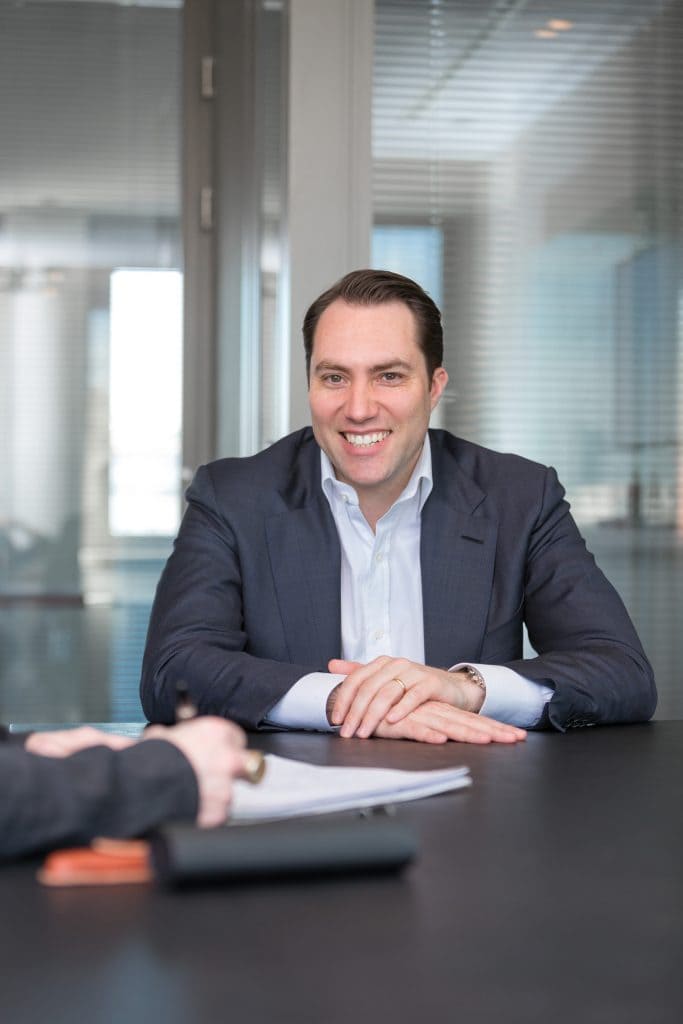
Tobias Ragge: “If we had been focused on profitability, we wouldn’t have invested in China.” But look at where it is now.
In Beijing, he’s seeing a market where the concept of Travel Management Companies is still new and although it’s taken eight years for HRS to get there, he is proud of the fact that it’s now the number two player in terms of managed travel and accommodation supply to the industry, after Ctrip. “We managed to overtake Alitrip,” said Ragge. “It shows it can be done – it just took us a while to drive it out of the local teams.”
In South Korea, a market dominated by a handful of family-run companies, he’s seeing a market that’s similar to Japan – inhouse agencies which have yet to outsource – and is on the verge of change.
In Vietnam, his first visit to Ho Chi Minh City (pictured above), HRS is preparing to invest in a partner, details of which he declined to disclose. “It reminded me of where Thailand was a few years ago.”
“If you look at the top 10 markets for corporate travel, China tops the list, Japan 4, Australia 7, India 8, Korea 10 – except for Australia, the other four were not on the list 10 years ago.”
In many ways, you could say Ragge has been preparing for this “convergence of thunderstorms” in corporate travel for the last eight years since he took over the reins in March 2008.
B2B more complex but worth it in the end
One of the first things he did was to pivot HRS from a consumer brand to a B2B player. “We started with a B2C OTA plan which was not successful. It was hard to understand complex markets like India and China when you are not driving it from within the region. We then pivoted to the corporate segment concentrating on global supply and standardised solutions. It was also less competitive in corporate travel.
“B2C is a marketing play, it’s a very hard play, if not impossible. B2B is more complex, longer sales cycle, longer time to materialise. It took us eight years to get to second position in China.”
This pivot, followed by relentless execution, has placed the company in a strong position to withstand the disruption happening in corporate travel. Billed as the world’s largest hotel content provider with more than five million rooms and 180,000 independent properties, Ragge said, “We’re now a serious accommodation challenger in corporate travel because we have created the single service, either direct or indirect, for the industry.”
Explaining the disruption, he said, “The industry’s been served for decades by the same travel management companies. We’re now seeing a trend of offline to offline, TMCs to OBEs, there’s so much content available that it’s no longer a currency.
“There is disintermediation going on, corporations are also changing, they used to have travel experts, now it’s part of procurement and there are more outsourcing models.
“We’ve gone from a world of few players to fragmentation – the sharing economy has happened. It’s becoming a more global game and consumers are also driving it – Millennials as well as consumerised solutions.”
Changing mindset to travel tech and global company
The disruption is leading corporate travel giants to make moves to defend or expand their turf. This week, Concur, owned by SAP, signed an agreement to acquire Hipmunk, the flight and hotel meta-search site, showing its clear intent to disintermediate TMCs.
Last month, American Express Global Business Travel bought France-based travel and expense technology KDS, calling it “part of a broader investment strategy by GBT to develop an industry-leading suite of traveler-centric online and digital services, sitting on top of the company’s core technology platform for business travelers.”
Ragge welcomes the disruption and wants to see more innovation in the industry. “We are seeing innovation in travel from startups, not from the big players, but they need to be fed into the ecosystem. Integration of the value chain is key.” (See related story)
So other than the pivot to a B2B play, Ragge has also been hard at work changing the company’s mindset from one of hospitality company to that of travel technology. “We have morphed into a company which is an expert for business and consumer travel in accommodation, our core expertise, backed by dedicated tech teams around Business Intelligence, personalisation and big data.”
However, he said, the bigger challenge was actually not digitisation but globalisation. “We’ve been around since 1995 and even 10 years ago, we were seeing 90% online transactions – but the globalisation piece was more challenging. Changing a German company to a global company was the bigger step. HQ running centralised services where we send staff out once a year didn’t work. We went through waves of evolution – sending, and failing – then we localised and decentralised, and now we have decentralised product development.”
“Family business is about investing in the long game”
Being a family business has also helped. “Obviously as a family business, you think more carefully about investments and longterm about culture and change. You, at the end, have more responsibility than external hires. Professional executives are in for 3-5 years, they don’t care.
“As a family business, you are more about principles, you invest in the long game. If we were just focused on profitability, we wouldn’t have invested in China. If I, as the owner of the business, have a vision and believe in it, it’s much easier.
“The disadvantage of a family business can be its resistance to change and slowness to adapt, but that’s not been the case with HRS. Our DNA has always been about change and taking risks is core. I was 33 when I took over and I think the combination of young leaders and longterm perspective can hold family businesses in good stead.”
Asked the biggest lesson he took from his father, he said, “Don’t talk about it, get things done.”