Even though product has taken centre stage during Covid-19, Traveloka’s Christian Suwarna believes that marketing is also having its breakout moment in terms of how the Indonesian travel unicorn is rethinking its marketing strategy.
With limited funds to spend, the chief marketing officer and CEO, Experience Business Unit of Traveloka said, “It’s been a period of reflection.”
He said, “There is compression of business and we need to be very financially disciplined. Now we look at the other side of the coin – our own customers that we have acquired so far, more than 60m app downloads – and we look at ways we can engage with them with our own capabilities.
“We are becoming more careful and thoughtful in our marketing efforts and spend and funnelling it in areas that would bring the most impact, building our own capabilities and balancing it with third party advertising platforms.
“I don’t think we can live completely without them but it’s revisiting our marketing – we don’t have money now, this is what we have, what can we do now? It’s when you’re most creative.”
He calls it a shift from “hunting” to “harvesting”.
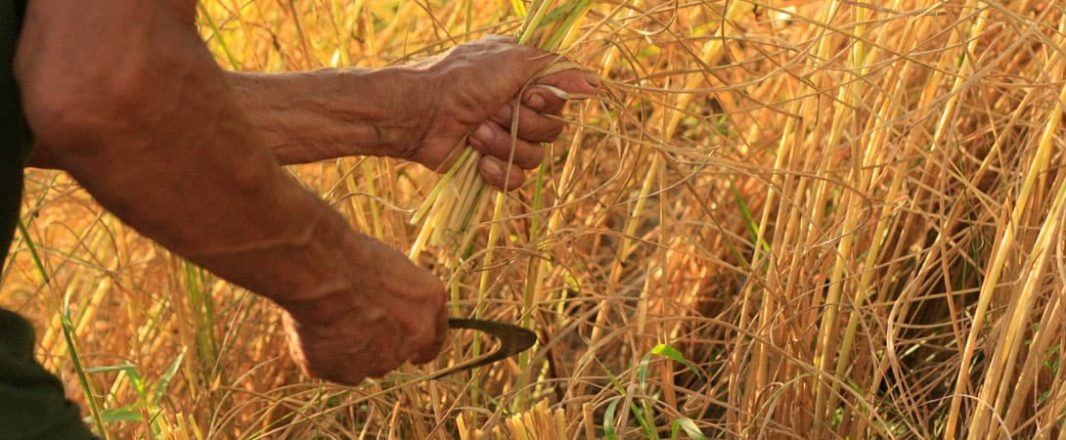
“When you’re in growth mode, you hunt for customers and once they are in your ecosystem, they become your crops and you farm them. Then you harvest them.
“Harvesting is a nice term but it’s very hard actually. How do you do it in such a way that you don’t upset your customers but still get your transactions at the lowest cost possible?”

Doubling down on payments, testing live streaming
Harvesting also relies on smart and creative use of data points and this is where Suwarna believes Traveloka has an edge because since Covid struck and took down its travel business, it’s been doubling down on all product capabilities, including financial services.
“We’ve spent a lot of effort in building an end-to-end solution for our financial service, Pay Later, which is the digital credit card that sits within our Traveloka Pay. We recently cooperated with two of Indonesia’s biggest banks for our Pay Later service. This enables consumers to not just use it in our ecosystem but also to purchase in other ecosystems. This helps people to better plan their finances, especially with Covid when some people are impacted more economically.”
With Pay Later, it is able to collect data on consumer buying and spending habits. “This is a very unique proposition that I don’t think any other company has. We haven’t had a chance to really make sense of it yet and that’s the part I am excited about.
“It’s art and science; it’s a lot of opportunity ahead.”
Suwarna is also excited about the possibility of live streaming as a new channel for both inspiration and transaction. It has hosted Traveloka Lifestyle flash sale campaigns, using live streaming and tying that with a flash sale component on its social media.
“We are still learning about the medium and we have been quite happy with the results. There’s a lot of improvements we have to make but there are already some benchmarks in China. We believe with good marketing innovation with our partners, it will help stimulate purchases.”
Trip.com Group has led the way in using live streaming to sell travel in China and on August 13, it hosted a #TripFlashSale live stream on Facebook and YouTube for customers in South-east Asia. The event ran for about 78 minutes and featured 20 participating hotels from five countries – Japan, Korea, Maldives, Fiji and New Zealand. Deep discounts of up to 58% were offered.
Suwarna believes this downtime has given Traveloka the opportunity to look at its owned media space. “I think there are lots of golden nuggets we haven’t uncovered perhaps because in the past, it was easiest to just spend when you have money and when you don’t have money, you start to get creative.”
As for how this period may change the way it markets post-Covid, Suwarna said, “When things return to normal, we probably would start experimenting. Certain businesses have started to do their paid ads again, one by one. Some have not. We would probably just experiment to see what’s the reception over there.
“I don’t think we will say, let’s cut 100% of our third party spend – it’s just a very important aspect but it can also be very costly as we have seen. So we have to exercise prudence and experiment in a logical and responsible way until business stabilises.”
Asked if this might be a good time to wean off the industry’s addiction to Google, “I wouldn’t say that we would wean off Google completely – they are great partners and they helped us grow to where we are today. They do have a very strong and unique proposition and it’s hard to fight that.”
Clean Partners, insurance products among new offerings to build confidence
Suwarna said that product has become a focal point in the past months “because we know that this crisis will pass and you want to get yourself ready for the party when it comes, and that’s through the products.”
On August 13, it launched Traveloka Clean Partners programme to showcase the different industry partners that have stated their commitment to health and safety standards to build confidence in consumers.

Its domestic strength in Indonesia, in particular, should also give it a competitive advantage given that it is domestic recovery that will lead the way out of this storm .
“We’re thankful that we have been investing our time in deepening our footing. We have a plethora of local inventory that we have gathered in second and third tier cities that, in the past, would not have been big destinations. But now with domestic travel rising, they have become destinations.”
It has also developed insurance products that are local for Indonesians. The challenge though is to find an insurance product that will cover Covid. “We are still in discussions. The difficulty is to find what is the right premium that would sell,” said Suwarna.
Cautiously optimistic “but the control is not in our hands”
Suwarna said that when the crisis first hit, “we were pretty taken aback by the impact. At one point, it dropped to almost none. We just stopped looking at it. But around June, things started to recover in Indonesia and Vietnam.”
But now that Vietnam, which was leading the way in recovery, has stumbled, Suwarna said, “We cannot fight the macro condition, right? It’s the same in Indonesia. Every week, we see recovery but we are still far from where we were in 2019. We’re thankful for the recovery, we’re cautiously optimistic but as we were reminded with Vietnam, the control is not in our hands.”
As with other domestic markets, it is hotels that are recovering first, particularly those in proximity to major metropolitan areas, and within driving distance. “People getting away for quick trips after being confined to their homes for a while. Bali’s recovery is a bit slower, it’s still relatively empty on certain major strips,” he said.
Suwarna also anticipates that business travel will take longer to recover. “Even the government is still contemplating whether they should restart their own employee movement for business, plus there’s a lot of behaviour around online meetings.”
Suwarna said while online meetings have proven to be a viable alternative, “maybe at the executive level, where you’re just monitoring”, it’s hard when “you have to charge, and attack, and collaborate”.
“You need the energy and that’s missing from online meetings.”
Experience worst hit, $250m fund raise major boost of confidence
The Experience side of the business, which he heads, has been worst hit. “Many of our suppliers have shut down, some temporarily, some permanently. The more resilient ones with better balance sheets have started to recover.
“We’ve been working closely with partners that have reopened, and working on sales and marketing campaigns with them. With the reopening of several destinations, and big attractions, the outdoor ones are recovering better than indoor ones.”
Asked if Traveloka would be developing its own products and experiences in line with changing customer preferences, Suwarna said, “We don’t have any desire to operate our own experiences at the moment. We want to focus on our core business of hotels and flights, and also we don’t have enough energy.”
The recent fund raise of US$250m has been a major boost of confidence to the team, he said. “The funding is to strengthen our travel and lifestyle proposition. Travel and lifestyle is what we sell to the consumers. Financial services is a unique enabler that we provide to the customers as well. We have to really focus on it, it’s a new business model. It’s interesting and it’s got a lot of its own merits.”
Asked how challenging it would be for Traveloka to switch from a high-growth, high-spending culture to one around constraints, he said, “There’s no other choice right? We have to do it. We have taken this time to really reflect and contemplate and work on our old self which, probably in a normal situation, we would be so busy just fighting around.
“We are definitely stronger after all of this, from a capability perspective, maturity, financial prudence, discipline.
“We will be able to do it. The mindset has changed. Even though we are so blessed to receive the vote of confidence with the fund raise and we’re so happy, it doesn’t mean that we will go back to the way we lived before, because then that means that we didn’t grow. But we are growing at the moment, learning from our mistakes.”
Personally, he said, “I’m actually thankful that I got to experience this. I feel that for me personally, it was a source of growth. Learning how to deal with this in a cool-headed manner, not being sucked into the situation today, but looking ahead to the other side of the crisis.
“As a team, we are stronger, our collaboration is stronger. We’re just excited to see the market rebounding but it will go on its own time. We will try to stimulate it but the overall macro situation will dictate the time.”
• Featured image credit: f.ield_of_vision/Getty Images