
Armed with its latest fund raise of US$75 million, GetYourGuide is expanding its global presence with the launch of four new domains and has added Traditional Chinese, Japanese, Russian and Mexican Spanish as supported languages for its global inventory of tours, attractions and in-destination activities.
The objective is to make its online marketplace even more accessible to travellers in Asia and the Americas, and follows on the heels of opening regional offices in Hong Kong and Bangkok earlier this year.
To add language support for the four newly-launched domains, GetYourGuide employed a combination of manual and machine-based techniques to translate and localise its inventory of over 31,000 things to do. The launch brings the total number of languages supported on GetYourGuide to 18.

Tao Tao started GetYourGuide as a student pet project that has now become a global travel brand
Tao Tao, co-founder & COO of GetYourGuide, speaks to WIT’s Yeoh Siew Hoon about the company’s journey from a student pet project to global travel brand – the Series D fund raise was the sector’s largest single raise to date and it’s raised a total of US$170 million since founding, what the latest war chest means to the business and its expansion plans in Asia.
Q: How does it feel to go from nearly-failed student startup to high-flying global brand?
We started our initial peer-to-peer tour guide idea as a side project next to our studies back in 2007. Sometimes it’s hard to believe that it’s already been a decade. In late 2009, we started to work on it full-time. That’s also when we pivoted to our current marketplace model. The feeling today is a mix of gratitude and dissatisfaction. Gratitude because the longer you do this, the more you realise how lucky you’ve been to have been at the right place at the right time, and grateful for the support from investors, friends and all employees past and present. At the same time, there’s a constant feeling of dissatisfaction. You always feel that you’re not going fast enough, that you could have avoided certain mistakes, that your current culture isn’t quite where it should be, and a hundred other things. Then again, as entrepreneurs we take satisfaction from dissatisfaction.
Q: What would you mostly attribute the success to?
Luck and execution. We started GetYourGuide just before mobile took off and we’re benefitting from the trend that customers are increasingly spending more money on experiences than on things. We were also fortunate with our investors who have been extremely supportive. Things like timing and investor selection are hard to control as first-time entrepreneurs. On the execution side, i.e. the things we could control, I think we always tried to find the right balance between growth and sustainability. We also focused on company culture from day one; not that we always got it right, but at least we’ve been thinking and working on it for eight years now.
Q: Series D of US$75 million comes with high expectations. You’ve already raised $170 million since founding. Does the pressure to perform outweigh the passion for what you started?
Our passion is stronger than ever because our initial vision has significantly grown over time. Initially we just wanted to create a place for travellers to find local guides. Today we’re trying to the answer the most difficult question in travel: what to do in a destination. Our mission has evolved from a student project, which in the worst case may have made for a good MBA application, to turning trips into amazing experiences for billions of travellers. The pressure comes less from the amount of money raised and more from the respect for the massive opportunity in front of us.
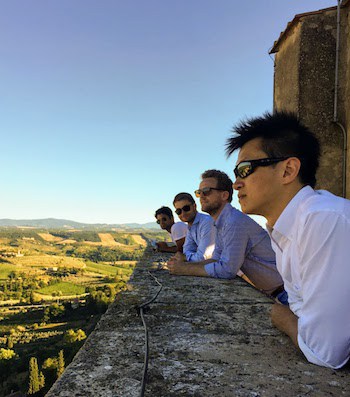
A day trip for the GYG group to San Gimignano, an Italian hill town in Tuscany
Q: Are you in this to make money for investors or for your team or to create better travel for travellers? Rate them in terms of priority.
Everybody will have their personal reasons why they start or work at a startup. As an economist geek at heart, I’m in this to build a company that creates as much customer value as possible. And the only way to create sustainable value is to build something that customers love. If we’re successful at doing that, the financial success will follow. Financial success is an outcome, not a driver for our thinking.
Q: What do you think was the magic word that got you to unlock that last war chest of US$75 million? How did you convince investors GYG is the place for their money?
At this stage of financing it’s mostly about the numbers and, fortunately, ours have been good enough to convince our existing investors to double down, and convince new investors to come on board. That said, capital isn’t the only factor in raising a round: we’ve always chosen investors who believe in our long-term vision and team. It’s a two-way street.
Q: From ugly duckling, tours & activities is now the swan of travel. Competition is rising. How do you intend to differentiate? What will that US$75 million help you to do?
The main focus is our continuous investment into our product and international expansion. The additional funding also allows us to take a long-term perspective on technology topics such as machine learning, which we believe will be crucial for personalisation.
Q: Your main competitor, Viator, was bought by TripAdvisor and seems to have slowed down in its international expansion, and most of the original team members have left. Is this an opportunity for GYG?
Tripadvisor, GetYourGuide and all other aggregators combined barely make up 2% of the total market. In that aspect, the opportunity is unchanged and remains huge.
Q: What do you think of what Booking.com and Airbnb are doing with their Experiences products? Who do you watch more?
We generally try to focus more on our customers than on our competition, but we think it’s great validation that more companies are entering the space, and there are many things we can learn from them. Competition forces everyone to do better and customers will be better off for that. I think what Airbnb is doing is very interesting, although they’re targeting a very specific audience that doesn’t overlap much with ours. Booking.com is a role model for many travel companies, and we respect them a lot. I’m sure more companies will try to enter the space, so the next couple of years will be very interesting.
Q: Other than those three, who do you think are your main competitors?
Most OTAs by now have an activities team, e.g. Expedia or Ctrip. There are also two to three startups in Asia and Europe that we are watching, but we like to think that the main competition is the 98% of travelers who don’t use any of the aggregator sites to book their tours & activities.
Q: What trends are you seeing in how travellers book tours & activities from the data you’re experiencing on your site?
Visiting iconic attractions and sharing pictures on social media are more popular than ever. At the same time we see a parallel trend in travellers also seeking experiences more attuned to their individual personalities. What I find interesting is how our customers’ booking preferences especially evolve with repeat usage of our product. Many of our first-time customers start off with booking iconic activities like a visit to the Sagrada Familia or sightseeing bus tour, but once we’ve established trust with them through a first transaction, a food enthusiast, for example, is likely to book an additional cooking class or tapas tour on the same trip.
Q: Do you anticipate customer behaviour will be different as you move out to Asia? If so, how? And how will you adapt to the local markets in Asia and compete with local players?
Through our experience in Europe we have learned that a Swiss customer is very different from an Italian customer, and we expect an Indian customer to be very different from a Japanese customer. We will take a market-specific approach in every Asian market that we try to compete in.
Q: What’s the next big thing in tours & activities?
GetYourGuide 🙂
Q: You and Johannes started this business because you loved to take people around places as guides. Do you still have time for that, or even go places as travellers yourselves? Or is it all work, work, work now when you travel?
Taking time off is really important to clear your head, recharge your batteries and draw new inspiration for your product. Johannes just came back from a trip to Chile where he went on a lot of tours from horse riding to wine excursions. I had to mute him on Instagram for a week, because Berlin in November is not quite as pleasant as the pictures he shared… Our most recent trip together was in Tuscany, where we spent a week with friends. We took five or six tours there, but the highlights were the visits to the Antinori winery and the Uffizi Gallery. I also regularly book activities in Berlin, mostly when friends and family visit from out-of-town.
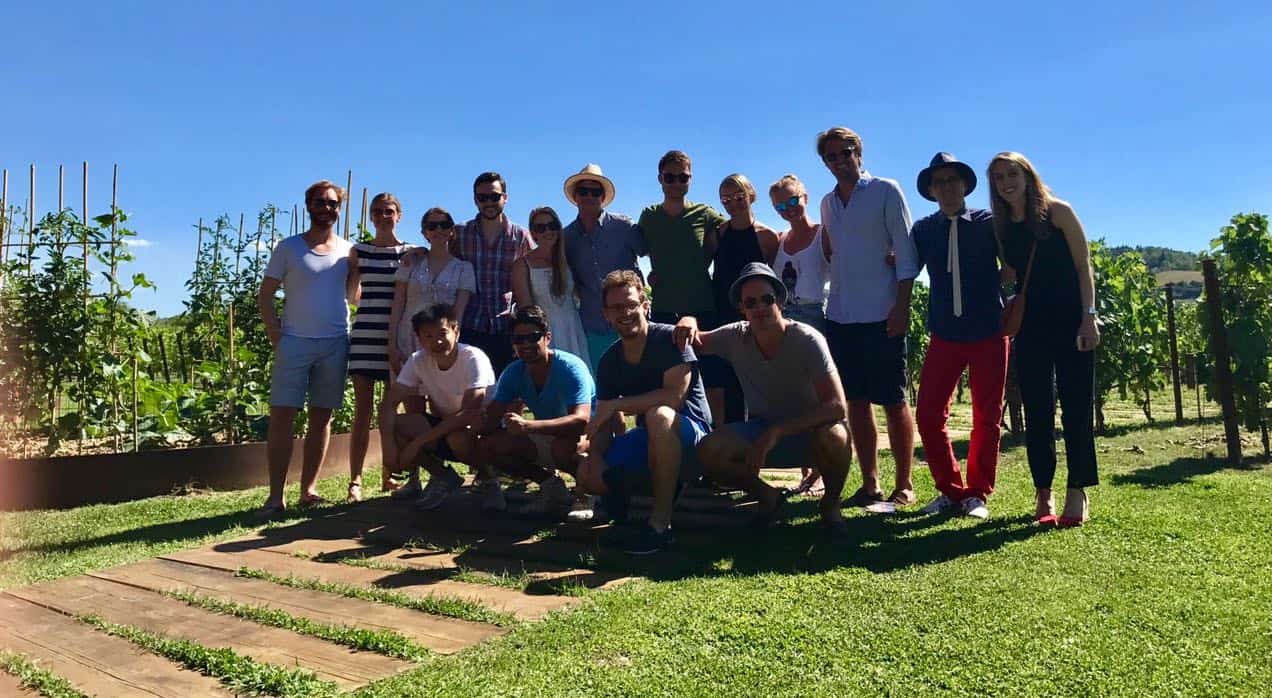
Highlight of a visit to Florence is the Antinori winery tour
Q: Success in business often comes at a price. What’s the biggest personal sacrifice you’ve had to make?
If you were to ask my parents, tthey would complain that I still live in a bachelor pad with no furniture to speak of. But I like to think that I’ve gained more than I had to sacrifice. When you work on something you love, it doesn’t really feel like work.
• Featured image credit: tiero/iStock-Getty Images; all other images credit: GetYourGuide