WEGO launches Shopcash, MakeMyTrip starts TripMoney, Seera enters alternative accommodation and car rentals, Cleartrip goes back to roots
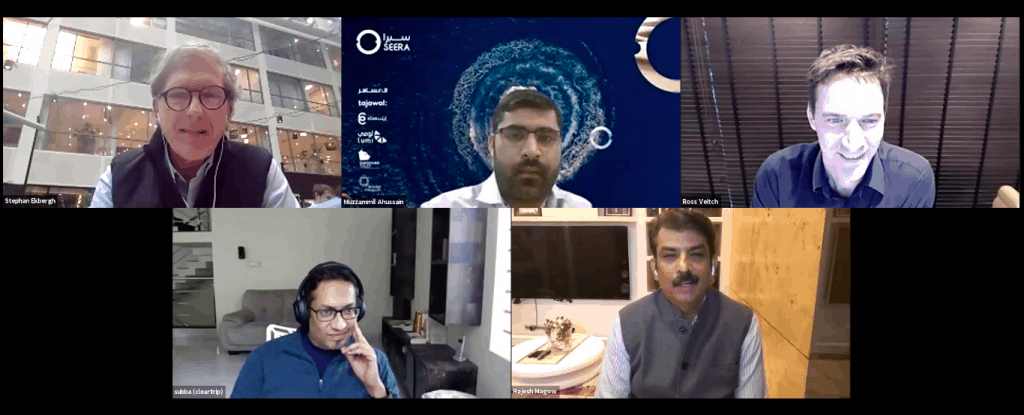
Wego’s CEO and co-founder Ross Veitch announced the launch of its new vertical, ShopCash, at WiT Middle East this week, a new business line to tide the company over till travel comes back.
With Covid having fast-tracked online shopping in the Middle East, the shopping app will allow Wego users to earn cash back when they book flights and hotels. And when they use ShopCash to buy non travel categories like groceries and fashion, they earn cash back which they can use to redeem flights, making it effectively a rewards platform for Wego users.
Said Veitch, “It’s going to have a life independent of Wego, but it’s also going to be the core of the loyalty programme on Wego. It’s a bit of a moonshot for us. One of the sectors that is actually booming at the moment is general ecommerce, so we’re trying to ride that wave.”
The “cash back” business is huge in markets like South-east Asia but is nascent in the Middle East and Veitch feels this will give Wego a first mover advantage in the region.
While hedging his bets, Veitch said, “I’m certainly more optimistic than I was a couple weeks ago before we had multiple positive results from the vaccine makers of the world. We know the Middle East is certainly not going to be at the back of the queue for vaccine distribution. So I’m hopeful that by around the summer next year, a majority of the people living in the Gulf have been vaccinated, and it’s going to be off to the races with regards to outbound travel.”
His comments reflected the overall mood and tone of the five-hour WiT Middle East. The industry has been uplifted by the positive news around vaccine development but, at the same time, they are not sitting idle and twiddling their thumbs.

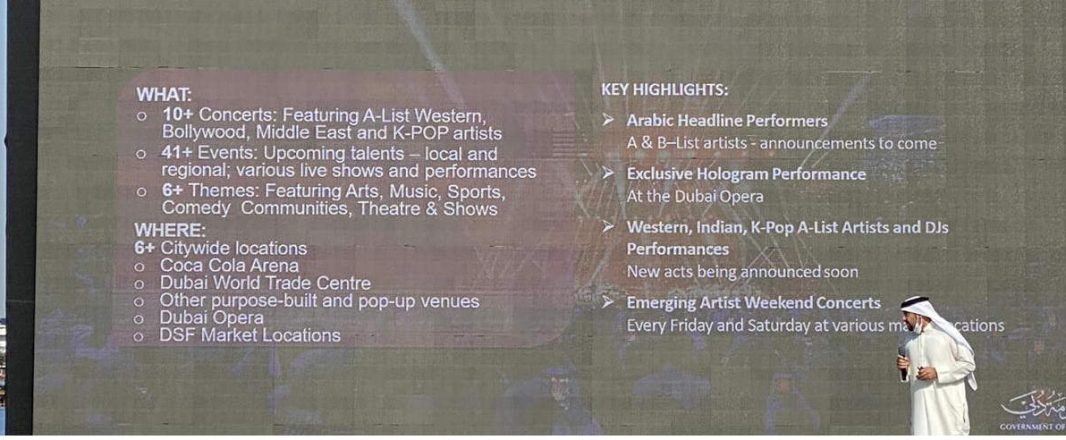
Yesterday, the Dubai Tourism & Commerce Department held its quarterly briefing which was attended by 900 stakeholders. Held outdoors, the event was described as amazing by Mona Faraj, managing director of Insight Out Consultancy, who herself is organising a hybrid HSMAI Middle East event on December 6.

“It was so energising to unite in such mass numbers and yet feel so safe and secure …the distant chairs, temperature check, face masks, no hand shakes/hugs, wrapped food and many other arrangement all felt so normal and part of being able to connect again in mass numbers,” she said.
Beyond the feel-factor, hard money is also being invested in travel. Both Certares and Seera Group, for example, have set up dedicated funds to invest in travel (more next week on this).
Why MakeMyTrip entered the Middle East in the midst of a pandemic
Meanwhile, while other OTAs moved back to focus on core during the pandemic, MakeMyTrip took the step to expand to the Middle East in the midst of Covid.
CEO Rajesh Magow said, “It could certainly appear to be a bold decision in the middle of all the crisis management that we’re all going through, but from our point of view, it was already kind of in the works. We had done pretty much all the work in terms of what we needed to develop the platform.”
It was also able to leverage the team in India to build the platform. “We ended up taking a longterm view. We were very clear it’s going to be a longer recovery process so in this market, whatever you got to do, you got to do and then you take the second track, which is the longer term view.”
It felt there was an opportunity within the crisis to do a soft launch, test the product and figure out the gaps. It’s launched in English in UAE and is now working on an Arabic platform. The idea is to get the building blocks ready so that when the time is right, it can start marketing and investing for a proper launch.
Do what you have do to survive and invest in the longterm
Fortunately for MakeMyTrip, domestic travel in India is bouncing back quite well, said Magow. “Domestic flights is actually back to about 60% of the pre-COVID level already. Hotels is back to about 40% of the pre-COVID level, which is helping us clearly.”
It’s invested in at least three new initiatives – MyPartner, an affiliate platform for travel agents, a mini fintech platform called TripMoney which will focus on consumer lending for travel and non-travel, as well as insurance, and a third party advertisement platform.
Said Magow, “This is the right time, to be honest. One track is to keep working on, how do you survive and how do you weather the storm effectively? The other one is very important – to focus on what will you do and attack those projects to be ready when the storm is over and emerge even stronger.”
Seera Group is also investing its way out of the crisis. Muzzammil Ahussain, executive vice president of consumer travel, said, “We’ve taken a couple of very strategic projects, across our group, within our OTA and travel business, but also in our other businesses. The growth of the Saudi inbound for international visitors is coming, we have new initiatives in our travel business around alternative accommodation and car rentals.
“We are taking this opportunity to pick the right big projects and we’re going to continue to invest in and grow, at the same time being smart and optimizing our costs on the day-to-day business.”
When asked what he had to unlearn, Subramanya Sharma, Chief Strategy Officer of Cleartrip, which had to cut its staff by 70%, called the year “super humbling”.
“Surprisingly, that has helped us to be more purposeful, and there’s more gratification. People are itching to travel and we are asking, what can we do and help people travel? It’s using this time to go back to the roots of product.”
Magow said one revelation is that “you probably don’t need physical offices to effectively operate”.
“The way the world has adapted to the virtual way of operating and running companies, it was amazing. It was amazing to see the amount of productivity that we were still able to get at the end of every project. I think we will go into a hybrid way of operating.”
So from events to work, welcome to a hybrid world.
More reports from WiT Middle East next week.
• Featured image: The Dubai travel industry gathering yesterday.