It is “mission critical” that Amadeus wins in Asia and one key plank of its distribution strategy is giving Asian OTA customers top priority, declared Holger Taubmann, senior vice president, distribution.
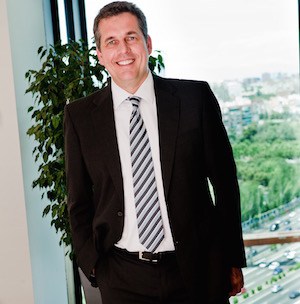
Holger Taubmann: Asian customers Amadeus’ top priority. (Image credit: Amadeus)
Speaking to WIT during a visit to Bangkok, he said that globally, online growth has been phenomenal although it’s maturing in the US and it is seeing consolidation”.
“Asian customers have become our top priority,” he declared.
The goal of winning in Asia lies in the hands of new Asia Pacific president Albert Pozo. Previously VP Global Customer & IT Services, Pozo was largely responsible for the win of the Orbitz business in the US, Sabre’s territory, said Taubmann.
Technology was a key reason for the win, said Pozo. “Traffic acquisition has become very costly for OTAs, OTAs need to bring ad costs down and achieve some independence from Google, which is almost impossible.
“We recognise their challenges and have worked hard with our partners to bring down costs and improve conversion rates,” he said.
One innovation has come from the acquisition of Germany-based Travel Audience, which specialises in improving conversion rates from clicks. “OTAs are under threat, they are facing larger and larger cost base on advertising and we are developing tools on the search side and getting into digital advertising and understanding how the advertising model works.
“This is a very specialised area – more than 50% of an OTA costs goes towards traffic acquisition and lead generation. If you can move the needle a point, it’s worth a lot.”
He said that other than developing IT in search, Amadeus had also developed the consulting expertise – “the secret sauce is the intelligence and the data scientists to use that intelligence for better performance”.
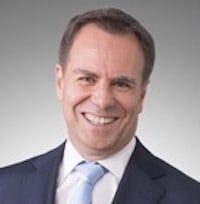
Albert Pozo’s goal is to win over Asia. (Imagae credit: amadeus)
Pozo said the strategy has been deployed in India and China, as well as Taiwan. “There are new entrants coming in to create the impetus for traditional travel agents to get online quickly.”
He said Asia was highly advanced in the online mobile space. “For example, with mobile in China, there is no recipe we can apply and we have to innovate together with them, and leapfrog, and then export that to other markets.”
Pozo added that OTAs recognised the need to reduce their dependence on metas and to “build stickiness to yourself by building a strong brand, otherwise, you’ll always be addicted to the drug.”
Taubmann noted that OTAs have been facing competition from metas for some time. “There’s a blurring of models, similar to what happened between low cost and full service airlines. Google is starting to act as sellers, OTAs are introducing diverse results in their pages and acting as metas – all with the objective of offering a “neutral marketplace”.”
Given the rising costs of customer acquisition, Pozo said that the ones in the middle will get squeezed. “We are entering a world of giants and specialists.”
The reverse though, he said, is happening with Travel Management Companies (TMCs). ‘They have to become experts in specialist sectors – the highest growth is in companies with specialists rather than in giants. Of course, you have to be global but then you have to prepared to accept lack of expertise in specialist sectors.”
Asked what it would take to win in Asia, Taubmann said, “We have 40% market share and are already leading. We need to be Asian, we need to work with customers and we need IT capabilities.”
Asked if winning might mean moving headquarters to Asia, Pozo said, “Why not? There is no reason for it not to happen. The centre of gravity in future will come from Asia.”
Taubmann said that it was less important where HQ was but how important functions were equally distributed across the world. “We are bringing core critical functions to Asia. Our investment in Asia is not by chance – we have 1,500 engineers in Bangalore and a total of 3,500 employees in Asia who are not just in sales but producing.”
• Featured image credit (Myeong-Dong, Seoul, South Korea): SeanPavonePhoto/iStock