
What makes a mobile app a lightning-fast proposition?
It’s quite intriguing to assess how design and development teams accomplish the task of facilitating a hotel reservation or on-demand car service in less than one minute.
When Apple recently introduced its new programming language in Swift, I tried reading into how the same can be used to make the most out of modern Mac, iPhone, and iPad hardware. Unfortunately the session didn’t last long!
Post this I chose to interact with specialists from last-minute hotel booking app HotelQuickly, OTA Cleartrip.com and travel search engine ixigo. These intermediaries analyze performance of their products almost on a daily basis.
Importantly, the approach of a product development head or a CTO isn’t just about assessing the API response or technical aspects like the writing code.
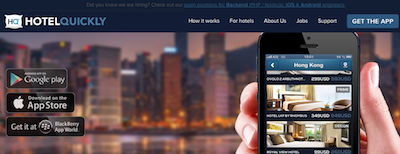

Michal Juhas: Lesson learnt from a taxi driver
Michal Juhas, co-founder and CTO, HotelQuickly (left) shares an interesting anecdote that eventually led him to re-work on the app.
“We were travelling in Vietnam where I tried to show the hotel address on a booking confirmation screen to a taxi driver. Since it was dark and he was half-blind (yeah, not really good for a taxi driver!), he didn’t see the small text so we implemented an enlarged version of the address in local language (font 5x bigger on a separated screen),” shared Juhas, who admires digital music app Spotify’s auto-complete attribute for how fast it is.
Some of the key areas that stand out in product development are as follows:
– Building from scratch: HotelQuickly, which has been downloaded more than 300,000 times since its launch in March last year, recently released from scratch a re-programmed and re-designed app.
HotelQuickly started iOS application from scratch with zero lines of code.
“We focused on polishing every single detail, adding more animations (see hotel list), better on-boarding process (4 iterations with different approaches until satisfied with results of UX testings), improved Chinese localisations (both simplified and traditional), and added more information about hotels (TrustYou reviews),” shared Juhas.
The team is optimistic about an even better Android app soon.
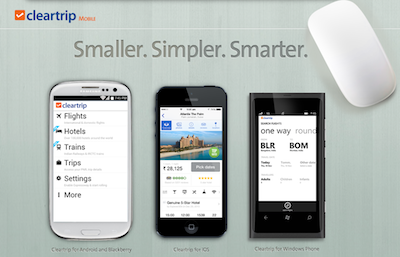
– Features in accordance with user behavior: An app can prove its worth when it saves time and makes the user more efficient.
Cleartrip recently introduced a new feature in Wallet by Cleartrip, a handy online account to save cancellation reimbursements that can then be utilized for future bookings.

Subramanya Sharma: Wallet in action
Subramanya Sharma, chief marketing officer, Cleartrip (left) shared that the company analyzed that around 70% of users who cancel went on to rebook within 48 hours of cancellation. So instead of refunding to the original instrument (which takes anywhere between 2-6 days), the team decided to develop this feature so that the customer can book instantly with the money in Cleartrip Wallet, said Sharma.
– Real-time monitoring: HotelQuickly has dashboards in place to display the most important performance indicators in real-time with average for the last 12 hours.
An example would be an average elapsed time spent generating the API response for the two most important APIs or a semaphore chart with a number of API calls with response longer than three seconds. Elaborating on the same, Juhas said, “We observed that if our initial API slows down to 4-5 seconds, people lose their attention and stop using our app. Thus we track the average elapsed time constantly on our main dashboard.”
“We have also implemented A/B testing tools (Optimizely for website and Vessel.io for mobile apps) which we evaluate on a bi-weekly basis and use as an input for next iteration cycle,” said Juhas.
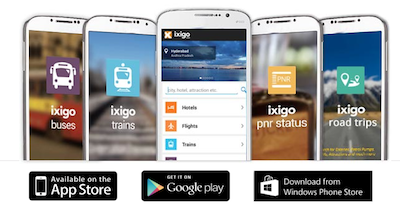
– Using data to advantage: The team at ixigo has worked out its way of organizing and using data to decide upon bundling/unbundling of features within the web and apps.
Saurabh Srivastava, VP marketing and product strategy, ixigo said, “We used data to figure out the 80:20 ratio of usage of our site.”
This gave a clear understanding that transportation was the key factor on ixigo’s site that could be used as a baseline for segmenting users as each user had a higher propensity and inclination to repeatedly use one form of transportation (flights or trains or buses) more than the others.
“With this insight we applied unbundling of our apps into 4 used cases of transportation viz; flights/ trains/ buses/ road trips,” said Srivastava.
Post this unbundling the team identified through data that there were common features that these travellers were looking for like hotels, info on the destination, weather etc and thus that became the bundled feature across the apps to driver higher engagement and a wholesome experience. “Also, to not leave the user in a state of conundrum when he wants to look at other modes of transport we have entry points across our apps to either mobile/ web or the relevant apps,” said Srivastava. This approach driven by scale and volume of data, user preferences and ability to segment key features based upon user actions has paid off. Today ixigo has more than 3.5 million users across its apps, web and mobile web with a huge portion of this growth coming from mobile users (more than 2.5 million downloads across all the apps). In all, more than 55% of ixigo-user interactions happen over mobile today.
Acting on user feedback: ixigo follows the customer development cycle and ensure that consumer feedback and interactions along with insights are looped back into the product roadmap. This is critical and helps in keeping a check and pushing what is working and pausing/ discontinuing/ modifying what isn’t, said Srivastava.
The team typically looks at following areas on a very regular basis:
– Easy navigability and closure of loop by user – Least no of clicks (ideally single click action)
– Time spent and page views across web and app
– Conversion funnel and leakages
– Returning visitors
– Feedback
– High quality and relevant results according to the needs of users. Stability and validity of links.
Being in sync all the time
One can imagine the excitement when an app or a site delivers what the team had set out for. But the pace of innovation can never let one to be complacent. Also, as Srivastava, says one of the biggest challenges that one continues to face is to seamlessly identify users in a multi device environment – across web, mobile web and apps.
Executives today are deeply involved and they are ensuring there is a mechanism in place to embrace change with aplomb.
Juhas has a note, “apps to check”, in one of the apps (Evernote) he uses where he adds mobile apps that he has heard about and wants to check later. He has an hour-long slot scheduled weekly in his calendar to download them and check them out. On a team level, he has set up an on-boarding process for new joiners to IT team – they spend first 10 days with getting feedback about the entity’s application from the staff and also outsiders. They need to meet random people in Starbucks and ask them for feedback, compile everything and present to the rest of the team. HotelQuickly also has a running document analysing and describing all hotel bookings apps, including those that are non last-minute.
As for me, I can’t say whether I will try to look into any programming language in the future, but it is clear that tracking customer interactions in real-time and taking an intuitive call to sustain improvement is must to stand out in the crowded world of travel sites and apps.