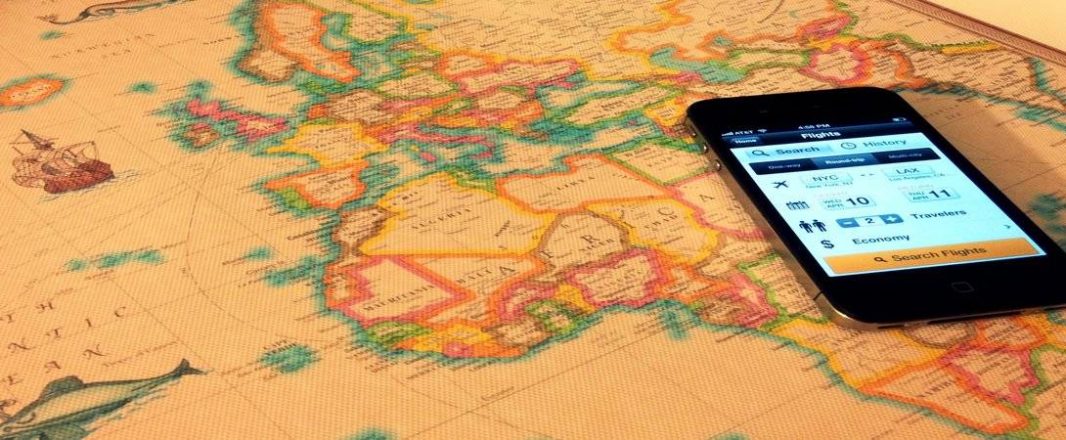
Frommer’s Unlimited, the B2B business of Frommer’s®, a branded imprint of Wiley, also found that respondents aged between 18 and 34 are the biggest advocates, with 72% of this age group accessing mobile travel content on holiday, compared to only 48% in 2010.
The top six types of mobile travel content that consumers want when on holiday are seeing points of interest like attractions, restaurants and shops on a map (57%), followed by key phrases in local languages (55%), local offers (51%), itineraries and walking tours (50%), local etiquette and customs (49%) and tipping and currency converters (45%).
Interestingly, the 18-34 age bracket expressed an increased interest in accessing information related to local etiquette and customs, and it ranked as the third most important type of content for this age group.
 Giles Longhurst, Frommer’s Unlimited’s director Europe, Middle East and Africa attributed the growing demand for mobile content to rise of the smartphone and the launch of the iPad.
“Consumers are expecting instant, sophisticated travel content and, more often than not, they are relying on this content to guide them through an unknown destination. Businesses need to respond to this by bypassing the gimmicks and offering reliable and trustworthy mobile travel content that can offer immediate up-to-date answers to the questions that consumers have when on holiday,” he said.
In the choice of a holiday destination respondents rated “things to do” (92%) as the most influential factor, followed by “price” (86%). This suggests that consumers are feeling more economically stable than last year when “price” was rated as the most influential factor.
User reviews on travel websites and travel guidebooks play an important part in influencing holiday decision making, with 81% of consumers considering them very influential. Editorial content on travel websites came in a close second with 80%.
Social media is also becoming more important has become notably more important in holiday decision making, with 36% of respondents considering online social networks as influential, compared to 22% in 2010. This indicates that using social media as a means of planning travel will be increasingly important to businesses.
The survey also revealed that travellers are increasingly more reliant on digital content in all phases of the travel cycle and consider many types of information as influential to their decision making than in prior surveys.
The most common time to look for destination information online continues to be before deciding where to go (93%). However, over 77% now look for destination information online when booking accommodation and flights, compared to less than 48% in 2010. There have also been significant rises in demand for destination content after booking but before leaving, while on holiday and after returning.
When planning a holiday consumers ranked “description destinations” and “special offers and deals” as the most important travel content, with 88% each. At the booking stage, “maps of destinations” (83%), is the most important closely followed by airport transportation information and city or resort guides (81% each). After booking, but before travelling, consumers rated weather as the most important information (85%), followed by attractions, events and maps (84% each).
From the trends unveiled in the report businesses should look at engaging with holidaymakers via social networks when they return home. This is because over half (51%) of all respondents indicated they are likely to post a hotel review online, and over one third would post travel photos (38%) or share travel experiences on Facebook (33%).
Despite this increased demand, consumers continue to encounter many negative experiences on travel websites. The most common problems are confusing websites, poor site navigation and insufficient destination information, with 58% each. This suggests that by addressing these common complaints, businesses could benefit from opportunities to engage successfully with consumers before, during and after their holiday.
Download the complete report and access prior research at Frommer’s Unlimited Research Center.