
20-year corporate travel veteran stays focused on three priorities – hire the right talent, deliver on product, grow customer base
“IT’s only the beginning, there’s so much to do,” said Sarosh Waghmar, CEO and founder of Spotnana, laughing and shaking his head, when I congratulated him on the latest fund raise by the corporate travel startup – $75 million in Series B, bringing its total fund raise since it came out of stealth mode in September 2021 to $116 million.
For Waghmar, it’s also not just about the amount raised but the “backers who are betting on us” – its investors include Durable Capital Partners, ICONIQ Growth, Madrona Venture Group, and Mubadala Capital – and he hopes that this level of endorsement will send the right message to the right talent to join Spotnana.
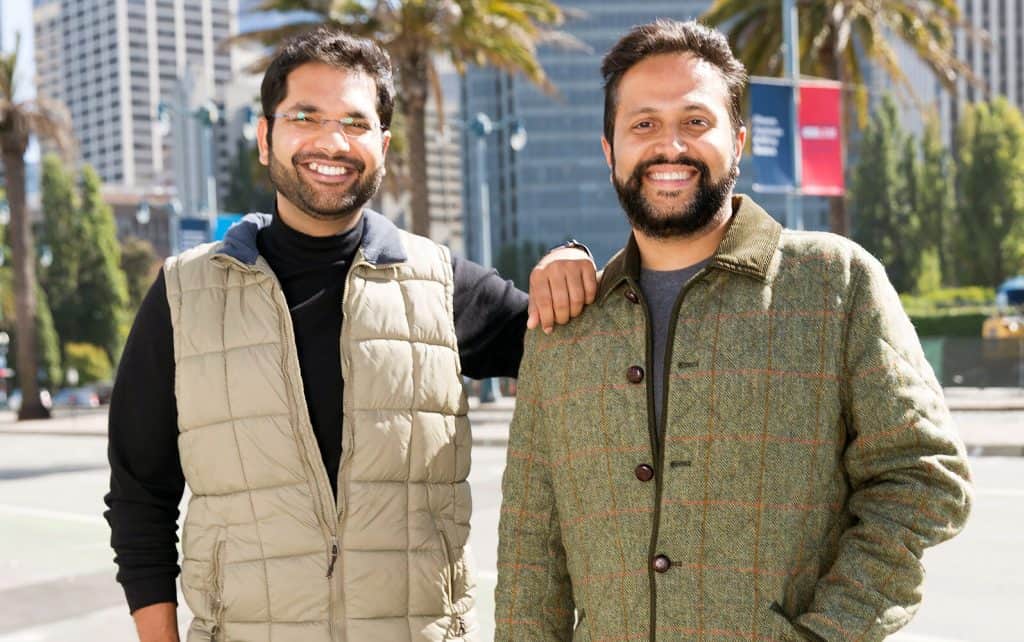
Sarosh Waghmar (right) and co-founder Shikar Agarwal, CTO, Spotnana
“It’s a tough market. Travel was decimated and now we are facing recession and lots of other uncertainties, changes in political landscape, so we have to move wisely and thoughtfully to hire the right talent to take Spotnana to the next level.”
Currently it has 200 employees in eight global locations and it needs to bring on more engineering and product talent to accomplish its vision for travel, which is to build the “AWS (Amazon Web Services) of travel”. It is looking to hire across a variety of areas including R&D, product, and travel operations.
Said Sarosh, who left for the US in 1994 from Mumbai on a computer science scholarship at The University of Texas, “We want to modernise the infrastructure for travel, fix the plumbing, that’s a heavy lift. We are an infrastructure play that will allow different stakeholders to build on it, and make more money than us eventually. Only when you can do that can you call yourself a platform.”
To do all that, it needs to blend “people with travel domain expertise” with “new world, new tech model of people who are used to solving complex problems”.
“Some startups hire the best tech talent but it’s no point if they don’t know how to solve the problem, so you need people on the product side who truly understand the complex problems that have to be solved,” said Sarosh.
Its leadership team comprises the who’s who of corporate travel – top executives who have worked with leading brands in the sector and who have united in Spotnana to solve the hard problems.
Putting together the crack team to solve the hard problems
Sarosh should know what the hard problems are, he’s been trying to crack the code for the past 20 years. Pre-Spotnana, he owned and ran WTMC, a leading TMC in the US and in March 2018, his agency built proprietary technology and pursued a New Distribution Capability strategy, which saw it become the first in the US to achieve Level 3 NDC certification in 2018.
In 2019, Sarosh made a tough choice. He felt that to accomplish his vision of building “the AWS of travel”, he needed to do it from scratch, and felt that he had taken WTMC as far as he could. “It was a tough decision. It was a profitable company, employing 120 people in several countries. But the only way we could scale was using third party tech, so we were dependent on other people. That’s when I realised I had to fix this and build the infrastructure myself. I can’t run two companies at the same time, so one had to go.”
He’s clearly inspired by Amazon’s Jeff Bezos. “He started selling books first, then their infrastructure failed them. He went out asking people, can you build this for us? And when no one could build it, they built it for themselves. I decided after 20 years, the only way to solve it is to build the infrastructure for ourselves.”
Around that time, he met Steve Singh, considered the guru of corporate travel, having founded Concur and selling it to SAP. “It was the biggest break of my life,” said Sarosh. Singh, who is now managing director, Madrona Venture Group, is executive chairman of Spotnana. “That was in January 2020. Three months later, Covid happened,” laughed Sarosh.
That turned out to be a blessing in disguise because with no sales to do, the company focused on building. “We just focused on product for the first nine months and by September 2021, we started getting good traction from customers.”
The pandemic also created a more open mindset among players in the industry. “It ripped open the bandages, people were frustrated with the way it was and were open to new ideas.”
Spotnana essentially has three go-to-market strategies – as a booking tool or agency for corporates, as a platform for TMCs and as a white label solution for corporations such as tech companies or banks.
Sarosh said TMCs have been highly receptive to the platform. “They have had to work with 10 tech vendors in the past – I should know, that’s what I used to do – now they need only use our platform.”
“It’s taken me 20 years, not two”
Raising $115 million in two years could be considered quite a fast raise but Sarosh is quick to remind, “it’s taken me 20 years, not two years, it’s bright and shiny now, but it’s been a lot of pain to get so far. We’ve got our feet on the ground and we want to execute and do right by our customers.”
He added, “This will give us a long runway for a few years. I am from the old school. In my previous company, I didn’t raise any money. We will be thoughtful and judicious about spending. We are glad to be highly capitalised so we can focus on what needs to be done – and there’s so much work to be done,” he repeated.
For him, there’s no substitute for profit. “This is part of the culture at Spotnana. Chasing valuation means nothing. We want to build a brand that customers talk about. The single reason why Spotnana will succeed is its people. Google did not get the search algorithm right, it got the people right. You need to have incredible people to solve hard, technical problems.”
Startups die from indigestion, not starvation and learning from “Indistractable”
With so much work to be done, and lots of uncertainty swirling around in the corporate travel sector, Sarosh is well aware of the need to focus. In fact, the book he is currently reading is “Indistractable: How To Control Your Attention and Choose Your Life” by Nir Eyal. “The biggest takeaway is how to stay focused with so many things pulling at you, personally and professionally.”
So Sarosh wants to stay focused on three priorities. “One, product and execution around product and delivering what our customers have signed up for, and getting that right. It’s about managing this inflow of interest, that we don’t bite off more than we can chew. Startups die from indigestion, not starvation.
“Two, growing amazing people and aligning our teams. We are a remote-first environment and that has its challenges – you can’t build culture remotely. There is no shortcut to spending time with people. A lot of people haven’t met each other but this is the new working model we have to accept and make it work. Overall, companies are spending less on workplaces and spending more on travel – offsites and meetings. Take me as an example, I am travelling extensively to meet the teams.
“Three, to grow our customer base and execute on our go-to-markets.
“We want to be the platform. I have no delusions of grandeur to say, we want to own the market. We just want to say, you can build on our platform, tell us how you want to use it. It’s not about us telling you how to use it. That was the old model.”