
If there was one clear message coming out from investors in the tech space at the Techsauce Global Summit in Bangkok last week, it was – it’s time for startups in Southeast Asia to stop looking to the US for role models; instead they should look to China.
A panel of investors, specialising in China, said that markets in Southeast Asia were similar to China seven to eight years ago – emerging secondary cities, fragmented, mobile-first, growing middle class – and the question they should ask is, “What Chinese business model can I copy and can I do it faster than they can?”
While the discussions weren’t specific about travel, there are definitely lessons to be drawn for travel startups looking to either enter China or engage with Chinese travel companies.
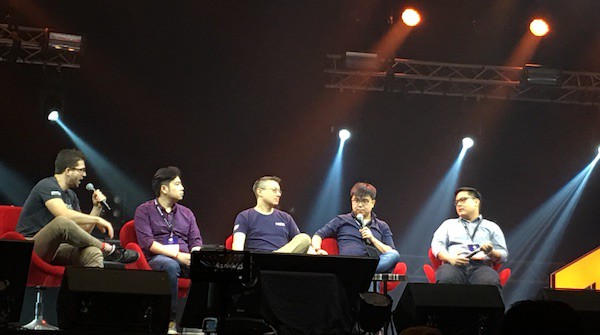
In discussion: Investors specialising in Ching (from right) Victor Chua, Dr Gang Lu and William Bao Bean)
William Bao Bean, who runs SOSV Accelarator which runs China Accelerator and MOX Accelerator, said that Facebook is copying WeChat and the question is, who can crack the global market first?
“Chinese companies have gone to the US and failed, WeChat tried – spent US$120,000 a day on marketing,” he said.
Chinese companies are now turning to Southeast Asia, which he said “is turning into a Chinese colony. Leaders by sectors are being taken out by the Chinese. If you’re building a business, say a family-owned bank, you have to ask what’s the future because Alibaba and Tencent are coming. Riches to rags in three generations?”
“In China, the big got bigger and the small got crushed.”
Blockchain technology, added Bao Bean, “will allow new companies to come in and disrupt many industries”.
Victor Chua, partner of Gobi Partners, a China-based fund investing in Southeast Asia, was unequivocal when he said, “Chinese companies are here to crush you, not buy you – it is good to assume that there’s no chance at all if you are hoping they will acquire you.”
His advice, “If you are building something valuable, then maybe consider a partnership. Understanding your local markets is a more defensible position.”
Dr Gang Lu, founder and chief editor of Technode.com, China, said that all companies – even BAT (Baidu, Alibaba, Tencent) – have their weaknesses. WeChat may be a super app in China, building a top to down ecosystem, but outside China, it is just a messaging app. It’s not that easy to build a payment gateway in Southeast Asia.”
He reiterated what Chua said, “Be the best in your local market, no matter how small.”
As for startups who want to enter China, Bao Bean said, “99% of you should not go to China. Look at all the big boys – how many of them have been successful? Uber spent US$2 billion, Didi shut them down. Uber was a company that broke the rules and that works in China but still …”
His thinking is you need an unfair advantage to compete. “We focus on fintech, AI, machine learning and education.”
Chua also said he did not recommend startups in Southeast Asia to enter China. “Chinese are hardcore workers. They can live and work in the same space. Focus on local markets. Some startups say, how can we leverage on BAT? I say, that’s a stupid idea.”
The panelists said there was a land grab going on in Southeast Asia by Chinese companies and it wasn’t about technology, but markets.
Dr Gang Lu said, “The China market is so tough, they are doing things beyond your imagination. China is market-driven – if your business is market-driven, it will be tough. But if you have your own technology, you have a chance – the market is looking for new tech to be deployed in China.
“Right now the hot companies are more market-driven than tech-driven.”
Bao Bean said that China has become the second largest venture market in the world and there’s also plenty of Chinese money outside China. “They are investing in deep tech, and also going for land grab.”
Goh’s concluding advice: “If you are looking at China, look beyond BAT. Think of Chinese companies as your opponents. If you are not market leader, you are not relevant to them.”
From the discussions going on at Techsauce, it’s clear than fintech is the latest land grab and one question asked by an American investor of a Thai startup in financial services was telling.
Mike Ducker, director, Tigers@Mekong, said coming to Techsauce had been eye-opening and showed there was a new wave coming and it’s working its way west. His question to Punnamas Vichitkulwongsa, CEO, Ascend Group/CEO, True Money, Thailand, was, “What should Americans be aware of and worry about?”
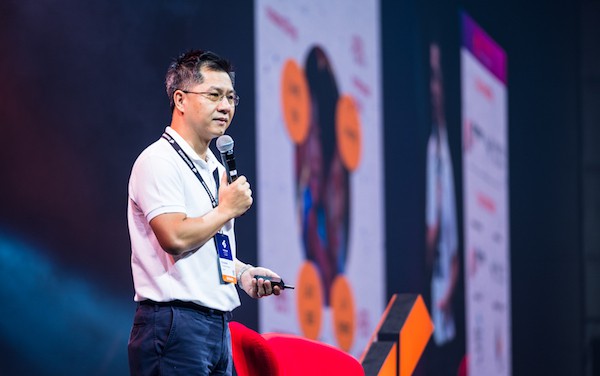
Punnamas Vichitkulwongsa: Payments remains biggest problem in Southeast Asian markets (Image credit: Dan Taylor – [email protected])
Vichitkulwongsa said, “Financial services in the US is very established, they don’t think of it as part of a value chain. But what is payment part of? It’s part of a commerce value chain – why not think of loyalty programmes for merchants, lead generation …”
He said that payments remained the biggest problem in Southeast Asian markets. “We want to be the platform for financial services.”
The company, owned by Ascend Group, provides e-payment services in Southeast Asia. In Thailand, the platform includes TrueMoney Wallet, WeCard by MasterCard, TrueMoney Cash Card, Kiosk, Express, Payment Gateway and Remittance. Alipay is a minority shareholder and Vichitkulwongsa said that even though TrueMoney had the local market advantage, it needed a best of technology partner and Alipay brings that.
“Issues like fraud and security are critical, they can wipe out your business.”
• Featured image credit: g-stockstudio/iStock