At the Sustainology Summit held in New York last week, Max Knagge (General Manager Americas, Scandinavian Airlines – SAS) spoke of how the onus of improving the sustainability of air travel lies with individual airlines, before highlighting SAS’ efforts in the space.
Taking a bird’s eye view, Knagge distilled the problem into three possible outcomes:
- Surrender – For airlines to acknowledge their negative impact and cease operations altogether, which would inevitably lead to another airline addressing demand.
- Don’t transform – Airlines can keep their heads in the clouds and avoid taking any responsibility whatsoever, leading to the demise of the beautiful destinations that drive people to travel in the first place.
- Take a stand – To drive innovation on all levels to fly with less impact altogether.
Unsurprisingly, SAS opted for solution three, with Knagge arguing SAS’ sustainability efforts began long before the era of Greta Thunberg and flight shaming. He said that SAS was one of the first airlines to produce and publish a sustainability report to maximise transparency, and is taking a three-pronged approach to improving its practices. Namely:
- Increase fuel efficiency
- Invest in biofuels and emerging technologies
- Develop more sustainable products and services
Knagge said these three guiding policies would work on every level of the airlines’ operations, from the type of aircraft used right down to the cutlery each passenger receives.
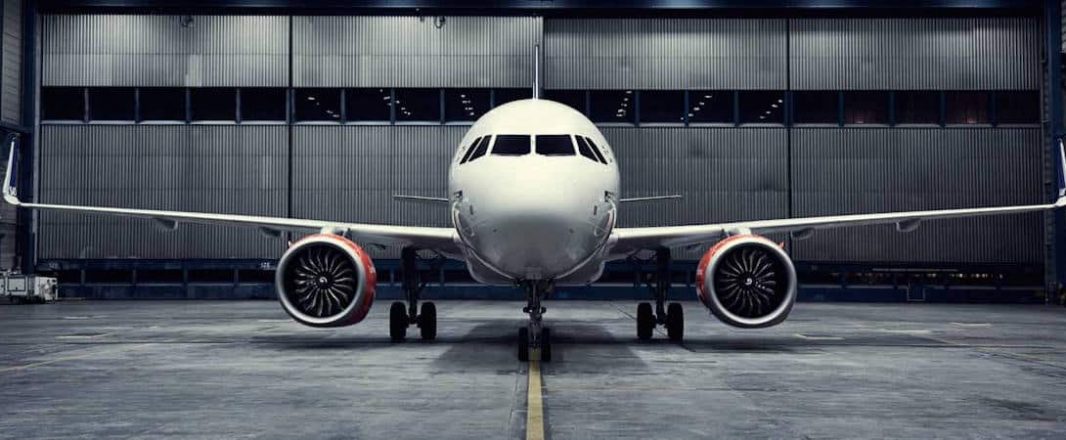
As of end January 2020, SAS will add eight Airbus’ A350 to its fleet for its USA flight paths and A320-neos for short-haul flights, as they emit less CO2 than other models. At the same time, the airline is looking to invest more in using biofuel as an alternative – potentially decreasing emissions by 80%.
However, Knagge explained that progress would take some time, as biofuels are currently scarce in supply and therefore costly to use. The airline is partnering with a biofuel company with large-scale production sites, and also looking at giving passengers to add biofuel to their journey when booking so they can also make a more conscious choice.
“But that is not the end game, because we are still emitting CO2,” said Knagge. “The end game is electrical aircraft, which are farther ahead than we think and I believe we will reach a solution sooner than we think.” The challenge is that electric aircraft are very small and only capable of flying short distances. However, the promise is there and the technology will develop over time.
“On our end, we’re evaluating what it will take to have this technology, in logistics and infrastructure… It all needs to be in place before adoption… it sets a direction of finding the end-game.”
Beyond the physical flying, Knagge pointed to behind-the-scenes operations that also needed to become more environmentally efficient.
“We’re partnering with Exxon Mobil who have a new coating to paint our new aircraft so we don’t have to paint them as often, so the weight of it will be less and we can burn less fuel to fly a lighter aircraft… so we’re looking across the board at all parts of our organisation [to make a difference].”
He also stated that SAS are using a new dry-wash technology that would reduce the amount of water used from 3000L per aircraft down to half a bathtub’s worth, when washing their fleet.
However, the most scalable opportunities would be through its in-flight practices. Knagge explained that approximately 20,000 items are loaded on board for each flight, so SAS has begun evaluating what items can be reduced, replaced or eliminated altogether.
“We stopped selling duty free items… which changed customers behaviour. It’s not popular amongst all our customers but we felt we cannot justify flying with that excess weight, just in case people want to buy,” argued Knagge. “There is the risk of having not-so-happy customers but it’s the standpoint we have chosen to take.”
When it comes to meals, the topic of waste is an inevitable one. Knagge explained that because airlines have not developed a way for passengers to pre-order or pre-select meals – a simple but effective solution that would prevent flights over-loading and waste large quantities of food. “We are improving the way we predict your needs so we can optimally load our aircraft.”
Knagge also highlighted that by 2030, SAS aims to replace all in-flight meal materials with biodegradable alternatives. “If you planted our knife and fork in a pot of dirt, it would decompose quickly.” Plus, it plans to flip the script on the types of food offered to customers – primarily focusing on making plant-based meals the default option and meat the exception. “Our starting point will be vegan… and we are working with local farmers and producers [to use] seasonal ingredients.” Overall, none of SAS’ sustainability efforts are particularly new or groundbreaking, but the hope is that these incremental changes will lead to greater cumulative effect. “We need to take those bolder decisions we know not everyone will be happy with. It’s necessary for this transition in history,” co