In today’s world of disruption, everybody can do and be anything we want to be. We can be taxi drivers (Uber), hoteliers (Airbnb), bloggers (WordPress), celebrities (social networks), headhunters (LinkedIn and lately, social recruiting sites like Wantedly from Japan) and, with Freelancer, the global outsourcing marketplace, freelancers.
Matt Barrie, CEO, Freelancer, the opening speaker at Echelon Asia Summit 2015 this morning said that services is the next big space to be disrupted and he sees no reason why an Alibaba of services would not emerge. His start-up, established in 2009 and which went public on the Australian Securities Exchange at US$1.03 billion in November 2013, connects entrepreneurs who are looking for freelancers for online jobs – it lists 6,000 jobs a day. He calls it a platform for international micro trade. 
He said the notion of employment had changed. The average job span of a Gen X may have been five years but for freelancers, it’s two weeks. “People are creating jobs rather than taking them. You can now architect your education (on the web) and your career (through marketplaces).”
Asia dominates Freelancer with countries like India, Philippines, Pakistan and Bangladesh leading. “Crowd-sourcing is huge in Asia,” he said. “If you’re young and you’ve got no money, you can jump in and do jobs for free first and build up your skills and reputation. Then you’ll start appearing high on the list. With 20-30 reviews, you can win more jobs.”
He cited the example of a mother in the Philippines who had to quit her job to look after her children “who now makes more money freelancing than she did fulltime”.
“The days of being average are over,” he said.
Barrie told the audience he chose the IPO route because “the VC market in Australia is dead”. That’s why most start-ups have to bootstrap as his did for six years and he had to look elsewhere for funding. “The stock market is crowd funding in the purest sense and I found the process significantly easier than raising capital,” he said.
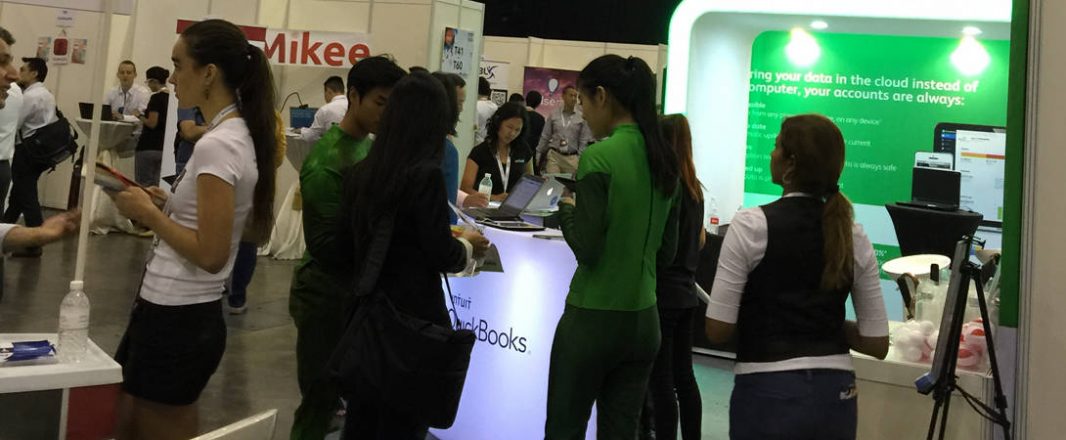
Outside in Tech Alley, it is clear services is the next battleground for start-ups. There were lots offering services such as personal chefs, plumbers and cleaners. Just this week, Malaysia-based start-up ServisHero, which calls itself the GrabTaxi of services, launched in Singapore and soon, Indonesia.

Donggun Lee, CEO & co-founder of MyRealTrip, looking to expand outside South Korea
In travel, services such as tour guides are being put on platforms. WIT Start-Up winner MyRealTrip, which started off in South Korea, is launching English and Chinese versions and are seeking funding to expand. Another Seoul start-up, Daily Hotel, the last minute booking app, wants to launch in Singapore, and is also seeking funding to do so. “We are the largest last minute hotel booking app in Asia,” said the staff manning the booth.
I like the confidence with which start-ups speak. Tours & activities start-up, eOasia, also told me they are the number one in Bali and I met a Kazaksthan flight OTA, Aviata.kz, which wants to launch in Indonesia through a joint venture. A Turkish Airlines crew was making videos of start-ups making pitches for its “Invest On Board” programme which allows entrepreneurs to pitch to investors in the sky. Talk about a captive audience …
It is good to see travel becoming a bigger category in an event like Echelon. I spent most of the day listening to new ideas and pitches by start-ups wanting to make it in travel and services. Ideas around mobile, concierges, messaging …
I love spending time with start-ups. They are all slightly mad – they have to be because when you do a start-up, you go in knowing 9 out of 10 fail and it’s 10 years of your life.
Here’s a handful of those I met today.
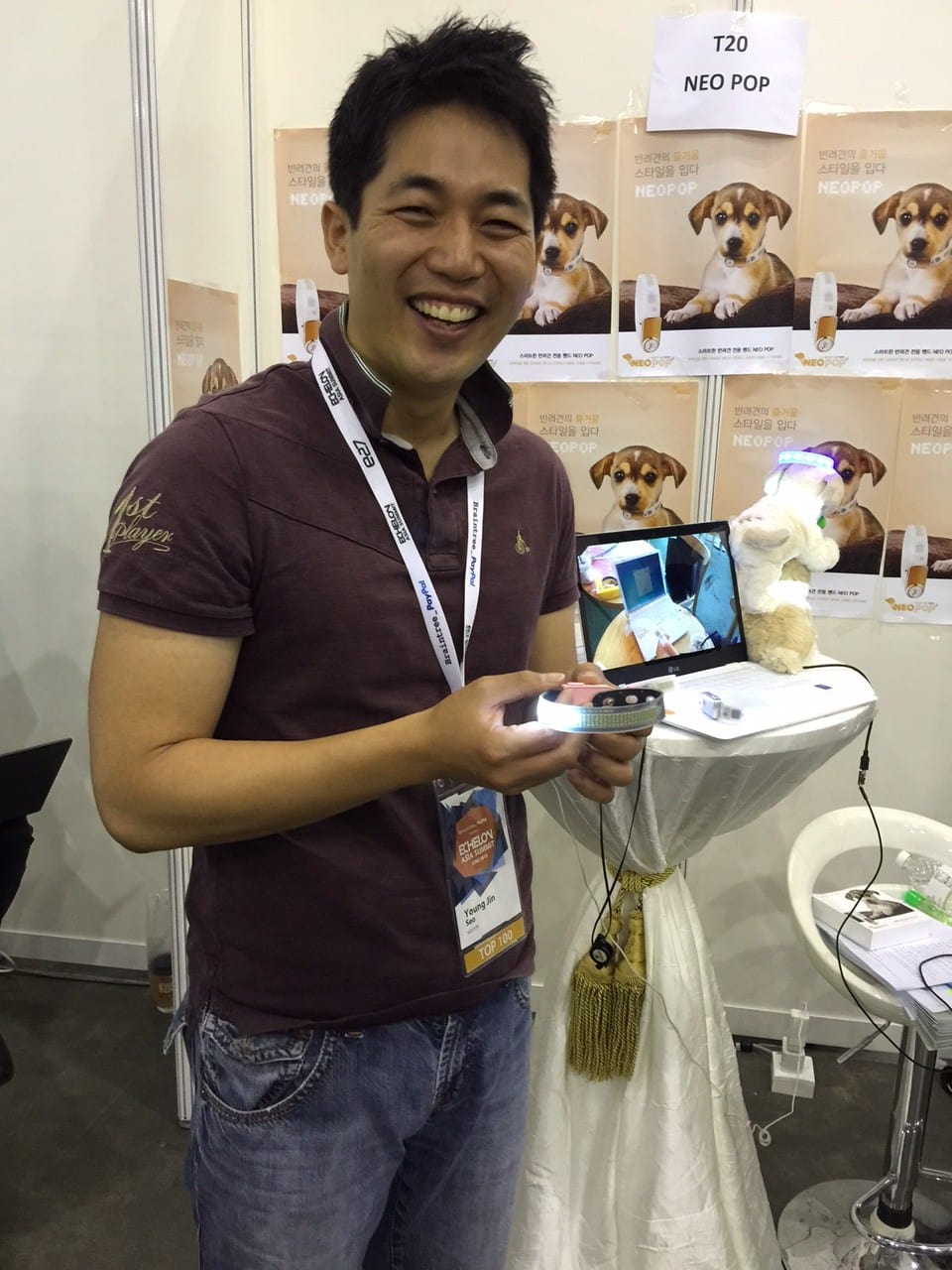
NeoPop’s Seo Young Jin showing off his invention, a bling bling smart dog collar
There’s NeoPop which makes smart dog collars – I love the bling bling round the collar. Founder Seo Young Jin’s dog was nearly hit by a car and ran away and he thought of an LED-Dog Tag which tells you your pet’s location plus it can be an “adorable accessory”.

Salt’s Aisa Mijeno sharing the idea behind her sea water-powered lamps
There’s a brother and sister team from the Philippines who invented Salt, lamps powered by seawater. They can last for eight hours and you can also use them to charge your smartphones. They are aiming them at island communities and are seeking funding to scale their sustainable alternative lighting. Aisa Mijeno told me each lamp now costs $35 to produce and they want to bring the cost down to under $10.
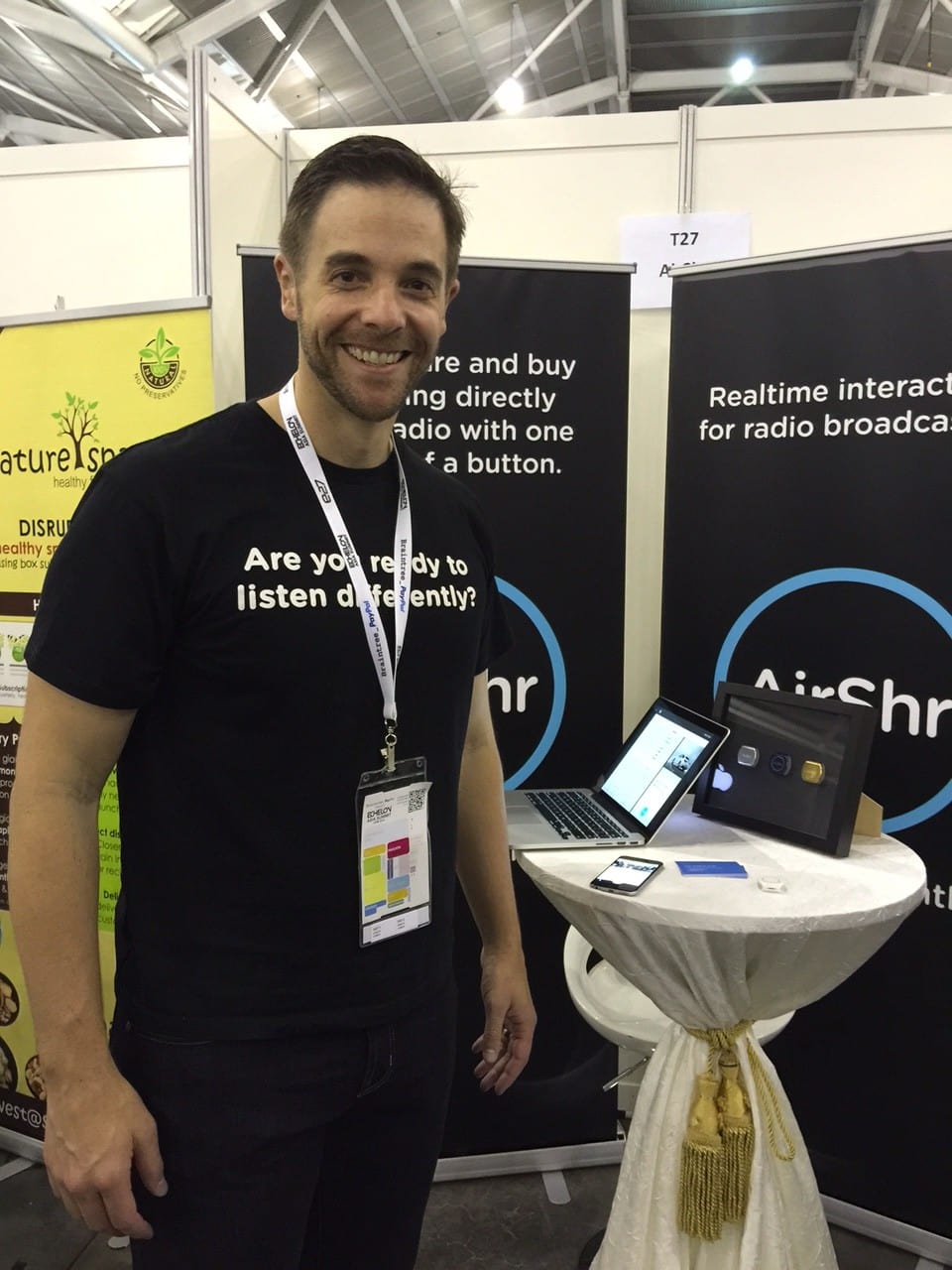
Phil Hayes-St Clair: He’ll record anything you’ve heard on radio with AirShr
And have you ever heard something interesting on radio or a podcast and think, I’d like to save that or really listen to that, and have trouble finding the programme again? Well, AirShr, created by Australian Phil Hayes St Clair, helps you record any content you find interesting on radio with an app. He then saves the content and sends it back to you.
Virtual reality is also big. I met Russian, Dimitry Morozov, whose company 3DiVi has spent four years developing Nuitrack Sensor, a Bluetooth accessory “that brings Kinect-like gaming and full body avatar animation” to the Android platform. I tried it on and you see yourself real-time and you get to kick and push balls around.
Then of course, there’s drones and Drone Matters took up a huge area to show off their flying machines. I asked the staff if I could use a drone at a conference and he said, “We tried that at a wedding, got the drone to deliver the ring and found it a bit dangerous.”
Yes, start-ups, crazy bunch but with them come innovation, disruption and democratisation. Long may they live because we need these independent rebel forces to counter the new tech monopolies.